Totally get it. But when the discussion turns to personal attacks it's all done. Everyone on my ignore list is there for one reason only, they can't repudiate an argument without a personal attack. I find that contemptuous, and annoying.Patience wears thin around here when idiotic "theories" are posted about a planned demolition of any of these buildings. Everyone around here is intelligent enough to understand these demolitions could not possibly be done on a covert level, one MUST drill/jackhammer into structural members for weeks/months prior AND wire it all up to work.

-
We’re currently investigating an issue related to the forum theme and styling that is impacting page layout and visual formatting. The problem has been identified, and we are actively working on a resolution. There is no impact to user data or functionality, this is strictly a front-end display issue. We’ll post an update once the fix has been deployed. Thanks for your patience while we get this sorted.
You are using an out of date browser. It may not display this or other websites correctly.
You should upgrade or use an alternative browser.
You should upgrade or use an alternative browser.
For Those Who Say "Jet Fuel Can't Melt Steel Beams"
Page 4 - Seeking answers? Join the AnandTech community: where nearly half-a-million members share solutions and discuss the latest tech.

zinfamous
No Lifer
Apologies, my mistake re where the collapse began. But doesnt change the fact the official report is still at odds with 1000s of architects and engineers who do not agree with the NIST findings and challenge them to this day. Pancake theory or not, the inconvenient little detail that the owner of WTC 7 said the building was "pulled" remains.
jesus fucking christ

MtnMan
Diamond Member
This ^^^This again? it doesn’t need to melt… it doesnt need to burn… it just needs to become pliable and the temperature for that is much much lower…
Since the first time I heard this bullshit, I understood that to fail it doesn't have to "melt" to fail, only reach a temperature that compromises it strength.
Structural steel begins to soften around 425 °C (800 °F) and loses about half of its strength at 650 °C (1200 °F).

yottabit
Golden Member
This ^^^
Since the first time I heard this bullshit, I understood that to fail it doesn't have to "melt" to fail, only reach a temperature that compromises it strength.
Structural steel begins to soften around 425 °C (800 °F) and loses about half of its strength at 650 °C (1200 °F).
The thing is, the steel did melt though at least in some cases.
There were multiple eyewitness accounts of molten metal at ground zero. Some of that may have been aluminum and copper, but some was certainly steel or components of it.
The whole conspiracy theory started from images like this: https://en.m.wikipedia.org/wiki/File:9_11_underground_fires_Hotslag-300x215.jpg#mw-jump-to-license
Now despite crusty 200px resolution images that may or may not show molten steel, damage to some of the steel beams was consistent with melting. There are many witness accounts of slag and I believe more photos.
This is why the conspiracy nuts hooked onto "It must be thermite!!!!" Since jet fuel without an oxidizer probably can't liquidify steel. Not that I'm defending the conspiracy nuts but it is a bit puzzling. I didn't realize there were even dumber people that hooked onto the phrase and thought it implied why the buildings couldn't have collapsed.
Anyway the answer seems to be FEMA posted an interesting report showing exactly how the fires DID "liquify" the steel at lower temperatures than normally thought possible, and not due to a traditional "melting" process
Here's a FEMA link https://www.google.com/url?sa=t&sou...wQFnoECAkQAQ&usg=AOvVaw0rXzD2s_HmHe3liPhbR0tB
It's very interesting to me. Mat sci is not my strong suit but my attempt at converting that into laymens terms would be it seems to me that long exposure to corrosive combustion gasses began to separate and expose the alloying elements of the steel (such as iron nickel and copper) which have a lower melting point. Which then melted into a mixture which penetrated further into the steel and became a viscous cycle of sorts
Most of the molten metal was probably from Wtc7. Wtc7 burned unrestricted. It was moreso a normal office fire than fueled by jet fuel, but the collapse of the other Wtc towers knocked out the water supply to the sprinklers so the temps were extreme. It's believed the building collapsed due to the tremendous thermal expansion which strained the joints between floors.

Zorba
Lifer
The real problem is the adiabatic flame temperature of Jet-A is over 4,000F. Modern turbofan engines run with combustion temperatures well over 3,000F.
Plus as the video shows, you don't have to melt to be worthless structurally.

Jaskalas
Lifer
Look how neatly it goes down.
Yeah, like a certain apartment complex near Miami.
These collapses via shoddy construction / maintenance are too common for you to gaslight us into thinking anything is out of the ordinary in #7's collapse.
Zorba
Lifer
Considering implosion works by knocking out critical supports and then letting gravity take care of the rest. Why are people surprised when you have critical supports fail and gravity takes over that it looks a lot like an implosion?Yeah, like a certain apartment complex near Miami.
These collapses via shoddy construction / maintenance are too common for you to gaslight us into thinking anything is out of the ordinary in #7's collapse.
Also I'd like to see videos of any building that was actually imploded top down.

Vic
Elite Member
300,000 lbs of jetliner carrying 11,000 lbs of kerosene collide with buildings at 625 mph and people are so shocked the buildings fell that they have make up bizarre conspiracy theories?
It is a testament to their engineering that the buildings stood as long as they did, and didn't collapse on impact.
It is a testament to their engineering that the buildings stood as long as they did, and didn't collapse on impact.
brycejones
Lifer
More like 70,000 to 80,000 lbs if jet fuel when they hit.300,000 lbs of jetliner carrying 11,000 lbs of kerosene collide with buildings at 625 mph and people are so shocked the buildings fell that they have make up bizarre conspiracy theories?
It is a testament to their engineering that the buildings stood as long as they did, and didn't collapse on impact.
Zorba
Lifer
I think it was around 80K of fuel when they hit and about 300 mph, IIRC. Still the amount of energy is insane.300,000 lbs of jetliner carrying 11,000 lbs of kerosene collide with buildings at 625 mph and people are so shocked the buildings fell that they have make up bizarre conspiracy theories?
It is a testament to their engineering that the buildings stood as long as they did, and didn't collapse on impact.
Edit: Looked it up. AA 11 was ~10,000 gallons, or about 66K pounds and 465 mph. UA175 was 9,100 gal, or about 60K pounds and >500mph.
Last edited:
Vic
Elite Member
Honestly, I couldn't remember the numbers it's been so long. I just remember that insisting that a building should remain standing after being impacted by a fast-moving widebody with full fuel tanks is still one of the stupidest arguments I've ever heard.I think it was around 80K of fuel when they hit and about 300 mph, IIRC. Still the amount of energy is insane.
Edit: doublechecked and it's 11k gallons which is about 80k lbs. My bad.
Last edited:
Zorba
Lifer
Yup, any one attempting now gets a beat down and has. Planes also are much more full than they were in 2001, making it that much harder.One good thing did come out of 9/11. Which is that planes don't get hijacked anymore. And that's not just because of the increased security measures. It's also because would-be hijackers know that ransom demands won't work when the passengers have no expectation of survival.
Last edited:
Vic
Elite Member
On that note, I remember having to defend why I always order a double Jack and coke before boarding a flight. Look, if I'm going to get on a machine that travels 6 miles high in the sky at 600+ mph carrying thousands of gallons of highly combustible fuel, the entire outcome of which I have no control over, then I'm gonna need a shot first, thank you very much.
Well, "building" could mean a lot of different sizes and mass's as well. Even a widebody jet full of fuel is nothing, (mass-wise) compared to a 1,200 ft steel and concrete structure. Keep in mind that to make code these towers needed to withstand a very high wind level too, sucks that no sprinkler system would be of much use in a raging fire like that.Honestly, I couldn't remember the numbers it's been so long. I just remember that insisting that a building should remain standing after being impacted by a fast-moving widebody with full fuel tanks is still one of the stupidest arguments I've ever heard.
Edit: doublechecked and it's 11k gallons which is about 80k lbs. My bad.
The hijackers planned out routes that were commonly had many vacant seats and were going a long distance so as to be carrying a lot of fuel.Yup, any one attempting now gets a beat down and has. Planes also are much more full than they were in 2001, making it that much harder.
Flight 93 pushed back at 8:00 but was delayed on the tarmac until 8:42, this was why it's passengers got phone calls from family/friends telling them about what had already happened. As the men huddled in the cabin and began hatching a plan to re-take control of the jet a Flight attendant came up to tell them she already had a couple of gallons of boiling water ready to go. Maybe that was the screaming heard on the recorder and think about it, a box cutter vs 1/2 gal or water boiling like a wildcat, I'll take option #2, hard to dodge much in the limited space. God bless this brilliant, smart, and ballsy woman, may you rest in peace, we will not forget you.One good thing did come out of 9/11. Which is that planes don't get hijacked anymore. And that's not just because of the increased security measures. It's also because would-be hijackers know that ransom demands won't work when the passengers have no expectation of survival.
Zorba
Lifer
Yeah, I mean that would be harder to do today (except for the height of COVID) because the average load factors have gone up over the last 20 years. The load factors were very low on 9/11 because we were already headed into a recession and none of the airlines had pulled back their schedules yet.The hijackers planned out routes that were commonly had many vacant seats and were going a long distance so as to be carrying a lot of fuel.
The average passengers per flight in August 2001 was 79, in August 2019 it was 95.
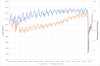
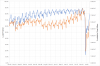
IIRC #93 only had around 40-45, I'll have to look it up.Yeah, I mean that would be harder to do today (except for the height of COVID) because the average load factors have gone up over the last 20 years. The load factors were very low on 9/11 because we were already headed into a recession and none of the airlines had pulled back their schedules yet.
The average passengers per flight in August 2001 was 79, in August 2019 it was 95.
View attachment 50266
View attachment 50267
Zorba
Lifer
Yeah, it was also a 757, so smaller than the 767s that went into the WTC. But still probably around 180-200 seats.IIRC #93 only had around 40-45, I'll have to look it up.
TRENDING THREADS
-
 Discussion Zen 5 Speculation (EPYC Turin and Strix Point/Granite Ridge - Ryzen 9000)
- Started by DisEnchantment
- Replies: 25K
-
Discussion Intel Meteor, Arrow, Lunar & Panther Lakes + WCL Discussion Threads
- Started by Tigerick
- Replies: 25K
-
 Discussion Intel current and future Lakes & Rapids thread
- Started by TheF34RChannel
- Replies: 24K
-

-
