That's correct for nearly all cases (not talking about Atom here of course) as long as there is no second thread or process or OS task running on that Intel core.
well from what I have seen when it comes to i5 vs FX 8xxx at a similar clock/high OC, even on the best cases for the FX, the heavy MT stuff the i5 is not far slower, it's quite close actually
http://www.bit-tech.net/hardware/2012/11/06/amd-fx-8350-review/3
(while using 100w less or something)
now when we move to the inevitable less than ideal situations for the FX, the difference can be huge in favor of the i5,
now comparing a BD module (2c) to a SB core, it probably can vary a lot,
http://www.xbitlabs.com/images/cpu/amd-fx-8150/t4.png
(sure it's BD and Sandra and the Intel core with HT enabled)
coming back to the next gen games and i5s, I would agree with this from the DF article I guess
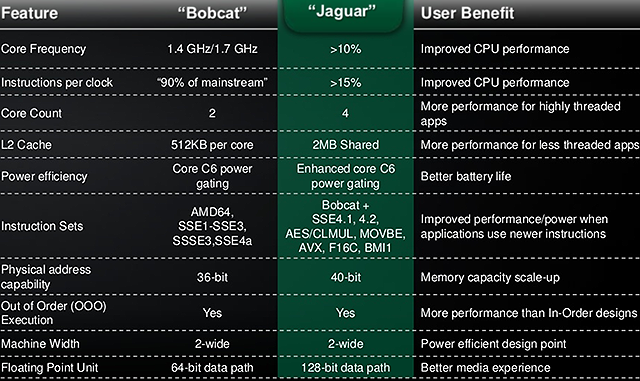
"CPU power is probably the least of the concerns the PC platform has, compared to the PlayStation 4 at least. After all, the AMD Jaguar cores in the next-gen consoles were designed to compete with Intel's low-power Atom architecture, created with tablets and low-power laptops in mind. Even with eight of them, today's quad-core and octo-core desktop processors outright own them in terms of processing power."





 Facebook
 Twitter