


RussianSensation
Elite Member
- Sep 5, 2003
- 19,458
- 765
- 126
Why do you always have to write a freaking article everytime you respond to someone? It makes atleast me less inclined to reply.
I only wrote 4 small paragraphs to you and the last one is a summary of where I would like the prices to be. The paragraphs above it explain why I think the prices should be where they are. If you don't want to read that info, you could have skipped to the pricing I provided instead. Is English not your first language? It takes me less than 3 min to type what I just typed which means it's < 3 min to read!
Who told you the Hawaii will continue to be priced at $249 in the 300 series?
No one. My poinst is R9 290X is already $280 today and R9 290 is $240. If AMD prices Hawaii rebrands at > $300, they should be all faster than a 970 which is essentially near 980 level of performance (380 = 290X, 380X = 980).
Shouldnt AMD be rewarded by putting out more efficient GPUs like Nvidia do with their cards? They are not running a charity.
Sure, some small reward for perf/watt. I personally assign very little value to perf/watt as electricity is dirt cheap for me and my PSU could handle 3x275W cards with ease. That's why I found 980's $550 price absurd compared to 290X/970. If someone does assign a lot more value to perf/watt, I guess this release sounds exciting to them. I care about performance and price/perf not power usage. If AMD can't deliver on those 2 metrics, R9 300 series is a fail to me. If R9 390X uses 1W of power, costs $549 and was as fast as a 980, I would not be impressed.
AMD have a low price now on the cards probably because the cards is bleak in comparison to Maxwell. And to remove inventory of current TSMC 28nm cards. Efficiency is a big part of the reason GTX 980 is selling like it does.
I think the efficiency hype behind it is mostly marketing. Review sites tarnished the image of all R9 200 cards, continuously ignored after-market options. In reality, an after-market 290X is both cool and quiet. So those 2 negatives are irrelevant for after-market buyers but the average Joe ignores reviews of after-market cards post launch.
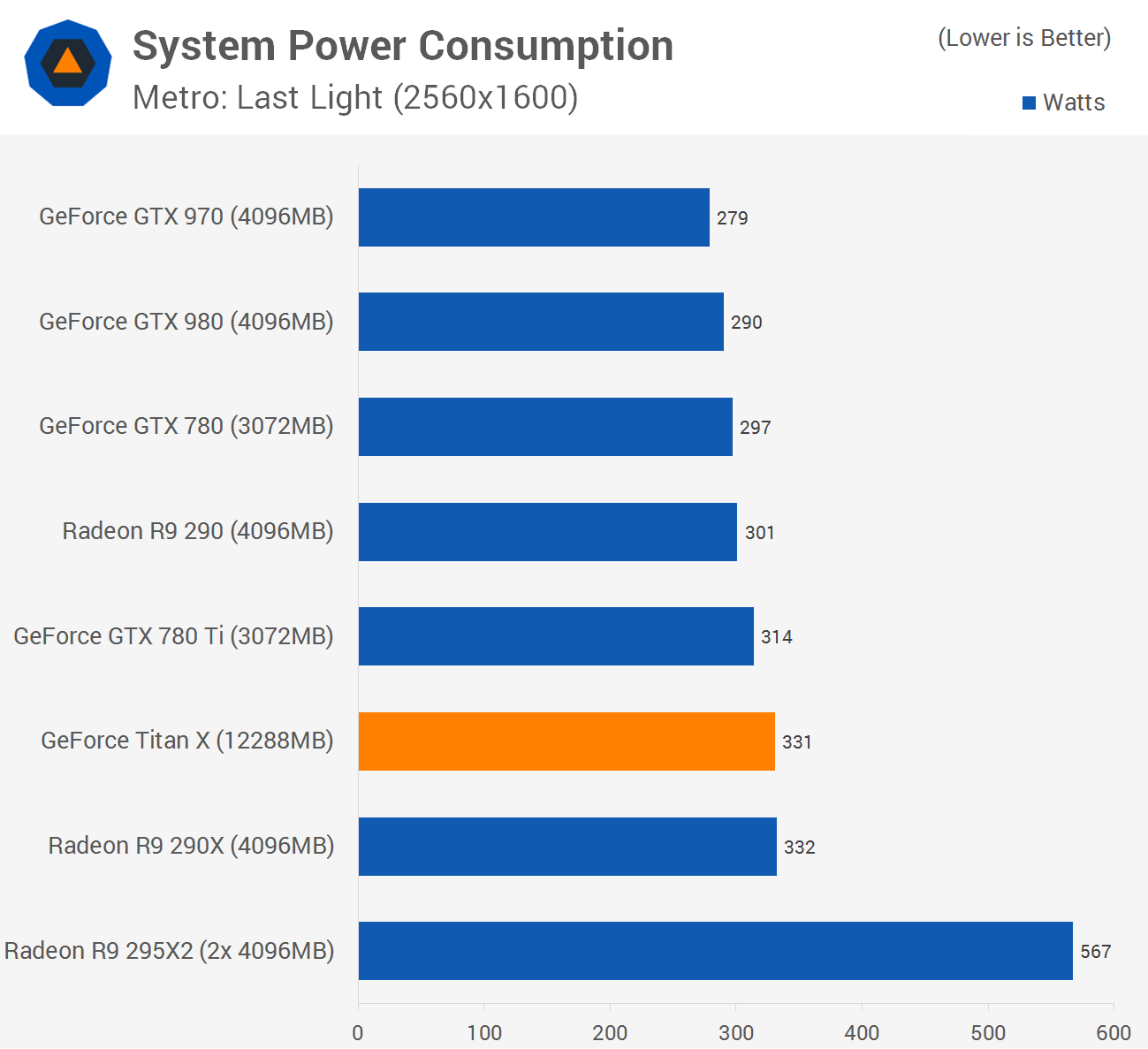
As far as power usage goes, by the time you build an entire i7 system with an 980 or 290X, the power usage is not world's apart. Again, pure marketing at work. At North American electricity rates, this is pocket change and we are still taking an entire rig that uses < 400W. Perf/watt is one of the most misleading marketing tactics GPU makers use to sell cards. I was really hoping AMD doesn't go down this path of charging huge premiums for R9 300 cards because of that....
A $2xx R9 370X with HBM and TDP of 140W will sell a heck more than a R9 290 at say 270W. Trust me, the price is very good for what you are getting
Ya, you are right. For me though I care about perf. not power usage. So a 140W R9 370X that costs the same as a 290 but uses half the power is an amazing engineering accomplishment but does little to move price/perf or overall perf. I guess that's what the market wants. I will focus my attention to R9 390/390X/GM200 because from what you are hinting, R9 380X does not sound like they will be even beat a 290X by much, with most of the focus on perf/watt. That's meh for me.
If it is ~GTX780 and costs 259$
How? That's too expensive. R9 290X is nearly 25% faster than a 780. At that point if I wanted a power efficient card, I'd try to find a GTX970 for $295-300. $40 more for 15% more performance. Most of the market will buy a slower NV card for more $. If R9 370X is $259, most people will keep buying a 970. NV can just drop GTX970 to $299 MSRP and with $20 rebates from AIBs, it's game over for the 370X at $259. I guess if we compare it to a 960 4GB, then it would be amazing. :awe: I still think the price is a tad too high.
Last edited:




 Facebook
 Twitter