• We’re currently investigating an issue related to the forum theme and styling that is impacting page layout and visual formatting. The problem has been identified, and we are actively working on a resolution. There is no impact to user data or functionality, this is strictly a front-end display issue. We’ll post an update once the fix has been deployed. Thanks for your patience while we get this sorted.

AMD Ryzen (Summit Ridge) Benchmarks Thread (use new thread)

Page 239 - Seeking answers? Join the AnandTech community: where nearly half-a-million members share solutions and discuss the latest tech.
Status
Not open for further replies.
Dolphin doesn't have any MOVBE instructions in it, and the only intruction belonging to BMI(1) is TZCNT.

No 256-bit instructions either.

This is for the public 5.0 binary available at the site.
Then why the hell is Haswell like 60-70% faster than Ivy? What is this sorcery?
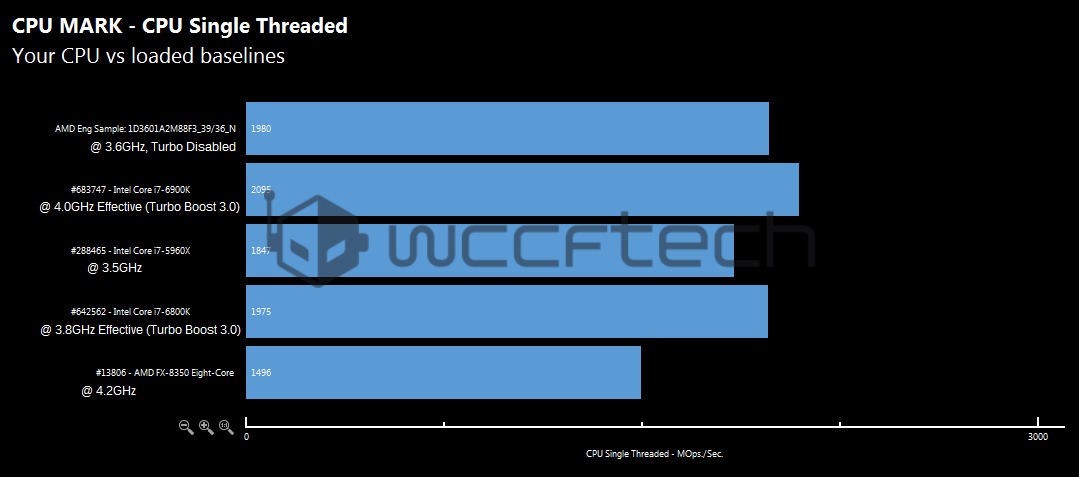
Yes they can, the other cpus have recorded turbos and the 1800X like the other had 1700X which could be firmware disabled. Passmark has a built in CPUID which detects turbo on or off through BIOS. It was a 3.6 baseline validation score.
Consider for a second that CPU-Z screen of recent could not detect multiplier range on Zen either and just reported 34.5x multiplier on 37/33 SKU. Turbo is hidden, deal with it.
 
Actually, from that i could extrapolate that the old Ryzen passmark result was actually running with turbo enabled to 3.8Ghz and this one indeed it seems turbo disabled and 3.6ghz, both cases seems to indicate below than Haswell IPC when compared to a 3.6 and 3.8 Haswell I3s, and more in line with the what AMD promised before all the hype.
 
Actually, from that i could extrapolate that the old Ryzen passmark result was actually running with turbo enabled to 3.8Ghz and this one indeed it seems turbo disabled and 3.6ghz, both cases seems to indicate below than Haswell IPC when compared to a 3.6 Ghz Haswell I3, and more in line with the what AMD promised before all the hype.

I think the other one was 3.7, as going up from 1980 to 3.7 is about 2030 either way yeah seems like the otherone was hidden this one is off or turbo is just not working well at all. IPC about Ivyish which is barely acceptable levels
 
Actually, from that i could extrapolate that the old Ryzen passmark result was actually running with turbo enabled to 3.8Ghz and this one indeed it seems turbo disabled and 3.6ghz, both cases seems to indicate below than Haswell IPC when compared to a 3.6 and 3.8 Haswell I3s, and more in line with the what AMD promised before all the hype.
The single threaded benchmark shows that the performance is basically identical to broadwell-e clock for clock. It has a sizable lead over the 5960x at nearly the same clocks.
 
Actually, from that i could extrapolate that the old Ryzen passmark result was actually running with turbo enabled to 3.8Ghz and this one indeed it seems turbo disabled and 3.6ghz, both cases seems to indicate below than Haswell IPC when compared to a 3.6 and 3.8 Haswell I3s, and more in line with the what AMD promised before all the hype.
What is below Haswell level? I usually consider 2-3% deviation to be within margin of error 🙂
 
I think the other one was 3.7, as going up from 1980 to 3.7 is about 2030 either way yeah seems like the otherone was hidden this one is off or turbo is just not working well at all. IPC about Ivyish which is barely acceptable levels

It was 38/34 i still had it in my passmark suite. Ill post a image.
 
What is below Haswell level? I usually consider 2-3% deviation to be within margin of error 🙂

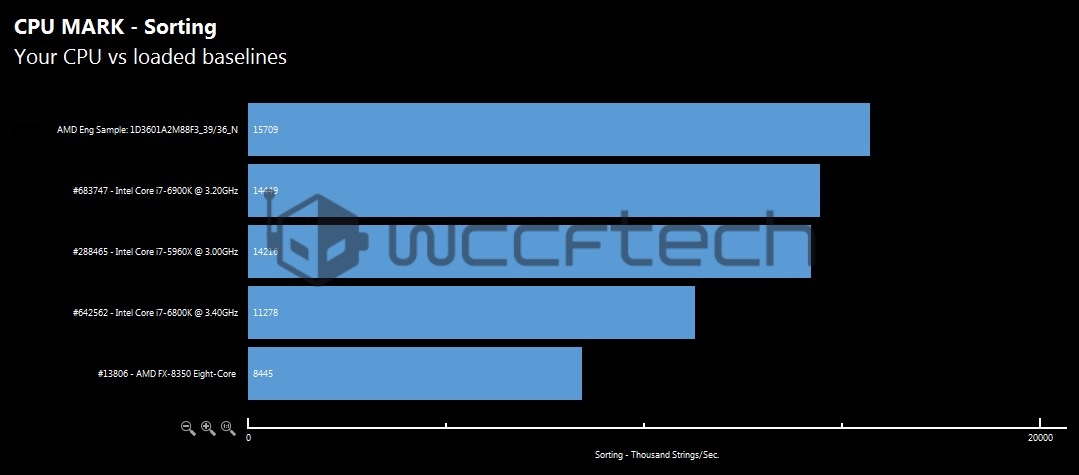
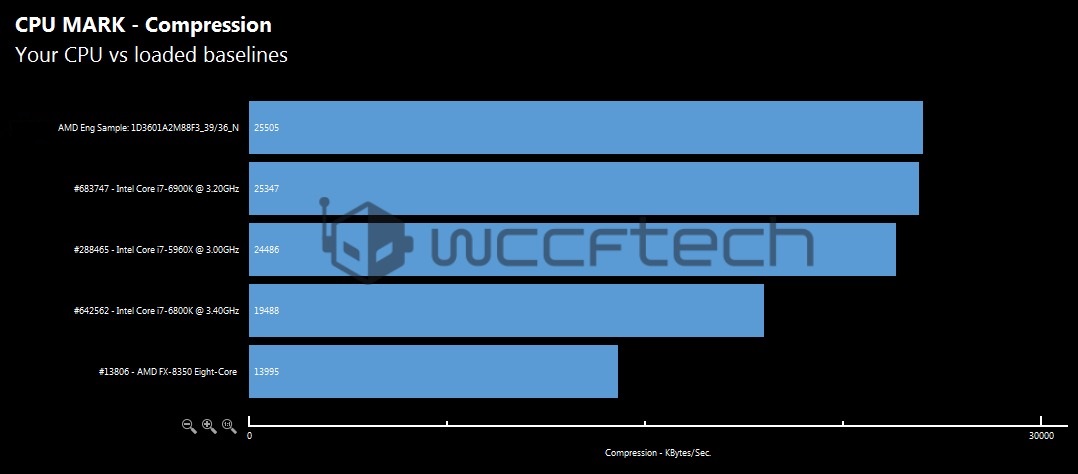
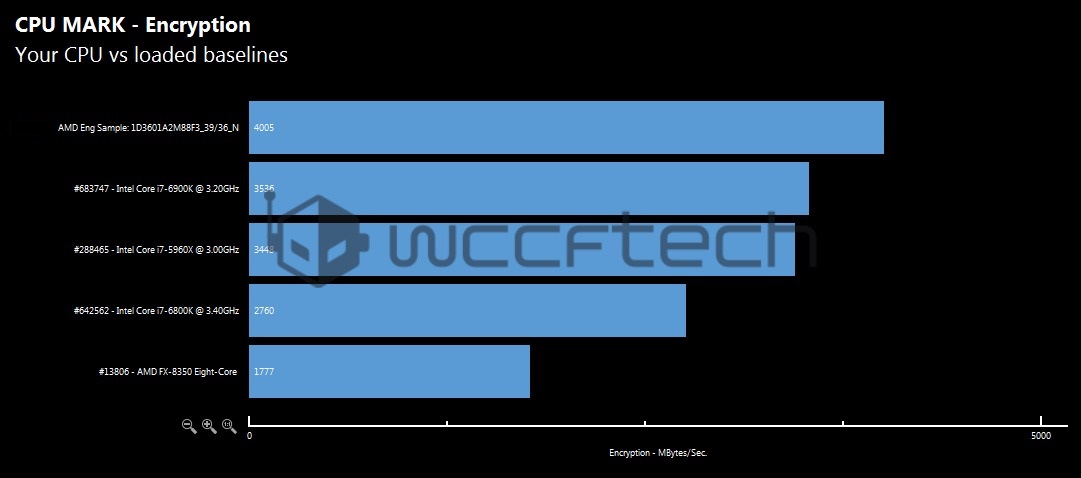
This is what happen when people take passmark results with ENG samples and show them as clickbait articles, we cant be really sure of anything, but i a take passmark as a aceptable bench, thats the result unfortunatelly.
 
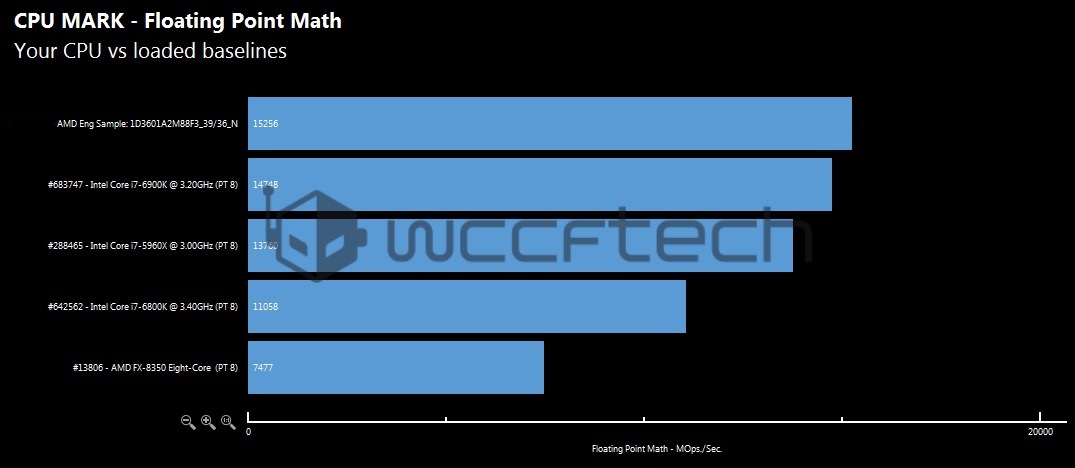
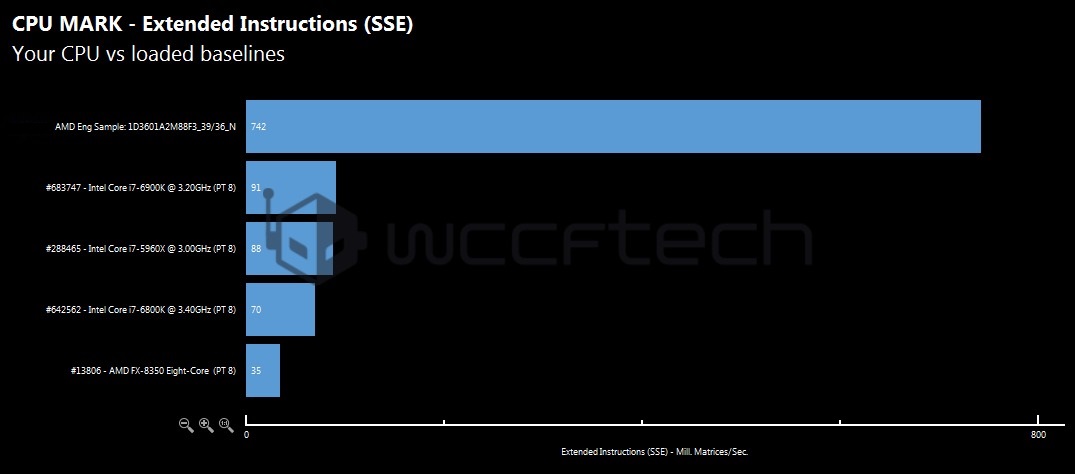
I don't know what WCCFTech is smoking, I just did the SSE test on my 6600K @ 4.2GHz, and got 474 points.
Apparently I have a magical CPU that gets 5.2x the perfomance of a CPU with half its cores 🙄
 
I don't know what WCCFTech is smoking, I just did the SSE test on my 6600K @ 4.2GHz, and got 474 points.
Apparently I have a magical CPU that gets 5.2x the perfomance of a CPU with half its cores 🙄
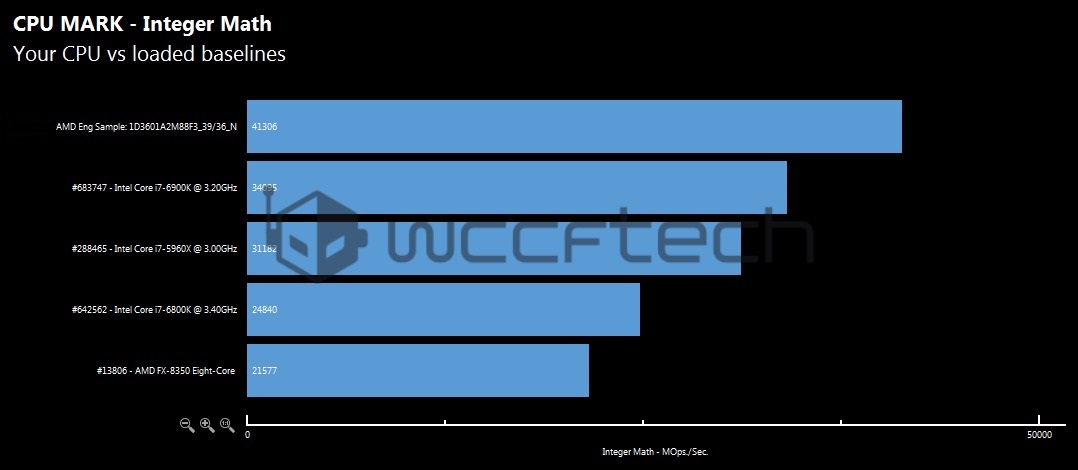
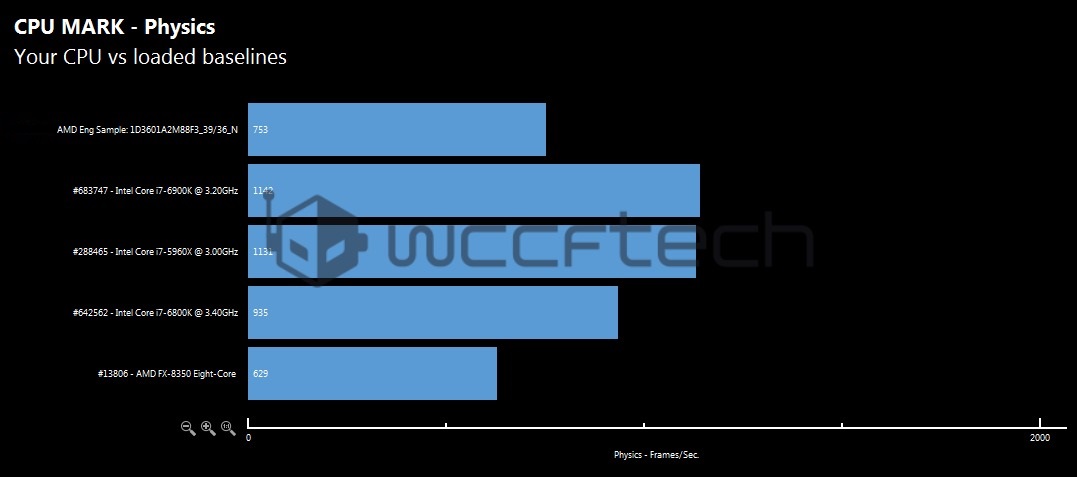
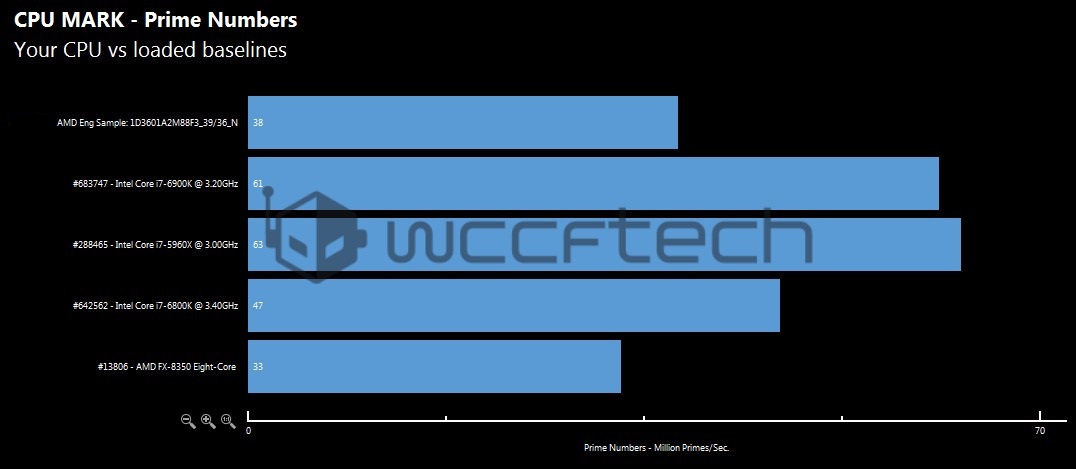
You need to take a closer look at what they (wccwhatever) used for results. Notice (PT8) next to some of the scores? Yes , that means it is taken from an older(different) version of Passmark and they are not directly comparable. Bad journalism unfortunately.
 
Could someone with pre-Skylake CPU test it? It appears my CPU is 99% percentile, which it's not in any other test.
Maybe Skylake did something that Broadwell didn't in that regard.

You need to take a closer look at what they (wccwhatever) used for results. Notice (PT8) next to some of the scores? Yes , that means it is taken from an older(different) version of Passmark and they are not directly comparable. Bad journalism unfortunately.
Oh, that would explain it lol
 
You need to take a closer look at what they (wccwhatever) used for results. Notice (PT8) next to some of the scores? Yes , that means it is taken from an older(different) version of Passmark and they are not directly comparable. Bad journalism unfortunately.

sounds like WCCFT
 
It is taking features on intel X and merging with socket 11XX with the obvious trade offs trying to fit all that onto a die the size of a comercial CPU. It doesn't have nearly as much resources as Xeon lite X99 chips but it has a lot compared with the mainstream i7's. Some other sacrifices were made in balancing peformance to cost. It should be fast though.
 
Status
Not open for further replies.
Back
Top