
• We’re currently investigating an issue related to the forum theme and styling that is impacting page layout and visual formatting. The problem has been identified, and we are actively working on a resolution. There is no impact to user data or functionality, this is strictly a front-end display issue. We’ll post an update once the fix has been deployed. Thanks for your patience while we get this sorted.

Question AMD Rembrandt/Zen 3+ APU Speculation and Discussion

Page 80 - Seeking answers? Join the AnandTech community: where nearly half-a-million members share solutions and discuss the latest tech.

izaic3

Member
Alright, so we've had some leaks so far. I don't know if any of it's been confirmed yet, as it's pretty early, but here is what I've surmised so far (massive grain of salt of course):

If if turns out to have RDNA 2 and 12 CU, I could see iGPU performance potentially almost doubling over Cezanne.

If I've made any mistakes or gotten anything wrong, please let me know. I'd also love to hear more knowledgeable people weigh in on their expectations.
 
Last edited:
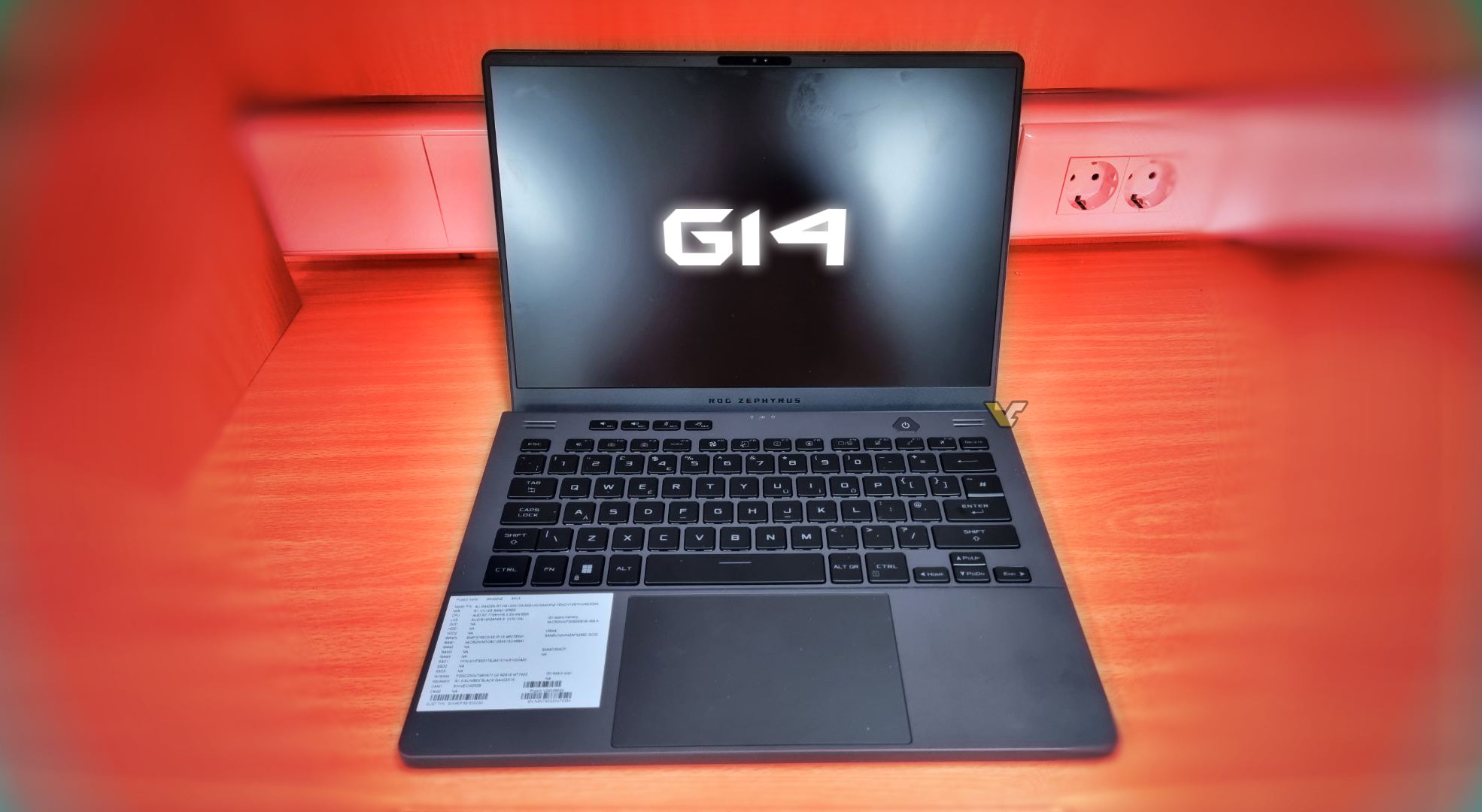
A first tangible design for refreshed or rebranded mobile Rembrandt SKUs:


Likely called Ryzen 7735H/HS, so similar or identical to 6800H/HS. Also seems to come with a Radeon RX 7000S dGPU. Dunno if Navi32 or 33 based.
 
Wow, 7000S already? Probably launches at CES. S series is low power for thin and light, so probably N33. Was there any N22 is 6000S? I think N23 only.
 
Wow, 7000S already? Probably launches at CES. S series is low power for thin and light, so probably N33. Was there any N22 is 6000S? I think N23 only.
launch? if rembrandt is any indication, these probably won't be available until mid 2024 at best. maybe by then we will have some good 6800U options too.
 
I haven't seen many good comparisons on rembrandt between native 1440, 1440 with XeSS, 1440 with FSR, and 1080p minimum. It would be i terrsting to see how capable it is with the upscaling techs and how Phoenix behaves by comparison in the future.
 
Last edited:
Just picked up a Thinkpad P16s with the 6850u. Let me know if you have any questions.
Well you can do the honors by testing the performance delta on battery and plugged in. Set Best Performance in Power Mode in Settings -> System -> Power & battery. Keep everything else on default. Run Geekbench 5 and Speedometer 2.0. Report the Geekbench ST score and Speedometer result when on battery and when plugged in.
 
Geekbench 5 Plugged In:
Single-Core:1521
Multi-Core: 8811

Geekbench 5 Battery:
Single-Core:1361
Multi-Core: 6078
That's a 11% loss in ST while on battery. My 11370H (which is basically configured like a 1165G7) loses only 4% on battery. So this is an area where AMD has to continue improving.

Try the same thing with Speedometer 2.0, with a Chromium based browser. That will align with a more real-world scenario.
 
That's a 11% loss in ST while on battery. My 11370H (which is basically configured like a 1165G7) loses only 4% on battery. So this is an area where AMD has to continue improving.

Try the same thing with Speedometer 2.0, with a Chromium based browser. That will align with a more real-world scenario.

You can't determine that without knowing how long this task will run for on a same capacity battery as this might simply be an OEM decision to target long battery life versus burst performance.
On the other hand, Intel's 10nm process is somewhat better suited to higher clocks, therefore not loosing efficiency as quickly going up in clocks (before hitting the wall).
 
You can't determine that without knowing how long this task will run for on a same capacity battery as this might simply be an OEM decision to target long battery life versus burst performance.
On the other hand, Intel's 10nm process is somewhat better suited to higher clocks, therefore not loosing efficiency as quickly going up in clocks (before hitting the wall).
That's why I said select Best Performance setting. That overrides any OEM specific optimisations and ensures that Turbo/Boost is attained quicker.
 
That's a 11% loss in ST while on battery. My 11370H (which is basically configured like a 1165G7) loses only 4% on battery. So this is an area where AMD has to continue improving.

It s the other way around, it s Intel that has to improve something...

In single core power is to be limited as well as it s well over 15W in your laptop and this considerably reduce the battery life, it was once proved in this forum that battery life is optimal when CPU power is equal to rest of the system power, so certainly lower than 15W for the CPU.
 
That's why I said select Best Performance setting. That overrides any OEM specific optimisations and ensures that Turbo/Boost is attained quicker.

I think BIOS still is in charge of power limits regardless of power settings in Windows. That's the reason we have such a wide spread of performances between different laptop models using technically the same CPU.

I could test my Ryzen laptop, but I'm rocking an old 4700U HP Envy model ...
 
That's a 11% loss in ST while on battery. My 11370H (which is basically configured like a 1165G7) loses only 4% on battery. So this is an area where AMD has to continue improving.
They probably already have done the best they can. I think your Intel CPU will burn through the battery lot faster than the Ryzen. It's a trade-off. You may be able to prevent the end of the world with a quicker calculation in a Mission Impossible type of scenario but the Ryzen will work longer and keep communication alive with the human using it in case of an emergency situation.
 
They probably already have done the best they can. I think your Intel CPU will burn through the battery lot faster than the Ryzen. It's a trade-off. You may be able to prevent the end of the world with a quicker calculation in a Mission Impossible type of scenario but the Ryzen will work longer and keep communication alive with the human using it in case of an emergency situation.
Well if Ryzen sips battery because it doesn't want to go fast and thereby causing sluggish performance, then that is a bad compromise.
I think BIOS still is in charge of power limits regardless of power settings in Windows. That's the reason we have such a wide spread of performances between different laptop models using technically the same CPU.

I could test my Ryzen laptop, but I'm rocking an old 4700U HP Envy model ...
PL2 or short-duration power limit doesn't affect ST performance that much, unless you reduce it drastically. Like I said, choosing Best Performance overrides BIOS and OEM optimizations governing boost behavior.
It s the other way around, it s Intel that has to improve something...

In single core power is to be limited as well as it s well over 15W in your laptop and this considerably reduce the battery life, it was once proved in this forum that battery life is optimal when CPU power is equal to rest of the system power, so certainly lower than 15W for the CPU.
Tiger Lake does just fine in the battery life department. It matches Cezanne while being bested by Rembrandt, so it ain't too bad for an older node that is primarily frequency optimized unlike the TSMC 7nm and derivative nodes used by AMD in its mobile processors.
 
Well if Ryzen sips battery because it doesn't want to go fast and thereby causing sluggish performance, then that is a bad compromise.

It would be more efficient than TGL even without ST frequency cutdown since it consume considerably less in the 4GHz range.

As for being sluggish that s as bad faith as possibly can be, if it s sluggish at 1361 GB ST points it will be as much sluggish at 1521 pts, you really think that such small of a difference could be perceptible elsewhere than in your forever anti AMD rants..?..
 
Geekbench 5 Plugged In:
Single-Core:1521
Multi-Core: 8811

Geekbench 5 Battery:
Single-Core:1361
Multi-Core: 6078
M2 Air gets 1890/8733. LMFAO absolute rekt! And half the cores are efficiency, no SMT.
This is not to diss your laptop. I would get that over any Mac. Just pissing on Apple silicon disrespecters.
 
Last edited:
M2 Air gets 1890/8733. LMFAO absolute rekt! And half the cores are efficiency, no SMT.
This is not to diss your laptop. I would get that over any Mac. Just pissing on Apple silicon disrespecters.
M2 may be pretty good but ironic pro-gamer posts are still bad.
 
It would be more efficient than TGL even without ST frequency cutdown since it consume considerably less in the 4GHz range.

As for being sluggish that s as bad faith as possibly can be, if it s sluggish at 1361 GB ST points it will be as much sluggish at 1521 pts, you really think that such small of a difference could be perceptible elsewhere than in your forever anti AMD rants..?..
It is impossible to give proper replies to you because you shift goalposts with every comment. When did efficiency become the topic under consideration?

It is a fact that all Ryzen mobile APUs deliver perciptably lower performance, with the decrease being worse as you go back each generation, when on battery as compared to plugged in. We have the data proving so. Just wait for something real-world like Speedometer to be run on battery to see just how sluggish it can be.
 
It is impossible to give proper replies to you because you shift goalposts with every comment. When did efficiency become the topic under consideration?

Efficency has always been the main topic once we re talking of mobile devices, and in this case it s counter productive to use the CPU at full frequency on ST since it would exceed 15W and hence reduce battery life uselessly.

Now if you dont bother for this metric you can always set a power profile that would negate this limitation, but then the advertised run times would be no more accurate.
 
Back
Top