
-
We’re currently investigating an issue related to the forum theme and styling that is impacting page layout and visual formatting. The problem has been identified, and we are actively working on a resolution. There is no impact to user data or functionality, this is strictly a front-end display issue. We’ll post an update once the fix has been deployed. Thanks for your patience while we get this sorted.
You are using an out of date browser. It may not display this or other websites correctly.
You should upgrade or use an alternative browser.
You should upgrade or use an alternative browser.
Question Alder Lake - Official Thread
Page 12 - Seeking answers? Join the AnandTech community: where nearly half-a-million members share solutions and discuss the latest tech.
Congratulations on finding the most expensive 12900k in the universe!One thing I noticed.... You can only buy the 12600 and 12700 at newegg. Others OOS. Amazon has the 12900k for $1600!

coercitiv
Diamond Member
It's low digits at 1080p, and closer to 10% at 720p, meaning Alder Lake has very good gaming potential.So, thats 2% diff ? Can hardly wait for all the reviews.
Until we get the Anandtech review there's this Techpowerup piece, they also ran 12900K with E-cores disabled. Interesting stuff, although too early to draw conclusions on the benefits of E-cores when schedulling in Win11 is still spotty for some productivity software.
Furious_Styles
Senior member
Congratulations on finding the most expensive 12900k in the universe!
Looks like some fools are paying 850+ for the 12900k on ebay already.

TESKATLIPOKA
Platinum Member
Translated Computerbase review. This is a very good review, check It out.
E-core is seriously much weaker than P-core.
IPC at 3.9GHz for P-core is 43% better, with HT It is 88% better and at 5.2GHz It is 131% better.
But It looks like It's much more efficient.
Average performance in 9 MT tests.
i9 12900K 8+8 -> 188% (PL: without limit)
i9 12900K 8+8 -> 184% (PL: 125/241W)
i9 12900K 8+8 -> 172% (PL: 125W)
i9 12900K 8+8 -> 148% (PL: 88W)
i9 12900K 8+0 -> 143% (PL: without limit)
i9 12900K 8+0 -> 139% (PL: 125/241W)
i9 12900K 8+0 -> 130% (PL: 125W)
i9 12900K 8+8 -> 130% (PL: 65W)
i9 12900K 8+0 -> 118% (PL: 88W)
i9 12900K 8+0 -> 106% (PL: 65W)
i9 12900K 8+8 -> 100% (PL: Energy saving mode, not sure how much It consumed).
E-core is seriously much weaker than P-core.
IPC at 3.9GHz for P-core is 43% better, with HT It is 88% better and at 5.2GHz It is 131% better.
But It looks like It's much more efficient.
- Reducing the number of e-cores lowers the CPU package power every two e-cores by eleven to twelve watts. An E-Core under full load therefore consumes between 5 and 6 watts. Apparently, it has little influence on whether it runs at 3.7 or 3.9 GHz.
- Reducing the number of P-cores from 8 to 6 reduces the CPU package power by 43 watts, which suggests a consumption of around 21 watts per E-core at 4.9 GHz.
Average performance in 9 MT tests.
i9 12900K 8+8 -> 188% (PL: without limit)
i9 12900K 8+8 -> 184% (PL: 125/241W)
i9 12900K 8+8 -> 172% (PL: 125W)
i9 12900K 8+8 -> 148% (PL: 88W)
i9 12900K 8+0 -> 143% (PL: without limit)
i9 12900K 8+0 -> 139% (PL: 125/241W)
i9 12900K 8+0 -> 130% (PL: 125W)
i9 12900K 8+8 -> 130% (PL: 65W)
i9 12900K 8+0 -> 118% (PL: 88W)
i9 12900K 8+0 -> 106% (PL: 65W)
i9 12900K 8+8 -> 100% (PL: Energy saving mode, not sure how much It consumed).
igor_kavinski
Lifer
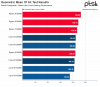
Things don't look so good for ADL in Linux gaming. Maybe things are different in FreeBSD.
Things don't look so good for ADL in Linux gaming. Maybe things are different in FreeBSD.
Could be scheduler problems. Android has its own scheduler that is full of hacks and quirks for hybrid mobile chips and not really applicable to upstream Linux kernel. The way 6P + 0E leads the Intel pack, kinda gives away that problem is not with actual chips.
Thanks for this. Here's another example ofSo Igor did some good gaming power consumption tests. In gaming ADL is really power efficient. See here
If the CPU limit is partially or completely removed, all Alder Lake CPUs are even more economical than all Ryzen 9 and Ryzen 7. Only the Ryzen 5 5600X can keep up, but it is almost always the slowest CPU in the test field. Intel has done a terrific job here and I think it’s a real shame when marketing only highlights the FPS bars. What has been done in terms of power consumption is, in my view, many times higher. You just have to sell it smarter.
The absolute wattage figures are one thing, but what you get for the use of electrical energy in reality in terms of gaming performance is something else entirely. Because what is visible here in the bars is almost declassification. A couple of percentage points of performance disadvantage can be well tolerated, but when it comes to fodder utilization, AMD really comes out on top. The listing in required watts per FPS speaks a very clear language. Only the Ryzen 5 5600X can hold its own there, even if it is downright outclassed by the much faster Core i5-12600K in gaming.

TheELF
Diamond Member
Don't look so good for the 5950x either... are they still using game mode?View attachment 52343
Things don't look so good for ADL in Linux gaming. Maybe things are different in FreeBSD.
Translated Computerbase review. This is a very good review, check It out.
E-core is seriously much weaker than P-core.
IPC at 3.9GHz for P-core is 43% better, with HT It is 88% better and at 5.2GHz It is 131% better.
But It looks like It's much more efficient.
Average performance in 9 MT tests.
i9 12900K 8+8 -> 188% (PL: without limit)
i9 12900K 8+8 -> 184% (PL: 125/241W)
i9 12900K 8+8 -> 172% (PL: 125W)
i9 12900K 8+8 -> 148% (PL: 88W)
i9 12900K 8+0 -> 143% (PL: without limit)
i9 12900K 8+0 -> 139% (PL: 125/241W)
i9 12900K 8+0 -> 130% (PL: 125W)
i9 12900K 8+8 -> 130% (PL: 65W)
i9 12900K 8+0 -> 118% (PL: 88W)
i9 12900K 8+0 -> 106% (PL: 65W)
i9 12900K 8+8 -> 100% (PL: Energy saving mode, not sure how much It consumed).
Interestingly power Zen3 matches power usage/freq somewhat closely for both the E-cores and the P-cores:
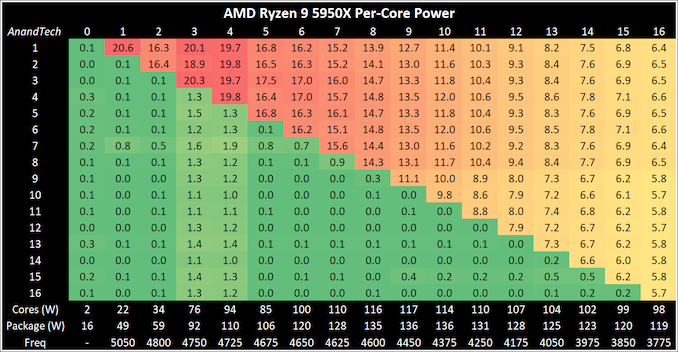
So I wonder if the main difference between the P and E cores in efficiency is really the clock speeds and not much else? (Of course more cores means we can run the cores at lower clocks at iso power so in that sense the E cores definitely help efficiency)
Could be scheduler problems. Android has its own scheduler that is full of hacks and quirks for hybrid mobile chips and not really applicable to upstream Linux kernel. The way 6P + 0E leads the Intel pack, kinda gives away that problem is not with actual chips.
The 12600k is 6p+4e though? If anything it makes it more confusing as the 12600k should be relying more on the e cores than a 12900k.
TPU has the 12700k review up as well...
 www.techpowerup.com
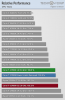
Intel Core i7-12700K Review - Almost as Fast as the i9-12900K
With the Core i7-12700K, Intel has released a formidable competitor to AMD's Ryzen 5800X and even 5900X. Thanks to eight powerful Golden Cove cores, the processor handles all workloads very well, including gaming. Compared to the i9-12900K, it runs almost as fast, but much cooler, with better...

Heartbreaker
Diamond Member
Translated Computerbase review. This is a very good review, check It out.
E-core is seriously much weaker than P-core.
IPC at 3.9GHz for P-core is 43% better, with HT It is 88% better and at 5.2GHz It is 131% better.
But It looks like It's much more efficient.
Even if they were only 1/2 as good, it looks like they only use about 1/4 the die area, so a significant win for multi-threaded peformance/area.
Furious_Styles
Senior member
Thanks for this. Here's another example ofRyzen gaming load inefficiencyIntel gaming load efficiency I was trying to highlight yesterday. It's one thing to consume more while churning out more fps, and another to consume less while churning out more fps. I'll let Igor conclude my point:
Hate to say this but I don't really care about gaming load efficiency. When I'm playing I want max performance. The power efficiency is more important for those who do lots of workloads like encoding or stuff that is very time-intensive.
It's a lot like using a GPU, miners go for power efficiency, gamers go for max speed.
Depends on the app/game. IMO we don’t really have any good reviews/tests yet.So, thats 2% diff ? Can hardly wait for all the reviews. Seems like it does take 10-120 watts more or almost double the 5950x for productivity apps. And runs hot. I have not seem a review with details, just whats in this thread. No idea what cooler they are using. On either one. My 5950x's run on air. 615-2 coolermaster.
An interesting quirk I have noticed is that some games love the additional memory bandwidth of DDR5.
3rd party seller on Amazon scalping. Even Newegg’s prices are high TBH. Best Buy was $620. Microcenter is $650, but you get $20 off when you buy a board. Intel says the price recommended customer price is $589-$599, so a lot of retailers appear to be taking advantage of initial demand.One thing I noticed.... You can only buy the 12600 and 12700 at newegg. Others OOS. Amazon has the 12900k for $1600!
The 12600k is 6p+4e though? If anything it makes it more confusing as the 12600k should be relying more on the e cores than a 12900k.
Yeah, sorry my mistake. It probably relies on E cores the least and therefore performance is the best out of all Intel chips lol.
zir_blazer
Golden Member
So basically, somewhere around 125W lies the sweet spot. 125W has a 37W higher cap to be 16% faster than 88W, whereas 88W vs 65W has a 23W higher cap to be 14% faster. From 125W onwards scaling becomes horrible.Average performance in 9 MT tests.
i9 12900K 8+8 -> 188% (PL: without limit)
i9 12900K 8+8 -> 184% (PL: 125/241W)
i9 12900K 8+8 -> 172% (PL: 125W)
i9 12900K 8+8 -> 148% (PL: 88W)
i9 12900K 8+8 -> 130% (PL: 65W)
i9 12900K 8+8 -> 100% (PL: Energy saving mode, not sure how much It consumed).
Hate to say this but I don't really care about gaming load efficiency. When I'm playing I want max performance. The power efficiency is more important for those who do lots of workloads like encoding or stuff that is very time-intensive.
It's a lot like using a GPU, miners go for power efficiency, gamers go for max speed.
The gaming power usage should be noted, but I think most fall into your same category. When a GPU is pulling down 200 - 350W for modern GPUs, a 20W or so difference in CPU usage isn't really going to be noticed. However, if you're doing encoding, rendering, or any high load MT work, a 120W difference in CPU usage is rather substantial, not to mention the increased motherboard and cooling requirements needed to accommodate that usage. Idle to low threaded power usage is definitely Zen3's (desktop) weak point which I think AMD will try to address in future products, but it's also low on the priority list for probably the vast majority of users.
Last edited:
exquisitechar
Senior member
Looks good, it's as fast as I expected. Better than I thought in gaming, actually. Have to wait until later to really sink my teeth into these reviews.
AMD is going to have a tough time responding to the level of MT performance the 12600k offers. Zen4, too, will have that problem against RPL-S.
AMD is going to have a tough time responding to the level of MT performance the 12600k offers. Zen4, too, will have that problem against RPL-S.
leoneazzurro
Golden Member
Hate to say this but I don't really care about gaming load efficiency. When I'm playing I want max performance. The power efficiency is more important for those who do lots of workloads like encoding or stuff that is very time-intensive.
It's a lot like using a GPU, miners go for power efficiency, gamers go for max speed.
And other sites have exactly the opposite situation..
Intel Core i9-12900K, i7-12700K & i5-12600K im Test: Leistungsaufnahme, Temperaturen und OC
Intel Alder Lake im Test: Leistungsaufnahme, Temperaturen und OC / Leistungsaufnahme in Spielen / Leistungsaufnahme in Anwendungen
Tha numbers the other igor put on his review seems quite off.

Hulk
Diamond Member
Translated Computerbase review. This is a very good review, check It out.
E-core is seriously much weaker than P-core.
IPC at 3.9GHz for P-core is 43% better, with HT It is 88% better and at 5.2GHz It is 131% better.
But It looks like It's much more efficient.
Average performance in 9 MT tests.
i9 12900K 8+8 -> 188% (PL: without limit)
i9 12900K 8+8 -> 184% (PL: 125/241W)
i9 12900K 8+8 -> 172% (PL: 125W)
i9 12900K 8+8 -> 148% (PL: 88W)
i9 12900K 8+0 -> 143% (PL: without limit)
i9 12900K 8+0 -> 139% (PL: 125/241W)
i9 12900K 8+0 -> 130% (PL: 125W)
i9 12900K 8+8 -> 130% (PL: 65W)
i9 12900K 8+0 -> 118% (PL: 88W)
i9 12900K 8+0 -> 106% (PL: 65W)
i9 12900K 8+8 -> 100% (PL: Energy saving mode, not sure how much It consumed).
Ian's review isn't up yet but this review is my favorite by a mile at this point.
But but "efficiency" is calculated based on power consumed for a given performance. In this case, Intel is faster while consuming less; best of both worlds. No?Hate to say this but I don't really care about gaming load efficiency. When I'm playing I want max performance. The power efficiency is more important for those who do lots of workloads like encoding or stuff that is very time-intensive.
It's a lot like using a GPU, miners go for power efficiency, gamers go for max speed.
Overall a very impressive jump for Intel. Not really anything earth shattering or unexpected when you look at the TGL cores but the E cores are more beneficial in general than I was expecting. Of course, power use is also more than I was expecting, Intel really wanted to try to take the all out performance crown and they didn't care who's house they burn down to do it 😛. I would really like to see a review where PL1=125W for a 12900k, hopefully these come with time. I expect that although performance will obviously be less, the overall impression may be better when the power isn't being blown out to try and beat AMD at all costs. Intel is finally back in the game, which is exciting. I'm also excited to see how AMD can respond with Zen3d but especially what they have cooking up with Zen4.
Biggest caveat for me is the occasional scheduling issues with the hybrid setup. Hopefully they can improve that quickly as large, seemingly random, and unfixable by the user slowdowns kind of suck.
Biggest caveat for me is the occasional scheduling issues with the hybrid setup. Hopefully they can improve that quickly as large, seemingly random, and unfixable by the user slowdowns kind of suck.
TRENDING THREADS
-
 Discussion Zen 5 Speculation (EPYC Turin and Strix Point/Granite Ridge - Ryzen 9000)
- Started by DisEnchantment
- Replies: 25K
-
Discussion Intel Meteor, Arrow, Lunar & Panther Lakes + WCL Discussion Threads
- Started by Tigerick
- Replies: 25K
-
 Discussion Intel current and future Lakes & Rapids thread
- Started by TheF34RChannel
- Replies: 24K
-

-
