
-
We’re currently investigating an issue related to the forum theme and styling that is impacting page layout and visual formatting. The problem has been identified, and we are actively working on a resolution. There is no impact to user data or functionality, this is strictly a front-end display issue. We’ll post an update once the fix has been deployed. Thanks for your patience while we get this sorted.
You are using an out of date browser. It may not display this or other websites correctly.
You should upgrade or use an alternative browser.
You should upgrade or use an alternative browser.
Info 64MB V-Cache on 5XXX Zen3 Average +15% in Games
Page 57 - Seeking answers? Join the AnandTech community: where nearly half-a-million members share solutions and discuss the latest tech.
He is assuming it will be $600, which I have no idea why he thinks this, NO WAY.
It might have to be that much to be worth it compared to selling more Milan-X to Cloud. Either way it's not going to be cheap. I do get the impression that they are hesitating a bit and I assume it's because of the price.
nicalandia
Diamond Member
They are selling a full size 3D-V Cache for $1,340It might have to be that much to be worth it compared to selling more Milan-X to Cloud. Either way it's not going to be cheap. I do get the impression that they are hesitating a bit and I assume it's because of the price.
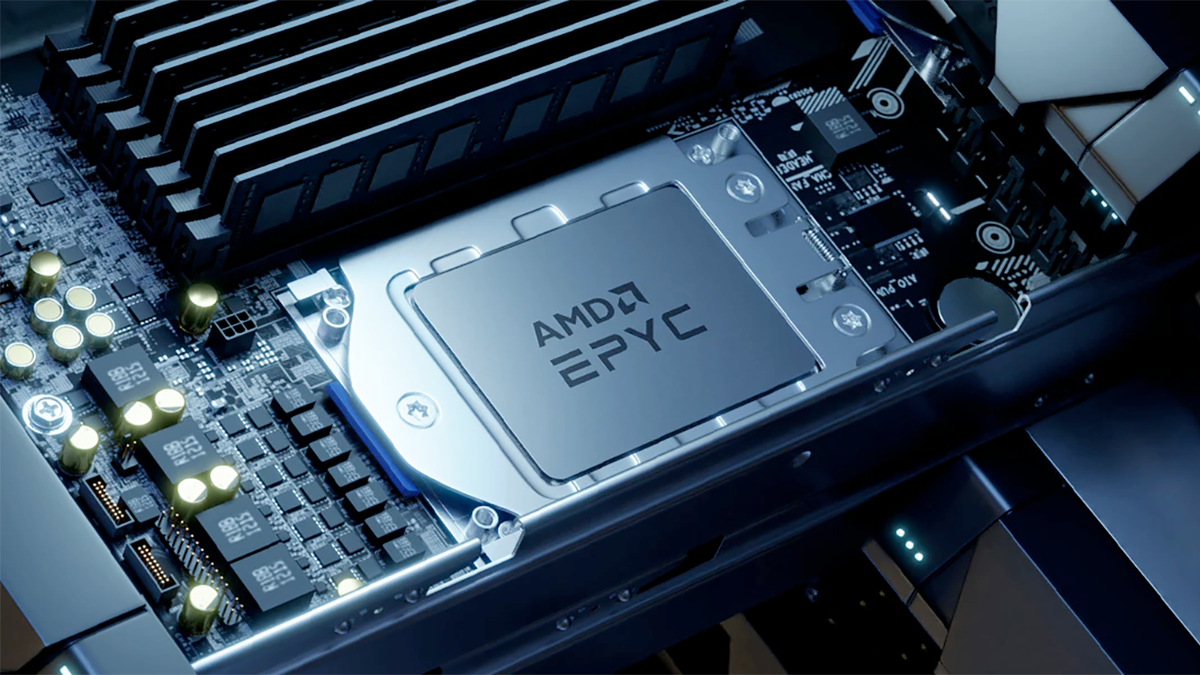
AMD 64-Core EPYC 'Milan-X' Listed For More Than $10,000
3D V-Cache for more cash
 www.tomshardware.com
Last edited:
tomatosummit
Member
But there's competition now. Especially in gaming which is where the x3d is targetted so I'd expect it to be priced between the 12700 and 12900.It might have to be that much to be worth it compared to selling more Milan-X to Cloud. Either way it's not going to be cheap. I do get the impression that they are hesitating a bit and I assume it's because of the price.
The 5800x3d feels more like a swansong for am4. Finishing off a very popular platform, giving the option of the best workstation cpu, best gaming cpu and in theory, the best/good value if the 5600 ever gets a price reduction. Be that options for current owners or new buyers.
As for the 12 and 16core missing cpus, I just don't think it's worth it. If these are workstation cpus, how many use cases are there for the extra cache? If you the person who uses them for work then you probably already have a 3950/5950 if you're not on hedt already and gamers aren't going to be buying what might possibly be a $1000 16core 3d cache cpu. The target market is incredibly small and it's a hard upsell where we don't know how much software gets any gain from extra cache apart from video games.
AMD themselves would probably advertise gains in the usual productivity stuff if it was there.
But there's competition now. Especially in gaming which is where the x3d is targetted so I'd expect it to be priced between the 12700 and 12900.
Alder Lake is selling so bad to DIY it's not really competition. That might be part of it too, that if Zen 3D was meant to be a response to Alder Lake but since Alder Lake is such a bust there might not be much of a need.
AMD wouldn’t want people with 59xx CPUs to by a 5800X3D. They want those people to buy zen 4 based CPUs later in the year with completely new boards and memory. There doesn’t seem to be much of a reason to sell 59xxX3D parts. Who would buy them with Zen 4 coming?But there's competition now. Especially in gaming which is where the x3d is targetted so I'd expect it to be priced between the 12700 and 12900.
The 5800x3d feels more like a swansong for am4. Finishing off a very popular platform, giving the option of the best workstation cpu, best gaming cpu and in theory, the best/good value if the 5600 ever gets a price reduction. Be that options for current owners or new buyers.
As for the 12 and 16core missing cpus, I just don't think it's worth it. If these are workstation cpus, how many use cases are there for the extra cache? If you the person who uses them for work then you probably already have a 3950/5950 if you're not on hedt already and gamers aren't going to be buying what might possibly be a $1000 16core 3d cache cpu. The target market is incredibly small and it's a hard upsell where we don't know how much software gets any gain from extra cache apart from video games.
AMD themselves would probably advertise gains in the usual productivity stuff if it was there.

Markfw
Moderator Emeritus, Elite Member
Not that I love Alder lake, but where did you see evidence it was selling so badly ?Alder Lake is selling so bad to DIY it's not really competition. That might be part of it too, that if Zen 3D was meant to be a response to Alder Lake but since Alder Lake is such a bust there might not be much of a need.

UsandThem
Elite Member
Intel will never release concrete numbers about that, but looking at large retailers like Amazon, it isn't selling as well as Ryzen or some previous Intel generation CPUs.Not that I love Alder lake, but where did you see evidence it was selling so badly ?
https://www.amazon.com/gp/bestsellers/pc/229189/ref=pd_zg_hrsr_pc
The lack of DDR5 (and the pricing for it from scalpers) isn't doing Alder Lake sales any favors.
The 12600K is such an attractive CPU price/performance wise, and it's sitting at #27 which is pretty shocking. In normal times, I imagine it would easily be a top #5 seller at Amazon.
I imagine once the locked CPUs (and cheaper chipset motherboard launches), they will sell much better. I mean they have nearly a year where AMD (outside of the 5800X3D) has nothing new on the horizon.
Combine that with low pickup rates for windows 11 that is needed to bring out the best with it & it ain't hard to see why AL has low adoption at this point in time.Intel will never release concrete numbers about that, but looking at large retailers like Amazon, it isn't selling as well as Ryzen or some previous Intel generation CPUs.
https://www.amazon.com/gp/bestsellers/pc/229189/ref=pd_zg_hrsr_pc
The lack of DDR5 (and the pricing for it from scalpers) isn't doing Alder Lake sales any favors.
The 12600K is such an attractive CPU price/performance wise, and it's sitting at #27 which is pretty shocking. In normal times, I imagine it would easily be a top #5 seller at Amazon.
I imagine once the locked CPUs (and cheaper chipset motherboard launches), they will sell much better. I mean they have nearly a year where AMD (outside of the 5800X3D) has nothing new on the horizon.

DrMrLordX
Lifer
If it performs like a 12900K they are going to price it at 12900K level. I trought we learned this lesson already.
But . . .
That would be a mistake. The 12900K would blow it out of the water in anything that can take advantage of the extra cores/threads.
Exactly. It isn't really competition for the 12900k. Not entirely. Yeah it games better, but as we have all seen, more than just gamers want these CPUs. Sadly the RTM miners may bid up the price on these things . . .
Also there will surely be Zen4 parts with Vcache which will widen the gap even more
Probably. It stands to reason there will be a Genoa-X. Whether or not Raphael-X ever makes it to AM5 remains to be seen.
I think it mainly exists a pipe-cleaner product to work out the logistics of stacked die products.
Milan-X already served that purpose, and has been shipping for a bit.
There is a bunch of different stacking tech, but I don’t think I have seen any tech where they polish down a chip for TSVs after dicing. There are a bunch of new packaging technologies that involve packaging steps applied at the wafer stage. They have chip on wafer (CoW) and wafer on wafer (WoW). WoW means they stack multiple wafer, bond them, and then dice. This might be used for something like HBM stacks. They would polish down the whole wafer, which is floppy like a piece of paper at the thicknesses required, apply micro-solder balls, stack multiple such wafers, bond, and then dice into die stacks. I haven’t researched the specifics that much, but I believe the X3D die are a CoW tech. I might be mixing some things up; there is a lot of new packaging tech. The cpu wafer would need to be polished down to something like 20 microns thickness from something like 700. I don’t think that would be possible or really doable for individual die at ~80 mm2. I assume that they dice the cache die wafer and place the chips on a carrier wafer (sometimes called a reconstituted wafer) with filler silicon also. They then bond the layers and dice the combined wafer. In this case there is no binning of cpu die before stacking. It may not be possible to test cache die either, even though they are diced. The cache die will have some built in redundancy, so the yield on cache is likely very high.Stacking before dicing has its own issues though. It is also probably more difficult than dicing first. For starters, I don't know how fragile the bonding is. Dicing is not a gentle process on the silicon and I imagine dicing after stacking introduces some risk in breaking the bond (or at least introducing stress that may cause cracks or other issues) though I have no experience in stacking, just speculating based upon having to do some conductive epoxy stuff in the past. The more difficult thing though would be that, as the way I understand it, AMD is actually stacking 4 pieces, not 2. There are two structural substrates on either side of the V-cache to level out the rest of the chip and provide low thermal resistance. So by stacking first you are wasting ~50% of the V-cache wafer with just blank space and then after dicing, you still have to carve out the sides of just the V-cache to place the substrates. Even if you could do this carving out precisely and without hurting either the V-cache or CCD, it would be a slow and expensive process. Perhaps the structural silicon is just blank space on the V-cache die, but that's not how AMD described it in their presentation and would still waste ~50% of the V-cache wafer on just blank silicon. That's a lot of waste of precious 7 nm silicon.
The Win 11 thing is a mill weight around Alderlakes neck.Combine that with low pickup rates for windows 11 that is needed to bring out the best with it & it ain't hard to see why AL has low adoption at this point in time.
People just do not want to Beta test Microsoft's latest software.
Hard to blame them.
igor_kavinski
Lifer
Maybe few years down the around, people might be able to buy them for ~$100 or so from Aliexpress...Sadly the RTM miners may bid up the price on these things . . .
I think the “can’t get memory” is more of an issue than “Microsoft is terrible” (to try to put it nicely). Microsoft has always been pretty bad; nothing new. I just went to Newegg looking for DDR5. There is maybe some of the lowest speed available for an expensive price and a few super high priced kits. It is mostly out of stock though, if I had the filter set correctly, so building a DDR5 based system will likely not be doable unless you want to spend a lot of money. I have to wonder if the 5800X3D is partially a stop gap due to memory availability for AM5. Even if they could launch Zen 4 right now, you would likely not be able to build a system.The Win 11 thing is a mill weight around Alderlakes neck.
People just do not want to Beta test Microsoft's latest software.
Hard to blame them.

Schmide
Diamond Member
The largest usecase for Threadripper non-pro is not because you need that many threads, it's because you need more PCIe.
and AM5 will have pci-e5 TB/USB4 and probably a marginal middle lane count between the threadripper pro and AM4.
There is a bunch of different stacking tech, but I don’t think I have seen any tech where they polish down a chip for TSVs after dicing. There are a bunch of new packaging technologies that involve packaging steps applied at the wafer stage. They have chip on wafer (CoW) and wafer on wafer (WoW). WoW means they stack multiple wafer, bond them, and then dice. This might be used for something like HBM stacks. They would polish down the whole wafer, which is floppy like a piece of paper at the thicknesses required, apply micro-solder balls, stack multiple such wafers, bond, and then dice into die stacks. I haven’t researched the specifics that much, but I believe the X3D die are a CoW tech. I might be mixing some things up; there is a lot of new packaging tech. The cpu wafer would need to be polished down to something like 20 microns thickness from something like 700. I don’t think that would be possible or really doable for individual die at ~80 mm2. I assume that they dice the cache die wafer and place the chips on a carrier wafer (sometimes called a reconstituted wafer) with filler silicon also. They then bond the layers and dice the combined wafer. In this case there is no binning of cpu die before stacking. It may not be possible to test cache die either, even though they are diced. The cache die will have some built in redundancy, so the yield on cache is likely very high.
CoW makes more sense in this situation. AMD also doesn't have to dice before binning at this point, I don't think (not a digital guy so not sure what all they do but I know it's possible). They can use wafer probers with some basic tests to know which dies are which corners before stacking or dicing. They would still thin the wafers though so all the dies would need to either go into a V-cache SKU at that point, or be stacked with just the structural die to make up for the thinned die but I doubt AMD wants to take that path at this point.
I don't see why the CPU would need to be thinned to 20 microns, that's approaching the thickness of what the chip has to have to support something with 9-10 metal layers and is less than what TSMC needs to get a 12 level stack. I don't know if AMD is already thinning their wafers from the ~700 micron default from the fab, but it is extremely rare for companies to go less than ~250 micron or so. Handling the dies becomes a real pain after that. That would mean AMD needs to thin to ~100 micron to fit another layer on top and have the same height as their standard die. I have a feeling they start with a thicker standard die though.
Not that I love Alder lake, but where did you see evidence it was selling so badly ?
Microcenter selling the 12700k for $300 (in store only as usual) this past holiday season.
As for the $600 price, its possible since they're claiming it is equal to a 12900k in gaming. I doubt it would sell well amongst gamers at that price but who knows these days. Lots of people said the Ryzen 5000 chip price increases were justified at release and people bought them up.
Well, since the upcoming 12900KS is already going to be at 5.5GHz, it's very likely that Raptor Lake will top that, plus whatever tweaks Intel may have done to the Golden Cove core, plus higher speeds DDR5 (which won't necessarily be an advantage but it being Intel's second time around, they very well should be optimizing the memory subsystem and cache as we speak.Zen 4 > Raptor Lake, that remains to be seen. We have no idea what tricks Intel might have up its sleeve. AMD will reign supreme in power efficiency but in pure bruteforce ST performance, Intel might surprise us again.
If Zen 4 is only 16 cores, then Intel should dominate the multithreaded tests, which in itself would be quite the feat, given where things stood only a few quarters ago. The real battle is going to be ST performance. With v-cache and a rumoured 25% ipc increase over Vermeer, Raphael should take the crown back, but I'm not writing off Intel yet. Raptor Lake should spot a bigger cache (due to additional 8 E-cores, plus a few other enhancements), and a humongous 5.6 - 5.8GHz single core speed! I'm quite excited to see how this match-up goes.

biostud
Lifer

AMD Talks Next-Gen AM5 'Ryzen 7000' Platform Longevity, Why Ryzen 7 5800X3D Is The Only V-Cache Option, How Radeon RX 6500 XT Tackles Miners & Hint at 8 GB Option
AMD's Gaming Chief, Frank Azor, talked about the next-generation Ryzen 'Zen 3 / Zen 4' CPU & Radeon GPU products coming to the market in 2022.
 wccftech.com
Transcript of Interview with AMD's Frank Azor.
Last edited:
I won't say AMD is in a debacle right now, but you must remember that some on this forum pegged the v-cache chips as an extension of the life of the AM4 platform, only for us to find out that all that noise was about a single 8 core 5800x3d, with 200-400MHz regressed clocks, I've read. This thing is going to be trading blows with the 5800x in certain workloads that don't benefit from the v-cache. That's not an upgrade, in anyway this forum has defined that term. As to whether a 59x0x3d will be released is yet to be seen. Color me underwhelmed.So releasing The Best Gaming CPU so they can claim they have the Gaming, Workstation and Server performance lead is a Debacle?
biostud
Lifer
I posted a transcript two posts above 🙂In this interview they say they are checking out the market for V-cache
it's still possible other SKU's are coming later.
Higher price a bit lower clock....not sure how people will react.
igor_kavinski
Lifer
Yeah but it would sell out nevertheless. People will keep the CPU until the mobos and RAM arrive. I know I would 😀 But AMD is not as ruthless as Intel.Even if they could launch Zen 4 right now, you would likely not be able to build a system.
igor_kavinski
Lifer
+++Agreed!Color me underwhelmed.
Man, it is so disappointing that AMD made us wait this long (and we don't even have a proper review yet! Several more weeks to go still) and then gave us something not that special. They should have just dropped the CPU on us without any formal announcement. At least then it would have been a somewhat pleasant surprise.
biostud
Lifer
+++Agreed!
Man, it is so disappointing that AMD made us wait this long (and we don't even have a proper review yet! Several more weeks to go still) and then gave us something not that special. They should have just dropped the CPU on us without any formal announcement. At least then it would have been a somewhat pleasant surprise.
At least it is better than when they released the 3600XT, 3800XT and 3900XT 😛
But yes it is a bit underwhelming, but on the other hand what could we expect this late in a product cycle? And lets see how well it does once it is released. What I find most underwhelming is the spring launch, I would have suspected a launch within weeks.

ryanjagtap
Member
This maybe due to low/slow stock build up. The die yield is good and matured, so most CCD are going to Milan-X.What I find most underwhelming is the spring launch, I would have suspected a launch within weeks.
TRENDING THREADS
-
 Discussion Zen 5 Speculation (EPYC Turin and Strix Point/Granite Ridge - Ryzen 9000)
- Started by DisEnchantment
- Replies: 25K
-
Discussion Intel Meteor, Arrow, Lunar & Panther Lakes + WCL Discussion Threads
- Started by Tigerick
- Replies: 25K
-
 Discussion Intel current and future Lakes & Rapids thread
- Started by TheF34RChannel
- Replies: 24K
-

-
