Must be where their Capex wentIntel already did all that back when they were cash rich (Swan years, 2018-2021).


Question Zen 6 Speculation Thread
Page 381 - Seeking answers? Join the AnandTech community: where nearly half-a-million members share solutions and discuss the latest tech.
You are using an out of date browser. It may not display this or other websites correctly.
You should upgrade or use an alternative browser.
You should upgrade or use an alternative browser.

adroc_thurston
Diamond Member
- Jul 2, 2023
- 8,857
- 11,592
- 106
Swan period was that and buybacks lmao.Must be where their Capex went
But that's opex.
Pat funneled it all into new hires and fab capex instead.

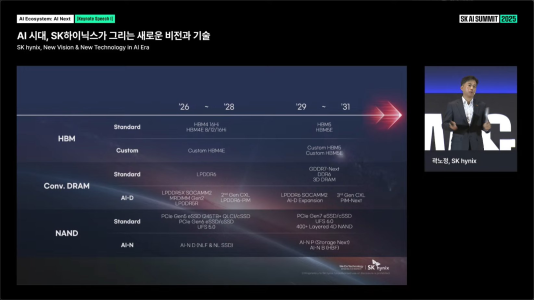
CAMM2 and LPCAMM2 ther was much talk. But who does use it?That's because they built their own shitty module standard. LPDDR6 will come in a JEDEC-specified CAMM2 modules.
JEDEC has already annouced this:
SOCAMM2 is on the road map of SK Hynix
Right, on paper it looks like OpenAI and Meta effectively get their AMD GPUs for free, but AMD's stock price would go up 3x to accomplish that ($200 to $600). I don't think shareholders would be disappointed in that outcome.
The stock price may go up as long as the bubble holds but the fundamental valuation of the company isn't helped by a transaction where Meta pays you $100 billion and you give them $100 billion in product AND $100 billion in stock. That's dilutive, you're giving away a piece of the company on the bet that they will keep buying more after they've passed the threshold.
OK probably not truly dilutive at the time of the transaction, as there are some financial thresholds for AMD, presumably the stock will have to have gone up by enough that it isn't dilutive then, but all bets are off after that date. If AMD's stock falls below that treshold later (which it 100% for sure would if the AI bubble bursts) then it is a bad deal. Lisa Su and her team don't care, they will make a lot of money off this from the stock bump it creates (due to their bonuses and stock options) even if that turns to be shorter term in nature.
The idea as I said is that Meta will continue to buy from AMD after that threshold has hit, and that will generate the value that makes this worth it in real terms rather than "stock price of the moment" terms. But what guarantee does AMD have that Meta continue with purchases once they hit $100 billion? Since you made that deal with them once, they might pause their purchases after hitting the $100 billion milestone and have their hand out for another stock deal. What do you do then? Or even if they fully intend to continue purchases what happens if six months after hitting the threshold the AI hypecycle has peaked, and everyone realizes they've massively overbuilt and purchases dry up?
Deals like this are just another "bubble is getting frothier" indicator to me.

Thunder 57
Diamond Member
- Aug 19, 2007
- 4,310
- 7,120
- 136
The stock price may go up as long as the bubble holds but the fundamental valuation of the company isn't helped by a transaction where Meta pays you $100 billion and you give them $100 billion in product AND $100 billion in stock. That's dilutive, you're giving away a piece of the company on the bet that they will keep buying more after they've passed the threshold.
OK probably not truly dilutive at the time of the transaction, as there are some financial thresholds for AMD, presumably the stock will have to have gone up by enough that it isn't dilutive then, but all bets are off after that date. If AMD's stock falls below that treshold later (which it 100% for sure would if the AI bubble bursts) then it is a bad deal. Lisa Su and her team don't care, they will make a lot of money off this from the stock bump it creates (due to their bonuses and stock options) even if that turns to be shorter term in nature.
The idea as I said is that Meta will continue to buy from AMD after that threshold has hit, and that will generate the value that makes this worth it in real terms rather than "stock price of the moment" terms. But what guarantee does AMD have that Meta continue with purchases once they hit $100 billion? Since you made that deal with them once, they might pause their purchases after hitting the $100 billion milestone and have their hand out for another stock deal. What do you do then? Or even if they fully intend to continue purchases what happens if six months after hitting the threshold the AI hypecycle has peaked, and everyone realizes they've massively overbuilt and purchases dry up?
Deals like this are just another "bubble is getting frothier" indicator to me.
Certainly seems to dilute the stock IMHO but I am far from an expert. AMD giving away so much stock (20%) in recent deals seems like a real liability. It isn't guaranteed of course but still seems unwise and I would expect better from Lisa. But, as you said, she will make well with this deal.

Saylick
Diamond Member
- Sep 10, 2012
- 4,167
- 9,731
- 136
All valid and fair points. Yes, there's nothing that guarantees that AMD stock stays elevated even after the last tranche is paid out and it would be catastrophic if that drop was initiated by a pop in the AI bubble. Like you say, all of these deals, irrespective of whoever is making them, are dependent on this AI fueled mania to continue long enough for the deals to reach fruition.The stock price may go up as long as the bubble holds but the fundamental valuation of the company isn't helped by a transaction where Meta pays you $100 billion and you give them $100 billion in product AND $100 billion in stock. That's dilutive, you're giving away a piece of the company on the bet that they will keep buying more after they've passed the threshold.
OK probably not truly dilutive at the time of the transaction, as there are some financial thresholds for AMD, presumably the stock will have to have gone up by enough that it isn't dilutive then, but all bets are off after that date. If AMD's stock falls below that treshold later (which it 100% for sure would if the AI bubble bursts) then it is a bad deal. Lisa Su and her team don't care, they will make a lot of money off this from the stock bump it creates (due to their bonuses and stock options) even if that turns to be shorter term in nature.
The idea as I said is that Meta will continue to buy from AMD after that threshold has hit, and that will generate the value that makes this worth it in real terms rather than "stock price of the moment" terms. But what guarantee does AMD have that Meta continue with purchases once they hit $100 billion? Since you made that deal with them once, they might pause their purchases after hitting the $100 billion milestone and have their hand out for another stock deal. What do you do then? Or even if they fully intend to continue purchases what happens if six months after hitting the threshold the AI hypecycle has peaked, and everyone realizes they've massively overbuilt and purchases dry up?
Deals like this are just another "bubble is getting frothier" indicator to me.
I certainly hope that Lisa doesn't follow in the footsteps of certain other CEOs who were once similarly respected for their accomplishments before going off the deep end... But just how much she's promoting AI internally with the same manner of talk used to convince investors is not a good sign.It isn't guaranteed of course but still seems unwise and I would expect better from Lisa. But, as you said, she will make well with this deal.
On the other hand, these deals are likely the only option AMD was able to negotiate in order to get their foot in the door. Otherwise regardless of how good their hardware is the great wall of NVIDIA software would remain intact.
Saylick
Diamond Member
- Sep 10, 2012
- 4,167
- 9,731
- 136
One thing I realized is that each tranche of stock warrants require both delivery and stock price milestones to be met in order to pay out for OpenAI/Meta. There is a scenario where AMD delivers 6MW of GPUs to OpenAI and/or Meta, thus satisfying the first criteria, but if the stock price fails to rise in concert with the purchases, thus not satisfying the second criteria, there's no dilution. In such a scenario, AMD gets paid for the GPUs without giving out a piece of the company. Of course, such a scenario where AMD records the revenue but the stock price fails to rise is unlikely, but just pointing out that the market can be irrational and it doesn't always price things according to the underlying fundamentals.
adroc_thurston
Diamond Member
- Jul 2, 2023
- 8,857
- 11,592
- 106
It's just a way for AMD to keep customers very loyal despite mountains of FCF NV is sitting on.One thing I realized is that each tranche of stock warrants require both delivery and stock price milestones to be met in order to pay out for OpenAI/Meta. There is a scenario where AMD delivers 6MW of GPUs to OpenAI and/or Meta, thus satisfying the first criteria, but if the stock price fails to rise in concert with the purchases, thus not satisfying the second criteria, there's no dilution. In such a scenario, AMD gets paid for the GPUs without giving out a piece of the company. Of course, such a scenario where AMD records the revenue but the stock price fails to rise is unlikely, but just pointing out that the market can be irrational and it doesn't always price things according to the underlying fundamentals.
OpenAI is unlikely to deploy beyond 1MW even, they're hardly solvent at this point.

RnR_au
Platinum Member
- Jun 6, 2021
- 2,927
- 6,535
- 136
Anthropic, Google and local AI are eating their lunch. Its also why OpenAI have talked about ads and an adults only model.OpenAI is unlikely to deploy beyond 1MW even, they're hardly solvent at this point.
It's just a way for AMD to keep customers very loyal despite mountains of FCF NV is sitting on.
OpenAI is unlikely to deploy beyond 1MW even, they're hardly solvent at this point.
Here is an interesting possible outcome:
Up through 2026, CPU server, client etc. paid for OpEx, such as R+D etc for the data center GPU division. That put a cap on investment that could go into client etc.
Starting Q4 2026, datacenter GPU can more than pay for their own OpEx. So perhaps, the CPU and client come out of starvation mode.
adroc_thurston
Diamond Member
- Jul 2, 2023
- 8,857
- 11,592
- 106
starvation mode?So perhaps, the CPU and client come out of starvation mode.
adroc_thurston
Diamond Member
- Jul 2, 2023
- 8,857
- 11,592
- 106

MadRat
Lifer
- Oct 14, 1999
- 12,014
- 321
- 126
Why use moly interconnects for adding traces in the CPU's package?MoP is nightmarishly margin dilutive and is never ever at AMD.
Forget about iti.
adroc_thurston
Diamond Member
- Jul 2, 2023
- 8,857
- 11,592
- 106
?Why use moly interconnects for adding traces in the CPU's package?
MadRat
Lifer
- Oct 14, 1999
- 12,014
- 321
- 126


coercitiv
Diamond Member
- Jan 24, 2014
- 7,533
- 18,052
- 136
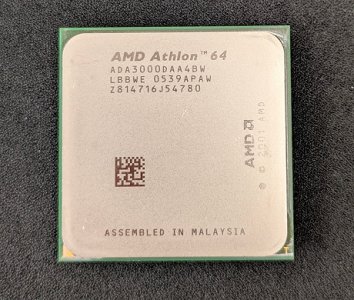
Ye I've brought that up before - I think that was the gen just before my first AMD chip, the Athlon X2.
In my (deeply negative) PoV it seems like AMD still desperately needs somebody to buy their AI accelerators at meaningful scale. One would thought that a viable AI product would sell itself at times of an AI craze...Certainly seems to dilute the stock IMHO but I am far from an expert. AMD giving away so much stock (20%) in recent deals seems like a real liability. It isn't guaranteed of course but still seems unwise and I would expect better from Lisa. But, as you said, she will make well with this deal.
Well, their earnings show they do sell. But the market expects them to hockey stick like Nvidia did. They're not Nvidia. Dumb expectations, dumb deals. It's the AI craze.In my (deeply negative) PoV it seems like AMD still desperately needs somebody to buy their AI accelerators at meaningful scale. One would thought that a viable AI product would sell itself at times of an AI craze...
No product is selling itself.In my (deeply negative) PoV it seems like AMD still desperately needs somebody to buy their AI accelerators at meaningful scale. One would thought that a viable AI product would sell itself at times of an AI craze...
coercitiv
Diamond Member
- Jan 24, 2014
- 7,533
- 18,052
- 136
IMHO the big datacenter spenders probably tried to use AMD and others as bargaining chips to get sweeter deals from Nvidia (better prices, volumes etc). This might have backfired because Nvidia is very... vindictive, so now the likes of Meta and OpenAi have to make it work with AMD while their Nvidia chip allocation is "suboptimal".In my (deeply negative) PoV it seems like AMD still desperately needs somebody to buy their AI accelerators at meaningful scale. One would thought that a viable AI product would sell itself at times of an AI craze...

Nvidia is fortunate to be in the position where they have buyers lined up.IMHO the big datacenter spenders probably tried to use AMD and others as bargaining chips to get sweeter deals from Nvidia (better prices, volumes etc). This might have backfired because Nvidia is very... vindictive, so now the likes of Meta and OpenAi have to make it work with AMD while their Nvidia chip allocation is "suboptimal".
Nvidia earnings and outlook make it look like AMD is stuck in the mud.
TRENDING THREADS
-
 Discussion Zen 5 Speculation (EPYC Turin and Strix Point/Granite Ridge - Ryzen 9000)
- Started by DisEnchantment
- Replies: 25K
-
Discussion Intel Meteor, Arrow, Lunar & Panther Lakes + WCL Discussion Threads
- Started by Tigerick
- Replies: 24K
-
 Discussion Intel current and future Lakes & Rapids thread
- Started by TheF34RChannel
- Replies: 24K
-

-


AnandTech is part of Future plc, an international media group and leading digital publisher. Visit our corporate site.
© Future Publishing Limited Quay House, The Ambury, Bath BA1 1UA. All rights reserved. England and Wales company registration number 2008885.
 Facebook
 Twitter