DisEnchantment
Golden Member
Speculate at will
Last edited:


Won't help when this is what Intel thinks (yes this is from an official Intel slide)View attachment 90771
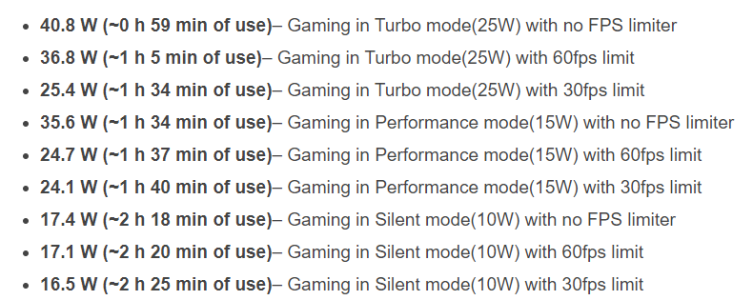
The Core Ultra 7 155H on average was consuming 24 Watts to the Ryzen 7 7840U at a 25.8 Watt average.
It was deliberate to show that Intel did make some progress, just on the wrong tile 😀That's definitely the wrong thread, Igor.
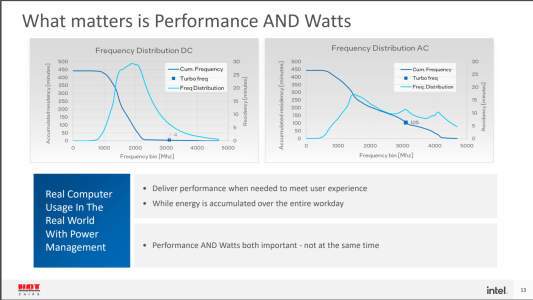
Ah I see. We have been wrong for years:
At least they made some progress which to be honest, is surprising. Guess all those billions in R&D for the GPU were not spent in vain after all.
Good point. Though credit is still due to Intel for not royally effing this up too 😀That s TSMC who made some progress since the GPU is fabbed in their plants...

Not so fast. The AMD laptop was using so-dimm 5600 speed ram. The Intel unit was using LPDDR5x @6400 speed. The AMD laptop might even be using a single ram stick - I can't tell from the review?
At least they made some progress which to be honest, is surprising. Guess all those billions in R&D for the GPU were not spent in vain after all.

I don't understand why laptops use LPDDR5X but clock it at 6400. Why not use plain LPDDR5-6400 ?Not so fast. The AMD laptop was using so-dimm 5600 speed ram. The Intel unit was using LPDDR5x @6400 speed.
LPDDR doesn't come in sticks.The AMD laptop might even be using a single ram stick - I can't tell from the review?
It's notable because MTL tGPU is made on N5, whereas Radeon 780M is on N4.That s TSMC who made some progress since the GPU is fabbed in their plants...
The AMD laptop is using so-dimm ram, not LPDDR.LPDDR doesn't come in sticks.
Note the gaming benchmarks at notebookcheck;AMD has a node advantage, yet Intel beat them?
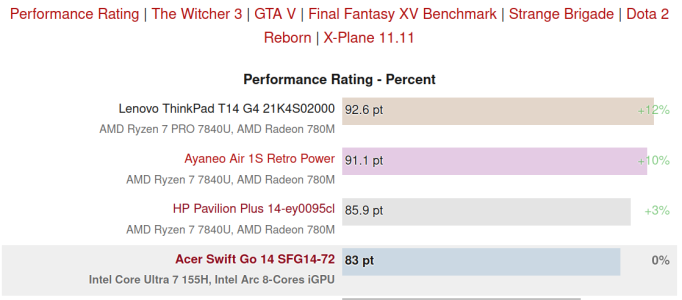
1024 shaders are not just for show.
At least they made some progress which to be honest, is surprising. Guess all those billions in R&D for the GPU were not spent in vain after all.
Why wouldn't It? It will have 33% more CU, so for the same perf you need lower clocks.It was deliberate to show that Intel did make some progress, just on the wrong tile 😀
It will be interesting to see if Strix Point will beat MTL's GPU in power consumption.
N5 and N4 are not considered exactly as a full node change, and there are a lot of things to consider, such as area and power budget dedicated to the GPU, number of units, and so on. That and considering that "beating" the 780M outside synthetic benchmarks is debatable if one considers the whole picture.It's notable because MTL tGPU is made on N5, whereas Radeon 780M is on N4.
AMD has a node advantage, yet Intel beat them?
I don't understand why laptops use LPDDR5X but clock it at 6400. Why not use plain LPDDR5-6400 ?
Max speed of LPDDR5 is 6400 and max speed of LPDDR5X is 8533. What is the point of using LPDDR5X if you are running it at LPDDR5's speeds?

Not entirely correct.It's in the name. LPDDR uses significantly less power at the same speeds, and especially so when idle. Also I think LPDDR5 is currently cheaper than DDR5?
(edit: sorry, misread your post, should have drank coffee first)
M2 Pro actually has only two packages, but each size is x128 bit.Not entirely correct.
8 chip memory subsystem for 256 bit bus of GDDR memory uses 40W of power.
4 chip memory subsystem for 256 bit bus of LPDDR5 uses 20W of power, per power draw of Apple M2 Pro chips.
Each memory package uses around 5W of power.
If you use 64 bit memory packages, you will cut the power draw in half, compared to 32 bit memory packages, for the same bandwidth.
Asus Ally has 4 memory packages for a total of 16GB RAM. With your logic, just this memory would consume 20W of power and we know this is nonsense.Not entirely correct.
8 chip memory subsystem for 256 bit bus of GDDR memory uses 40W of power.
4 chip memory subsystem for 256 bit bus of LPDDR5 uses 20W of power, per power draw of Apple M2 Pro chips.
Each memory package uses around 5W of power.
If you use 64 bit memory packages, you will cut the power draw in half, compared to 32 bit memory packages, for the same bandwidth.
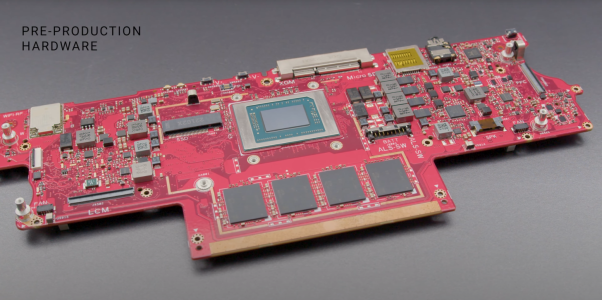
M2 Pro actually has only two packages, but each size is x128 bit.
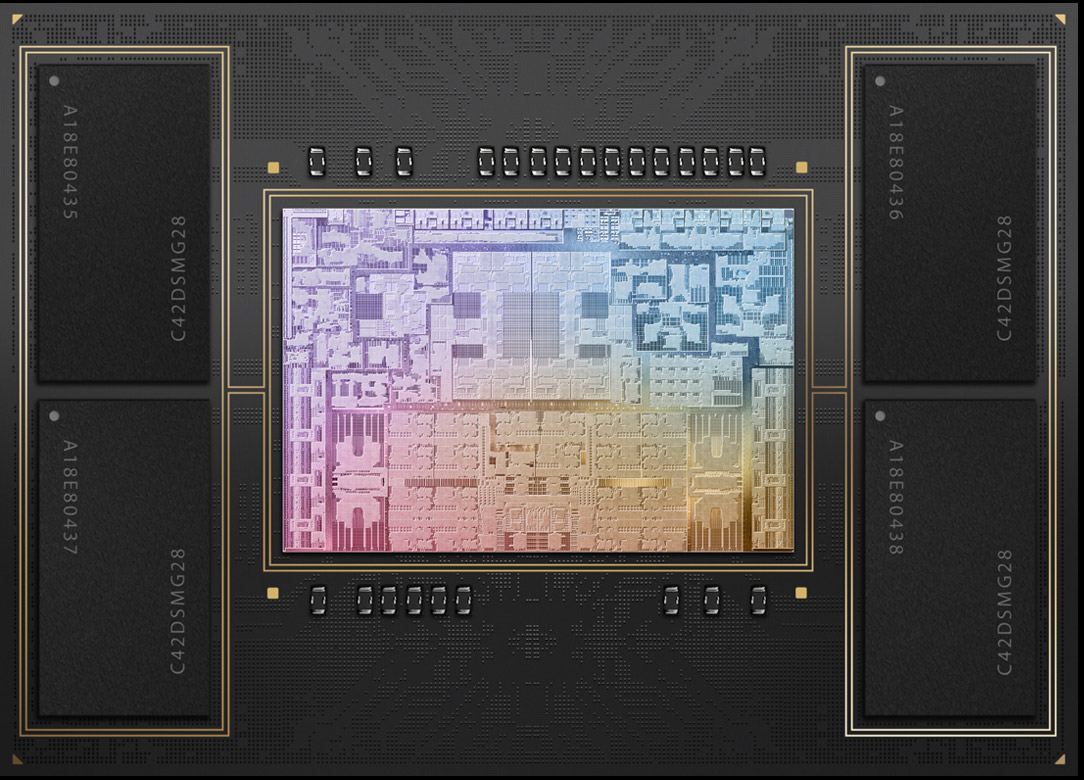
Thats how much power memory uses.Asus Ally has 4 memory packages for a total of 16GB RAM. With your logic, just this memory would consume 20W of power and we know this is nonsense.
View attachment 90799
If what you said was true, then Asus would use only 2 modules to halve memory consumption.
Because It's BS, simple as that.Thats how much power memory uses.
Why is it surpising?