It should just say Xcode 16.1 or just apple clang 16.1, don’t know why Michael adds the misleading stuff
Because he doesn't care about the fine details, but scale and automation, that is why when you scrutinize the benchmarks from phoronix you will see all kinds of inconsistencies

I guess on MacOS simply gcc aliases clang for convenience.
I doubt changes for Zen5/ARL would be in GCC 13 he would have been better off using a LLVM Based compiler for doing testing of around the same timeframe would have been a more fair comparison and if he is using Apple propritery compiler than Intel/AMD might as well use their compiler toolchain.
Support for Zen5 in mainstream LLVM is still a joke. It's copy paste of Zen4 backend which itself only recently got fixed and was a copy paste of Zen3. AMD is dropping a ball there.
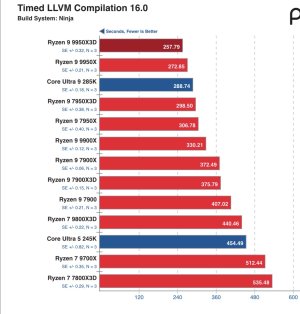
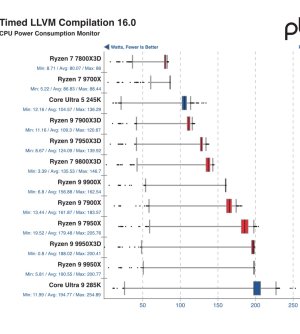
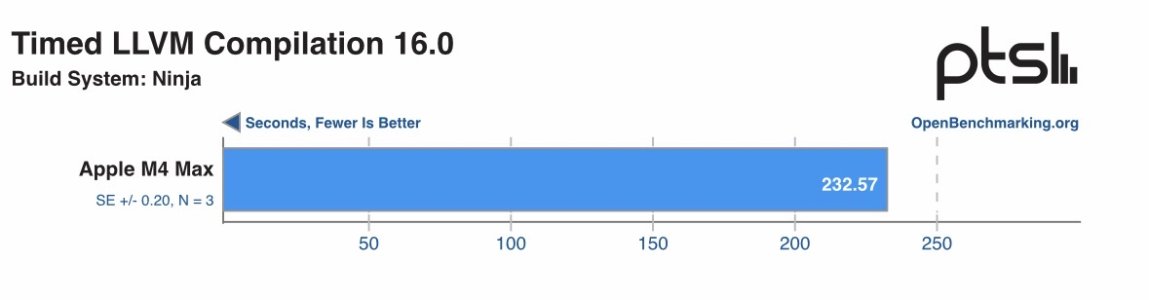
Michael didn’t test FFMPEG compilation in this review but we can compare LLVM compilation.
I’m going to test my own 9800X3D on LLVM and see the time difference.
Be sure to build the same target as by default each will compile for the same architecture it's running on, which will trigger different code/data paths in the compiler
Make sure to match the same options, and depending on the platform use the right compiler package
[As in my table, depending on the package source there was large diff between 18.1.8 clang versions].






 Discussion Zen 5 Speculation (EPYC Turin and Strix Point/Granite Ridge - Ryzen 9000)
 Discussion Intel current and future Lakes & Rapids thread


 Facebook
 Twitter