Will Nvidia's 6xx series, be Cypress Vs Fermi again?

Page 2 - Seeking answers? Join the AnandTech community: where nearly half-a-million members share solutions and discuss the latest tech.

notty22

Diamond Member
Jan 1, 2010
3,375
0
0
Lacks data from before Cypress launched (Q3 2009) and I can't find it either. AMD's desktop market share went from x% to 44,5% before Fermi came out, can't say it was or wasn't a significant jump without knowing x.
Synopsis fail. You challenged Nvidia's market share, and Fermi's role in it.
You build a compelling product and it will sell. One company will always launch before the other in a 2 horse race.
Nvidia launched their top end re-fresh in time for Holiday shopping 2010 and it was well received. AMD had problems, delayed Cayman to right before Christmas.
Its funny how this is forgotten, and fans want to keep pointing back to one AMD successful moment, which was back in 2009.
Cayman Officially Delayed, AMD Explains Why
 

Borealis7

Platinum Member
Oct 19, 2006
2,901
205
106
the 5800 series had severe availability issues when it first launched due to 40nm process problems and AMD still produced and rose to the top for about 9 months.
delay and yield issues don't necessarily mean a bad product.
 

Grooveriding

Diamond Member
Dec 25, 2008
9,147
1,330
126
Synopsis fail. You challenged Nvidia's market share, and Fermi's role in it.
You build a compelling product and it will sell. One company will always launch before the other in a 2 horse race.
Nvidia launched their top end re-fresh in time for Holiday shopping 2010 and it was well received. AMD had problems, delayed Cayman to right before Christmas.
Its funny how this is forgotten, and fans want to keep pointing back to one AMD successful moment, which was back in 2009.
Cayman Officially Delayed, AMD Explains Why

No one really cares about refreshes, that's why it's not being mentioned. Even those those cards were given a new series number, they only brought 15% more performance over their predecessors.

The 5870 crushed the GTX 285 and NV had nothing competitive for 6 months. In the past they have always released close to one another. I distinctly remember NV trying to rape customers charging $650 for a GTX 280 and a month later the 4870 came out forcing NV to slash the price by 50%. EVGA was issuing $300 refunds to customers who paid the $650 for the 280 at release.

If it's another repeat with 7970 being the sole 28nm for a good 6 months, it will be another NV failure.
 

RussianSensation

Elite Member
Sep 5, 2003
19,458
765
126
[Citation needed]

Q1 2010 = NV desktop discrete = 64.8%
Q2 2010 = NV desktop discrete = 55.2%
Q3 2010 = NV destkop discrete = 58.8%
Q1 2011 (May 2011 data) = NV desktop discrete = 59.4%

But if you look closely at Q1 2010 to Q2 2010, AMD has only increased its desktop GPU shipments from 6.85 million to 6.9 million units. The entire desktop GPU market has collapsed from 19.61 million to 15.5 million units. I can't easily explain what caused the collapse of the desktop GPU market from Q1 2010 to Q2 2010 and why NV's market share fell so much in that Quarter without doing additional research. But you can see that despite AMD launching Cypress in Q3 2009, NV still has a 59% market share in the discrete GPU space and has been gaining since Q2 2010.

Sure they launched late out of the gate, but since they had competitive products, it didn't really hurt the company that much on the desktop GPU space. AMD has been dominating the mobile GPU space though. Even if Fermi launched at the same time as Cypress, I doubt it'd be able to upset AMD's dominance in the mobile segment anyway since Fermi offerings aren't that great in that segment to begin with.

You do know, that the strong market share has nothing to do with Fermi, right? I mean, you can't possibly be saying that it won't hurt Nvidia quite badly to be trailing AMD in release of a new gen for the second time in a row?

Of course the strong market share has everything to do with Fermi. That's the main product driving their entire range from Q2 2010 to Q1 2011 today - 59% market share in the discrete desktop GPU segment.

And missing out on the launch of several games, that might actually stress the hardware without having "cry" and "sis" in the name? AND missing out on the holiday season?

You think in the last 10-15 years NV and AMD have launched each new generation 1 month apart? We have witnessed 'spread-out' launches for a decade. It's not unusual for the 2 firms to launch products 1-6 months apart from each other and it isn't the end of the world for either when this happens. How much market share does the $350-500 discrete GPU market command in total?

You think 5 million people who buy desktop GPUs are sitting there and waiting to drop this kind of money on HD7000 series when BF3 launches? AMD would need to launch 10+ graphics cards from $50-500 all at once in September-October timeframe to even make a dent in the marketplace. We don't have any information even on what HD7000 series are going to be launching in the fall (are they going to postpone mid-range or low end to late Q4 2011/Q1 2012? We don't have any info. Even if AMD launches every product line by Q4 2011, this gives NV plenty of time to launch Kepler series in Q1 2012 and still be competitive. As you have seen in recent history, modern GPUs now have a lifecycle of about 15-18 months. Therefore, even if you launch 3 months later, you still have at least 15 months of sales on that architecture.
 
Last edited:

notty22

Diamond Member
Jan 1, 2010
3,375
0
0
No one really cares about refreshes, that's why it's not being mentioned. Even those those cards were given a new series number, they only brought 15% more performance over their predecessors.

The 5870 crushed the GTX 285 and NV had nothing competitive for 6 months. In the past they have always released close to one another. I distinctly remember NV trying to rape customers charging $650 for a GTX 280 and a month later the 4870 came out forcing NV to slash the price by 50%. EVGA was issuing $300 refunds to customers who paid the $650 for the 280 at release.

If it's another repeat with 7970 being the sole 28nm for a good 6 months, it will be another NV failure.
Maybe in your mind. The majority of buyers see the gtx 480- 580 as a new generation of cards. Just like 5870 to 6970. One company may have changed more architecturally (even with sideways results) than the other, but that is all transparent to most who buy them. They understand performance. And the reviewers perception of value.
 

Saico

Member
Jul 6, 2011
53
0
0
Q1 2010 = NV desktop discrete = 64.8%
Q2 2010 = NV desktop discrete = 55.2%
Q3 2010 = NV destkop discrete = 58.8%
Q1 2011 (May 2011 data) = NV desktop discrete = 59.4%
Can you please use JPR research numbers instead? Because Mercury was "asked" by Nvidia to do this research. And they are not as trusted as JPR.

Fermi launch made a huge dent on Nvidia's reputation and that certainly affected sales. NV marketchasre is still strong because people still use their 8xxx-9xxx-2xx cards. Try comparing number of cards sold after radeon 5xxx launched. I recall AMD reported hitting 35 million dx11 cards mark and that was pretty long time ago. I don't know Nvidia's numbers though.
 

notty22

Diamond Member
Jan 1, 2010
3,375
0
0
Can you please use JPR research numbers instead? Because Mercury was "asked" by Nvidia to do this research. And they are not as trusted as JPR.

Fermi launch made a huge dent on Nvidia's reputation and that certainly affected sales. NV marketchasre is still strong because people still use their 8xxx-9xxx-2xx cards. Try comparing number of cards sold after radeon 5xxx launched. I recall AMD reported hitting 35 million dx11 cards mark and that was pretty long time ago. I don't know Nvidia's numbers though.

Those %'s don't reflect what consumers are using, with a margin of error, they reflect what the companies have orders for and are shipping.

Small growth in graphics card market in Q1

(add-in boards)

Shipments of graphics cards for Q1 reached 19.03 million units, up 1% from 18.84 million units in the last quarter of 2010, although they did not exceed shipment levels from the same quarter last year.
For the full year, JPR now forecasts that the total market will be worth $19.8 billion, down 4.5% from 2010. The company revised this forecast downwards from its previously given figure, as its says that although unit shipments will be up, there is a gradual decline in average selling price.
The company said that shipments in Q1 were in line with normal market trends with regard to seasonality in the quarter, but was lower year-to-year than 2010. The modest growth from Q4 2010 to Q1 2011 should still be seen as positive indicateor, however, as Q4 2010 did not conform to the normal seasonal cycle, but was down slightly compared to previous years.
In terms of units shipped, nVidia was the market leader in Q1, with 59.12% market share. nVidia unit shipments decreased by 2% from Q4, and its market share decline by 2.71%, but the company continued to lead, boosted by double attach (customers buying additional cards to upgrade PCs that already have a GPU), and GPU-compute/CUDA sales.
 

AnandThenMan

Diamond Member
Nov 11, 2004
3,991
627
126
AMD saw both market share and shipment volumes increase in the quarter, up 4.37% and 5.7% respectively from Q4 2010, giving it a total of 40.46% market share. On a year-to-year basis AMD increased its market share by 16.8%.
Nvidia should be very concerned with this.
 

Grooveriding

Diamond Member
Dec 25, 2008
9,147
1,330
126
Maybe in your mind. The majority of buyers see the gtx 480- 580 as a new generation of cards. Just like 5870 to 6970. One company may have changed more architecturally (even with sideways results) than the other, but that is all transparent to most who buy them. They understand performance. And the reviewers perception of value.

I doubt that. The majority of buyers of the top end cards are fairly well informed I would guess, sure there are some who have no idea and buy what a friend told them. But I think most buyers know a gtx 580 is a gtx 480 with 32 more shaders.

This is all a complete waste of time though. Your point of trying to bring up Cayman being delayed as the same as the GTX 480 taking close to 7 months to come out after the 5870 and still having some clear flaws is totally off-base.

It's basically accepted that the gtx 580 is what the gtx 480 was supposed to be. It's a fixed gtx 480, rebadged as a 580.
 

RussianSensation

Elite Member
Sep 5, 2003
19,458
765
126
Can you please use JPR research numbers instead? Because Mercury was "asked" by Nvidia to do this research. And they are not as trusted as JPR.

Fermi launch made a huge dent on Nvidia's reputation and that certainly affected sales. NV marketchasre is still strong because people still use their 8xxx-9xxx-2xx cards. Try comparing number of cards sold after radeon 5xxx launched. I recall AMD reported hitting 35 million dx11 cards mark and that was pretty long time ago. I don't know Nvidia's numbers though.

The numbers I provided reflect new sales only. I am pretty sure Q3/Q4 2010 wouldn't even have 8800/9800 series as they were discontinued by then. The same is true for most 2xx series. Regardless, only a small fraction of customers care about the latest and greatest. So if NV was able to sell older cards, that's the point. That's why even when HD7000/Kepler launch, HD6000 and GTX4xx/5xx will continue to sell around the world. This is exactly why if HD7000 series launches by 2-3 months earlier, for desktop discrete GPUs, this won't have a huge impact on market share. These type of things only create fanboism on the Internet.

The most important takeaway is that the entire desktop discrete GPU market is shrinking. That's far more important to me. I could care less who has more market share. Clearly less and less people are interested in desktop GPUs. This doesn't look so great for PC desktop gaming. But it makes no logical sense to assume that if Kepler is late by a Quarter, NV is doomed. Like I said it takes 15-18 months for 1 generation to pass. So being late by a Quarter isn't that big of a deal (except for Enthusiasts who upgrade every 6 months).
 
Last edited:

Chinoman

Senior member
Jan 17, 2005
336
0
76
The most important takeaway is that the entire desktop discrete GPU market is shrinking.

Exactly. Nvidia's offerings in the mobile department are slipping quickly. Take a look at Apple and their Macbook line. The extremely slim aluminum designs require that you use the absolute most efficient bang per watt cards or else you'll have to sacrifice performance.

I also like where AMD is headed with their Fusion chips. I consider Llano to be a pipecleaner for the "real deal" aka Trinity. From there on it's only a matter of time before you start seeing mobile designs utilizing heterogeneous crossfire instead of a clunky optimus-like solution.
 

Skurge

Diamond Member
Aug 17, 2009
5,195
1
71
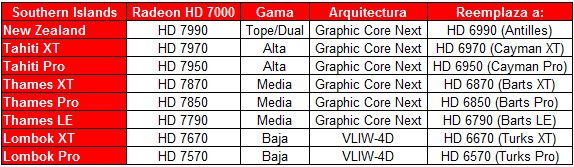
Looks like the 7 series will use GCN if this slide is to be balieved.
southernislands-nc.jpg
 

Saico

Member
Jul 6, 2011
53
0
0
Looks like the 7 series will use GCN if this slide is to be balieved.

southernislands-nc.jpg
IMHO that's a fake. Because 7790 is reserved for Trinity x 7670 Hybrid Crossfire, both VLIW-4D not GCN. But 7xxx series will have GCN-based cards, that's official word from AMD.
 

RussianSensation

Elite Member
Sep 5, 2003
19,458
765
126
Wow, that is a reality check for th nV doom-and-gloomers.

You also know that NV sells Tegra, Tesla and other variations of their prosumer products. As such, claiming "their years are numbered" is laughable. But that's besides the point. In overall discrete market share, it is true that AMD did catch up. However, that mostly came from their dominance on the mobile segment. Since on our forum we mostly discuss desktop discrete GPUs, it's a reality check for people that keep insinuating that the overall discrete market share is synonymous with desktop discrete market share, which it isn't.


