• We’re currently investigating an issue related to the forum theme and styling that is impacting page layout and visual formatting. The problem has been identified, and we are actively working on a resolution. There is no impact to user data or functionality, this is strictly a front-end display issue. We’ll post an update once the fix has been deployed. Thanks for your patience while we get this sorted.

Why Does Nvidia use a Heatspreader on High End Chips but AMD does not?

n0x1ous

Platinum Member
Im sure everyone knows that Nvidia uses them on the top end chips, but maybe someone with more knowledge on the electrical end of things can explain the exact reasoning.

For example, G80, GT200, GF100/110 (GF104/114 too) use the heat-spreader whereas their smaller G92, GF106,116 and smaller do not.

AMD doesn't use them on any of their chips.

Obviously the size of the chip is probably a factor as they are used on the big chips, but not the small ones and AMD chips are smaller.

However, does the heat spreader dimensions directly correlate to die size. I thought that if you looked at a CPU die for example, that the heatspreader itself is actually bigger than the processor die?

So is it possible that Nvidia's high end chips are smaller than the heatspreader allows us to see? I mean the point of it is to help dissipate and spread heat evenly away from the chip so if the actual die was as big as the heat-spreader wouldn't the heat-spreader just be getting in the way of the heatsink being able to cool it off instead of helping?

Thoughts?
 
You don't measure nVidia chips with the heatspreader still on - that's why it's sometimes difficult to get an exact measurement of nvidia chips because if you remove the heatspreader you have clearly interfered with the card.
 
You don't measure nVidia chips with the heatspreader still on - that's why it's sometimes difficult to get an exact measurement of nvidia chips because if you remove the heatspreader you have clearly interfered with the card.

So the 520mm for GF100/110 is based on someone removing the heatspreader? I have never seen a picture of an actual GPU die from Nv like this. Sure they put out the close up picture of it, but not of it actually sitting there on a card. Would help to give some perspective......
 
I've wondered about this too. It's also much easier to replace coolers since you know the IHS protects the die, but then again I haven't bought a card that needed a 3rd party cooler in a long time.
 
pulling off a heatspreader is hard work, to do so, I assume they pull the chips out of the nvidia cards first.

The only real reason for it is to measure the die space, taken up by the chips (and yes they get rid of the heatspreader, when they measure dies)


Why does Nvidia use a heatspreader, and AMD not?
No idea (/.\).


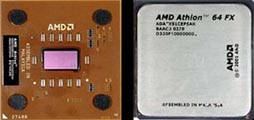
its not all AMD cpus either that use it:
Athlon64_headspreader.jpg


Why do they do it with 1, and not another? I guess its a price vs benefit situation that determines it though.
 
Last edited:
Interesting. Thank you for those who have responded so far. Does anyone have a picture of an Nvidia chip with heatspreader removed? for clarification: not the stock die image that Nvidia press sends out, but the actualy chip itself with heatspreader removed.
 
Interesting. Thank you for those who have responded so far. Does anyone have a picture of an Nvidia chip with heatspreader removed? for clarification: not the stock die image that Nvidia press sends out, but the actualy chip itself with heatspreader removed.

Some adventurous people have done it before. I believe the most recent I saw was a GTX 480 with it removed. I'll try and find the thread, believe it was on xtremesystems.

The consensus is that it's not worth it at all, and there is a fair chance of damaging the die when you try to remove the heatspreader.
 
Imo, its both form and function.
It helps dissipate heat, give more surface area which can possibly give more consistent cooler mounting. The 'high end' chips are also used in the workstation cards.
similar to the why behind these
images
 
It's "safer" with the heatspreader too, especially when changing coolers. I watercool but prefer fewer interfaces so I don't like the heatspreader myself.
 

Thank You, that was exactly what I wanted to see and thanks to Groove if you find one as well. Much smaller than the spreader and totally changes my perception of the chips.

Even though deep down I thought they must be smaller, when you look at them vs AMD chips, I would always say D***! that thing is big, but this gives a little better perspective on things.

Anyone else with other images or information on this topic, please continue to post for all of our benefits.
 
Good One! Now I know what my 260's look like under the hood.

How about an Nvidia one with a Cayman or Cypress in the same shot?
 
Thank You, that was exactly what I wanted to see and thanks to Groove if you find one as well. Much smaller than the spreader and totally changes my perception of the chips.

Even though deep down I thought they must be smaller, when you look at them vs AMD chips, I would always say D***! that thing is big, but this gives a little better perspective on things.

Anyone else with other images or information on this topic, please continue to post for all of our benefits.


If you think about it though (compaireing performance from both camps):

460 1gb (332mm^2) vs 6850 (255mm^2) (differnce of 31&#37😉
470 1gb (529mm^2) vs 6870 (255mm^2) (differnce of 107%)

570 (520mm^2) vs 6970 (389mm^2) (differnce of 34%)


Id say on avg. AMD chips are like ~30% smaller than Nvidia counterparts (in performance).


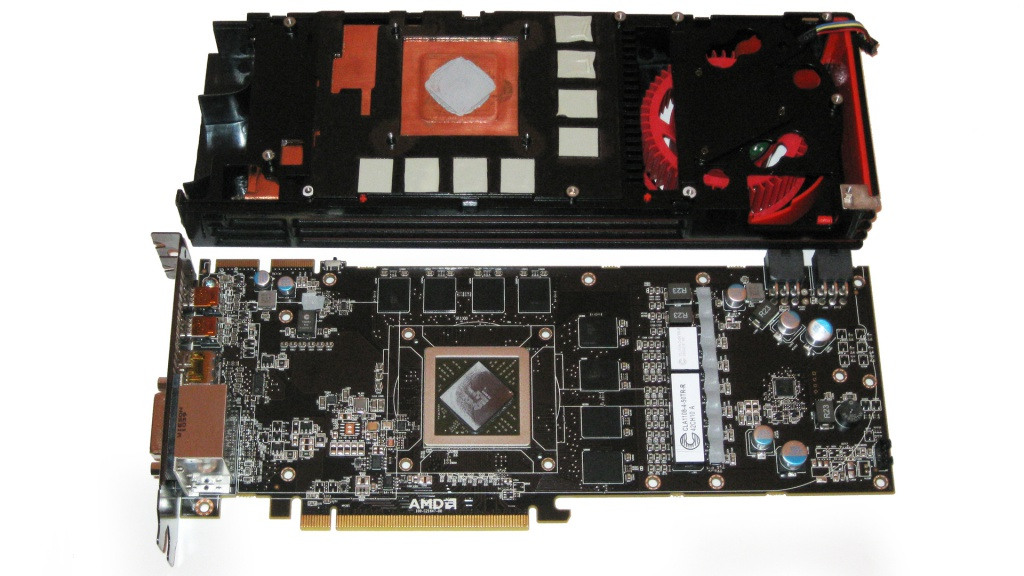
OP here is a pic of a 6970:
cooler%20off.jpg
 
Last edited:
If you think about it though (compaireing performance from both camps):

460 1gb (332mm^2) vs 6850 (255mm^2) (differnce of 31&#37😉
470 1gb (529mm^2) vs 6870 (255mm^2) (differnce of 107%)

570 (520mm^2) vs 6970 (389mm^2) (differnce of 34%)


Id say on avg. AMD chips are like ~30% smaller than Nvidia counterparts (in performance).


OP here is a pic of a 6970:
cooler%20off.jpg

Thank You. This picture brings up a couple of interesting things to my eye. First is that based on the square around the Cayman die, if AMD used a heatspreader it would make that "package" similar sized to Nvidia's "package (heatspreader + die) "

Secondly, do we know why AMD places their die at a slant or "diagonally" if you will? Also, have they always been diagonal like this or is that a more recent development?
 
Last edited:
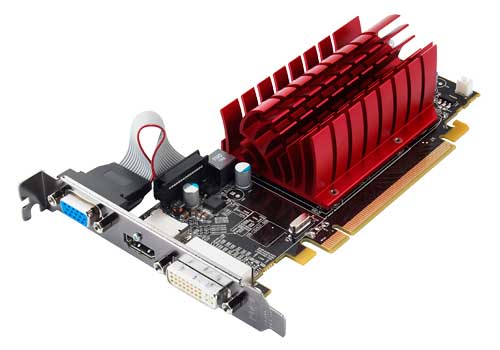
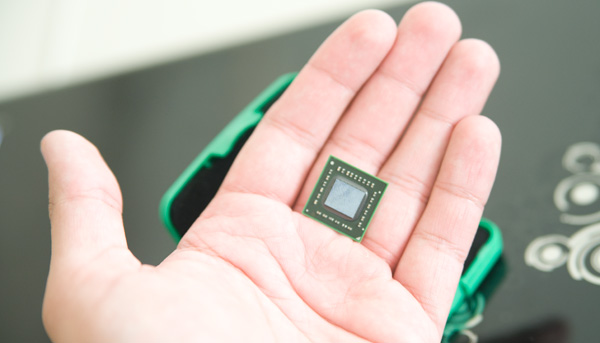
Here is a E-350:

dual "bobcat" core 1.6ghz cpu + 80 shader "evergreen" gpu (same as 5450).


so imagine:
5450Q.jpg


+

1758-1a.jpg


=


hand2.jpg


Couldnt help myself 🙂 love that its so small lmao.
 
Secondly, do we know why AMD places their die at a slant or "diagonally" if you will? Also, have they always been diagonal like this or is that a more recent development?
It depends on where the "ports" on the chip are, if they design the "ports" to be on the longer sides of the chip (its not a perfect squire), then maybe its to help layout design? makeing it easier for them to design the pcbs, when the chip is tilted.

Makeing chips is expensive, compaired to miniscule price of putting a heatspreader there.
So what matters isnt the total size of the chip with a heatspreader on, what matters is whats under it.

fact of the matter is, AMD for same performance as nvidia, use smaller chips.


chips arnt all thats on a graphics card though, maybe nvidia to be able to battle AMD in same price segments, use cheaper components on its cards, to make up for it? or maybe they just dont earn as much pr each sold card.
 
Last edited:
Makeing chips is expensive, compaired to miniscule price of putting a heatspreader there.
So what matters isnt the total size of the chip with a heatspreader on, what matters is whats under it.

fact of the matter is, AMD for same performance as nvidia, use smaller chips.


chips arnt all thats on a graphics card though, maybe nvidia to be able to battle AMD in same price segments, use cheaper components on its cards, to make up for it? or maybe they just dont earn as much pr each sold card.

Yes I realize that (bolded) I guess my point was just that it would be perceived differently because we always see naked AMD gpu's and "clothed?!" Nvidia chips lol.

As far as the other components yeah who knows how it all adds up for them. Maybe they dont make as much per or maybe they make it up on things like charging SLI license fee for motherboards or their "supposed" better pricing from TSMC, and/or their control of the Professional market and the great margins they make there.

Probably alot of factors on both sides.

They each have different pressures as well. AMD GPU division has pressure to make money because the CPU division hasn't done very well since Core 2, and Nvidia has pressure because up until all the mobile stuff they are doing now, they had nothing else to fall back on (and right now mobile plus Tesla etc is not making enough to fall back on yet).
 
Last edited:
Most CPUs/GPUs are smaller tan your fingernail. The big chip size is only to provide enough room to put all the pins/contacts which are needed to solder/attach chip to the mobo/card...
 
Yes I realize that (bolded) I guess my point was just that it would be perceived differently because we always see naked AMD gpu's and "clothed?!" Nvidia chips lol.

People when they talk about Nvidia chip sizes, they dont talk about "clothed" nvidia chips, they talk about when you remove the heatspreader and look under the hood.
 
it was done for compatibility purposes with aftermarket coolers.

if you look at the base for aftermarket coolers, the bases are larger than the actual die of the chips on nvidia cards.

if the base is larger than the die of the chip, then you don't want a heatspreader to maximize heat transfer to heatsink.

if the base is smaller than the die of the chip, then you want a heatspreader to transfer parts of the die that are not in contact with the heatsink to now transfer that to the heatsink.
 
its not all AMD cpus either that use it:
Athlon64_headspreader.jpg


Why do they do it with 1, and not another? I guess its a price vs benefit situation that determines it though.
In the above, no. It's that Intel didn't with socket 370, and AMD made socket 462/A physically compatible with S370, likely not knowing it would be successful enough that cooler compatibility would not be an issue. The fraction of a millimeter needed to fit the height of an IHS was not there.

I imagine the foam dots are a cost thing, though. Radeons, FI, have a big metal ring, and I've seen other chips with the same, some with hard rubber for the protection against corner-crushing, and even some heatsinks with hard plastic or soft foam glued to the base.
 
When Intel/AMD started with the CPU heat spreader's they did it to minimize cracked/damage cores on the user level, nVidia likely does it for the same reason. AMD has the smaller dies which I'm sure play a roll, but cost is more likely their stop.
 
Last edited:
Back
Top