
-
We’re currently investigating an issue related to the forum theme and styling that is impacting page layout and visual formatting. The problem has been identified, and we are actively working on a resolution. There is no impact to user data or functionality, this is strictly a front-end display issue. We’ll post an update once the fix has been deployed. Thanks for your patience while we get this sorted.
You are using an out of date browser. It may not display this or other websites correctly.
You should upgrade or use an alternative browser.
You should upgrade or use an alternative browser.
Why does anyone use flat head screws anymore?
- Thread starter Exterous
- Start date

dave_the_nerd
Lifer
agreed


Skunk-Works
Senior member
Just take a wizard tool and make it a Philips head. I have done this. I like torx head myself.
ts easily the worst of all the screw types
used in the correct application with the proper tools , there is nothing wrong with them. Must be an ID TEN T Error

BudAshes
Lifer
One defense of flatheads is they can be fairly easily fixed when stripped, and tools are more easily improvised. That said, Robertson is tits. They should all be Robertson.
GRK Stardrive are the best i've used. Robertson is fine if you go cheaper.


ive lost track of how many flathead screws i have stripped. they suck and should go extinct
Seconded!


Mr.IncrediblyBored
Lifer
Slotted and Philips are both awful and need to go away.
s0me0nesmind1
Lifer
I'll be honest, I can't say I've ever stripped a flathead.... Most stripped screws I've done is Phillips hands down...
Though it's probably because most flatheads I ever use are something I manually screw in vs. a drill with Phillips.
Though it's probably because most flatheads I ever use are something I manually screw in vs. a drill with Phillips.

Charmonium
Lifer
The problem with star drive and similar screw heads is that you get such a good grip that it's easy to twist the heads off if you're driving into some very hard wood. I've done that more times than I care to count. Then I have to just leave the broken screw in the beam and remember that I need to drill pilot holes for all of the other holes I have to drill.GRK Stardrive are the best i've used. Robertson is fine if you go cheaper.

shortylickens
No Lifer
I think OP meant slotted.
They are easy if you only intend to put them in once and are sure you will NEVER have to remove them.
Otherwise they are shit.
Also, I will admit that if you are trying to remove an old stubborn screw its relatively easy to use a file or Dremel and make it slotted then extract with a dime or penny. Thats convenient. But then it should be replaced with Robertson, Torx, or Allen. I really wish there was a better selection of wood screws with Robertson or Torx or Allen. I generally have to order them from Amazon if I want high quality with a head that wont strip.
Philips is shit too. Easy to strip. and when you do that you are fucked unless you have a Dremel and a penny.
They are easy if you only intend to put them in once and are sure you will NEVER have to remove them.
Otherwise they are shit.
Also, I will admit that if you are trying to remove an old stubborn screw its relatively easy to use a file or Dremel and make it slotted then extract with a dime or penny. Thats convenient. But then it should be replaced with Robertson, Torx, or Allen. I really wish there was a better selection of wood screws with Robertson or Torx or Allen. I generally have to order them from Amazon if I want high quality with a head that wont strip.
Philips is shit too. Easy to strip. and when you do that you are fucked unless you have a Dremel and a penny.

Red Squirrel
No Lifer
What I'd like to see is triangle or torx take off as being standard. While square is pretty good, and it's a Canadian invention, one issue it does have is that there are way too many different sizes. Open a bit set and there are like 30 different sizes that are only slightly different. If you don't put in the EXACT right one, it will strip fairly easily. I guess one easy way to solve it would be to have more defined standards for the size of the actual hole so that there is less chance of putting wrong size bit in it.
Flat is ok for stuff that you have to put in by hand, they are less likely to strip than star. The issue with flat is that it's easy for the screw driver to slip out, and don't even bother trying to use a drill. What I do like is "electrical" screws like for inside electrical panels, wiring boxes, etc. They tend to be compatible with flat, square and star because of the design.
Flat is ok for stuff that you have to put in by hand, they are less likely to strip than star. The issue with flat is that it's easy for the screw driver to slip out, and don't even bother trying to use a drill. What I do like is "electrical" screws like for inside electrical panels, wiring boxes, etc. They tend to be compatible with flat, square and star because of the design.

boomerang
Lifer
Most of the stripping of the heads of Phillips screws is due to the screw itself being manufactured incorrectly. Secondary is incorrectly made bits and screwdrivers. If the fastener and the bit are to spec, the fastener can be put on the bit for insertion and will be retained by the bit without any magnetism being involved.
And then there is PoziDriv. You can easily mess up the head of a PoziDriv screw by using a Phillips bit or screwdriver.
http://controlparts.com/poziDriv/
I'm going to be replacing 56 hinges on our cabinetry with soft-close hinges and the fasteners for them are PosiDriv. I'm considering getting some bits or at the least a screwdriver to do the job as I only have Phillips.
And then there is PoziDriv. You can easily mess up the head of a PoziDriv screw by using a Phillips bit or screwdriver.
http://controlparts.com/poziDriv/
I'm going to be replacing 56 hinges on our cabinetry with soft-close hinges and the fasteners for them are PosiDriv. I'm considering getting some bits or at the least a screwdriver to do the job as I only have Phillips.
While square is pretty good, and it's a Canadian invention, one issue it does have is that there are way too many different sizes.
Maybe there are a lot in Canada because Canadians area so excited they invested something useful but pretty much the only ones I see in hardware stores around here are #2 square drive. That seems to be the most common one in online stores as well. Every so often an $80 variety box of those will arrive at my house so I can just toss whatever cheap soft metal screws that comes with things these days and use my own.
I also tend to give them away to friends when I help them with things.
"ARGH! These keep stripping!"
Here you go my son. *Hands them square drive screws and a bit* Use these and be happy
"OMG These are AMAZING!"
Now go - go tell all your friends of the miracle you have seen today. Forsake those who say you should be content with lesser screws

Humpy
Diamond Member
Their disadvantage is also their advantage, they have to be installed with a sense of purpose. Slotted are also by far the most aesthetic of the drive types, more reminiscent of a vagina as opposed to the Philips or star drive.
I wouldn't use anything else for custom doors or furniture for just those reasons alone.
I wouldn't use anything else for custom doors or furniture for just those reasons alone.
Philips will more easily strip than slotted. The only issue with slotted is if you aren't centered in the slot you will get some wobble as you drive it. Philips will "cam out" and strip with too much torque.
Slotted, as Humpy said is the most aesthetic driven screw, philips is the most useless, and Torx is probably the best or at least among the best for driving.
Slotted, as Humpy said is the most aesthetic driven screw, philips is the most useless, and Torx is probably the best or at least among the best for driving.

A proper phillips screw
I think its getting harder and harder to get 'proper' phillips screws. Instead you get ones that start deforming at the slightest resistance - even when they were packaged with the very item they were supposed to screw into

renz20003
Platinum Member
Its easily the worst of all the screw types
Square headed lags are right behind it

Scarpozzi
Lifer
That may be, but metal quality has increased and decreased over the years due to better alloys....then worse alloys due to recycling. Most of our screws are manufactured overseas and quality control isn't always the best. It's even worse when machine screws of questionable quality are over-torqued. I remember some of the old Dell arrays would have these little screws tightened so tight, it was nearly impossible to remove the backplanes without having to drill the screws out....and Dell techs weren't prepared.People also screw up Phillips screws by using a Reed and Prince screwdriver. A proper phillips screw and driver are hard to strip out by hand or a driver.
People grab a reed and prince screwdriver and ruin phillips head screws and blame it on the phillips head.
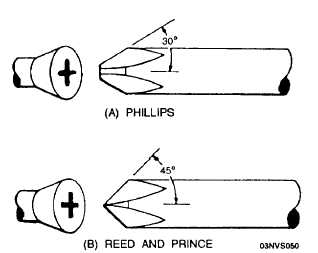
Anyhow, read reviews of fasteners at Home Depot and Lowes and look at the dates. You'll see some fasteners get 5 stars...then for 6 months, get 2 stars consistently....then back to 5. Even the same products have bad batches when they go through softer alloys and don't get the right ratio in their steel.
TRENDING THREADS
-
 Discussion Zen 5 Speculation (EPYC Turin and Strix Point/Granite Ridge - Ryzen 9000)
- Started by DisEnchantment
- Replies: 25K
-
Discussion Intel Meteor, Arrow, Lunar & Panther Lakes + WCL Discussion Threads
- Started by Tigerick
- Replies: 25K
-

-

-
