• We’re currently investigating an issue related to the forum theme and styling that is impacting page layout and visual formatting. The problem has been identified, and we are actively working on a resolution. There is no impact to user data or functionality, this is strictly a front-end display issue. We’ll post an update once the fix has been deployed. Thanks for your patience while we get this sorted.

Which was Intel's first CPU to require a cooler?

JeremyF50

Junior Member
Hi guys,

Just wondering here.. what was Intel's first CPU to actually require a cooler? It seems some of the earlier ones it was an optional thing. 386 didn't seem to need them, nor 486 in some photos I've seen. What about Pentiums (P5) and Pentium Pros (P6) ?

Pentium 2 obviously had it integrated in the slot cartridge.

Cheers 🙂
 
486's, as I remember, had heatsinks but not fans. All the pentiums I remember came with fans.

I don't know about them being "required", but that's how I remember all of them.

I guess it also depends on if you consider a bare heatsink to be a cooler or not. I would...
 
My family's HP with a Pentium MMX 200MHz only had a heatsink. I was 5 years old when we got it ^_^.

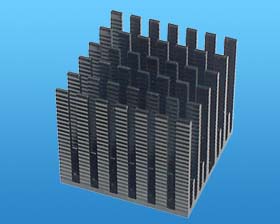
image-aavid-heatsink.jpg
 
Last edited:
had a 486 sx 25mhz and it did not come with a heat sink but installed an intel over drive 75 MHz and that came with a heat sink,I think the DX chips all started coming with heat sinks and right after that I build my first computer and bought a p60 at a computer fair and that had a heat sink and fan on it.
 
P5 66 (MUST or will melt your socket 5)
P5 90 had copper Bulge require
Later cpu like OverDrive etc came with one!
Dell was known to put Giant Heat sink along Case Fan from 486 DX 33 and up
 
Hi guys,

Just wondering here.. what was Intel's first CPU to actually require a cooler? It seems some of the earlier ones it was an optional thing. 386 didn't seem to need them, nor 486 in some photos I've seen. What about Pentiums (P5) and Pentium Pros (P6) ?

Pentium 2 obviously had it integrated in the slot cartridge.

Cheers 🙂

I think the 486s were the first generation to bridge the no heatsink vs passive heatsink vs fan gap. The early slow 486s and the low power models could run without heatsinks. The later 486s needed heatsinks and fans.

Then the Pentium 60/66 could run with just passive heatsinks if they were large enough.

http://www.cpu-world.com/CPUs/Pentium/
 
as a cooler do you mean active cooling? If that is so, the first pentium needed them (P60/66). I have a p166 non mmx here that doesn't need a fan, just a heatsink... but the P60/66 was most definitely the first one that they actually specced for active cooling. They fought tooth and nail with heat problems before finally "giving in" and putting a fan in the spec for it, which back then was a major thing.
 
I have a lot of old 68k Macs lying around and it's always funny to open up the case and stare at bare CPUs, without even a heatsink.

Motorola's 68040 was a screamer regardless, but you've gotta wonder how much more performance could have been had out of these older chips if the manufacturers and designers had approached thermal envelopes more aggressively.
 
The first Intel CPU I remember seeing with a heat sink and fan was on a 486 DX2 100 MHz that my friend and I purchased as an upgrade to his 33 MHz CPU. If I remember correctly we could only get it to run at 66 MHz though.

And don't get me started on the 256 MB hard drive that came with the computer. Filled that turd up in no time.
 
as a cooler do you mean active cooling? If that is so, the first pentium needed them (P60/66). I have a p166 non mmx here that doesn't need a fan, just a heatsink... but the P60/66 was most definitely the first one that they actually specced for active cooling. They fought tooth and nail with heat problems before finally "giving in" and putting a fan in the spec for it, which back then was a major thing.

That's what I had too. A P166 w/heatsink but no fan. So technically that was with a cooler.

My 386 SX-25 had no cooler, just the ceramic package sitting on the mobo dissipating whatever it was back then, maybe 8W?
 
Via C3 750mhz.. naked

The C3 chips say they need a heatsink on the heatspreader. However, I've read numerous reports about these chips being able to run without a heatsink - one report saying 800mhz and lower without a heatsink works fine.

There's some low TDPs listed for the 150nm and 130nm C3 chips. I know they were no Pentium 3 in regards to performance, but I wonder if there's any truth to the claims of heatsinkless operation? That 2.5W 667mhz and 3W 766mhz look particularly promising even being the earlier 150nm/higher volts variant.

http://en.wikipedia.org/wiki/List_of_VIA_C3_microprocessors#C3
 
My 386 was naked. My 486 had a heatsink about 1/2" tall but no fan. I think my 586 133 was the first to have a fan.
 
P5 66 (MUST or will melt your socket 5)
P5 90 had copper Bulge require
Later cpu like OverDrive etc came with one!
Dell was known to put Giant Heat sink along Case Fan from 486 DX 33 and up

My Pentium overdrive cpu 150-198-mhz which came with a intel fan was on p-75 socket 5.
Had no heat problems at all but I was worried do to the voltage change on the od cpu.
That pc was in the attic for 10 yrs when I decided to plugged it in to find some info on it.
The hd a had death noise but win 98se came up with correct time and date and that pc came out 93.
 
Back
Top