• We’re currently investigating an issue related to the forum theme and styling that is impacting page layout and visual formatting. The problem has been identified, and we are actively working on a resolution. There is no impact to user data or functionality, this is strictly a front-end display issue. We’ll post an update once the fix has been deployed. Thanks for your patience while we get this sorted.

Discussion WD Velociraptor, 80k hours, born Nov 2008, RIP Nov 2025

Golgatha

Lifer
The oldest of my 3, now 2 (sniff), 300GB Western Digital Velociraptor drives finally gave up the ghost. With around 80k+ hours usage or a little over 9 years of continual service, it was definitely a workhorse. It is survived by 2 other 300GB varieties born Nov 2009 and Oct 2010. An era when SSDs were still in their infancy and around $2-3 per GB in cost. At one point, 2 of these were used in RAID0 for my gaming rig, and the other one was my boot drive for my home fileserver. The one that died was the older unit in the RAID0 array, so it's surviving twin that's a little newer is reporting 73k+ hours. My newest unit has around 71k hours on it. Both are grieving but healthy with no errors or reallocated sectors.
 
Last edited:
LoL 300GB. what is the transfer rate on these rusty spinning drives anyway?
 
Last edited:
LoL 300GB. what is the transfer rate on these rusty spinning drives anyway?
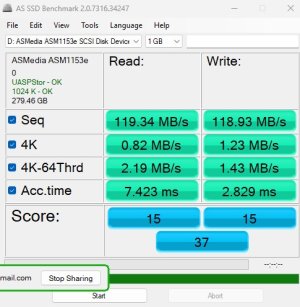
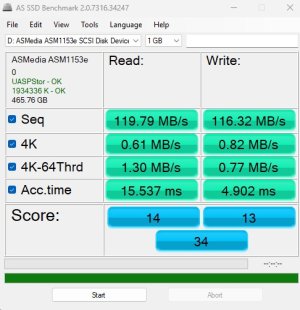
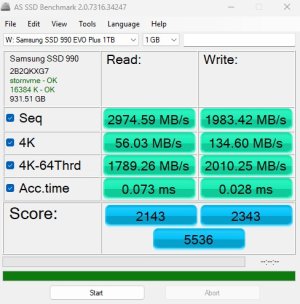
Not much faster than a 4 year newer, single 500GB platter, WD Blue for sequential operations, but man, look at those access times! Slow as cold molasses compared to a modern NVME, even when it's slightly limited by the PCIe 3.0 4x slot it's installed in.

Velociraptor 300GB, Nov 2010
201011 WDV 300GB.jpg
WD Blue 500GB, May 2014
201405 WD 500GB .jpg
NVME 1TB Goodness
NVME 1TB.jpg
 
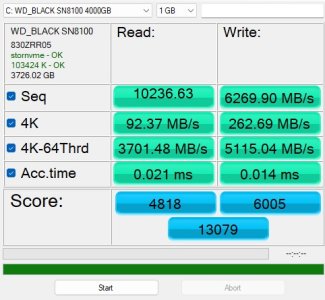
Western Digital SN8100 on PCIe 5.0 4x NVME slot for good measure. Had to benchmark the new toy! 🙂
Got my 2TB version yesterday. You may want to check/update the firmware, latest update (830ZRR0A) apparently fixes some stornvme errors logged in the Windows event viewer after system resumes from sleep (as example, might be more than that). Reportedly one needs to do a cold power cycle afterwards.
 
I remember these; not being able to afford them at the time. They were still somewhat relevant even after the first SATA SSD's started to show up, because they offered a bit more storage, but certainly a novelty now. I'd say ~17 years is a darn good run though.
 
Back
Top