• We’re currently investigating an issue related to the forum theme and styling that is impacting page layout and visual formatting. The problem has been identified, and we are actively working on a resolution. There is no impact to user data or functionality, this is strictly a front-end display issue. We’ll post an update once the fix has been deployed. Thanks for your patience while we get this sorted.

Uh-oh, a mini ice age is coming

Page 4 - Seeking answers? Join the AnandTech community: where nearly half-a-million members share solutions and discuss the latest tech.
  • Reduction in polar ice


That may not be what the alarmists have lead you to believe it is.
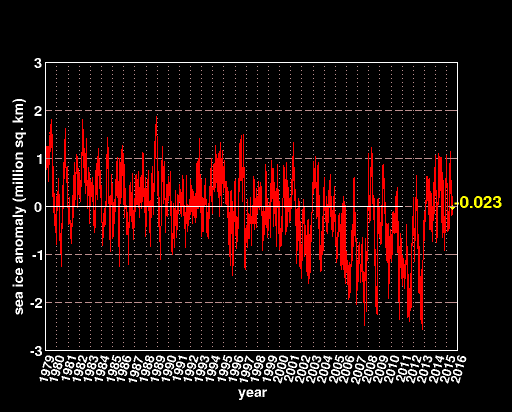
iphone.anomaly.global-8.png
 
...

1. The science is settled!
2. Hmm, that didn't work out as predicted.
3. This could explain why our predictions were off.
4. Okay, NOW the science is settled!
5. Loop to 1.
Nobody claims the science is settled when it comes to future predictions. The scientific consensus is that man is contributing to warming. It would be helpful if you could manage to separate the two issues if you are interested in discussing the topic honestly.
 
I think you are relying too much on the greenhouse gas radiation absorption equations. If that was the whole answer, then Earth would have become Venus 2: The Revenge long before humans when CO2 and especially methane concentrations were much higher. Earth has exquisite feedback systems to make the planet hotter or cooler as needed; it has to, to have remained habitable (as we understand habitable.)

Your point on what we know is well taken, but allow me to point out that the ICN effect predictions have consistently proven too catastrophic and have continuously been revised downward. Even the simplest things in climate science are grossly oversimplified. Just look at ocean levels. It's true that rising temperatures cause higher sea levels. They also cause more water to be stored in clouds and as rainfall runoff, which in turn cause less solar radiation to penetrate, which mitigates rising temperatures. Put it this way: I understand quite a lot about nuclear plants. Absolutely no one would want to live near a nuclear plant built to my design. To paraphrase and extend Rumsfeld's words, I know what I know I don't know, but what I don't know that I don't know could have catastrophic results. Climate science seems much the same to me.

1. The science is settled!
2. Hmm, that didn't work out as predicted.
3. This could explain why our predictions were off.
4. Okay, NOW the science is settled!
5. Loop to 1.

The greenhouse gas term is not the whole answer, that energy balance chart is the whole thing! Using that energy balance and the equations for the individual terms is how we know how much contribution greenhouse gasses make to the Earth and Venus.

Predicted Planetary Temps Without Greenhouse Effects

1374177687088.jpg


Notice that for Mercury with no atmosphere the predicted Temp (Tp) is pretty close to observed (Tobs).

Mars is also close but slightly warmer. It only has 1% the pressure of our atmosphere but it's almost all CO2.

Venus is 500 degrees hotter than predicted! It has an atmosphere much more dense than Earth that's 97% CO2.

Earth is 33 degrees warmer than predicted. We have an atmosphere 100X denser than Mars but much less dense than Venus with several greenhouse gasses. The energy balance chart above lets us figure out their contributions which is bounded by the difference between Tp and Tobs.

The basic science behind this is settled:
  • Conservation of energy
  • Absorption
  • Convection
  • Radiation
  • etc

Are all settled.

The predicted direction of change is settled as well. More greenhouse gasses raises the temperature of the planet which raises sea level and melts ice whic raises sea level.

The magnitude of the predicted change has varied. I'm more than willing to admit that. The difficulty in modeling is that by adding more and more realistic terms more uncertainty can be added. There was a good quote from a statistician George Box:

All models are wrong, but some are useful

Despite the uncertainty the models are all broadly consistent on their predictions Quite frankly just knowing the direction of the change is more than enough to take some first steps at mitigation.
 
Nobody claims the science is settled when it comes to future predictions. The scientific consensus is that man is contributing to warming. It would be helpful if you could manage to separate the two issues if you are interested in discussing the topic honestly.
Um, see below.

The greenhouse gas term is not the whole answer, that energy balance chart is the whole thing! Using that energy balance and the equations for the individual terms is how we know how much contribution greenhouse gasses make to the Earth and Venus.

Predicted Planetary Temps Without Greenhouse Effects

1374177687088.jpg


Notice that for Mercury with no atmosphere the predicted Temp (Tp) is pretty close to observed (Tobs).

Mars is also close but slightly warmer. It only has 1% the pressure of our atmosphere but it's almost all CO2.

Venus is 500 degrees hotter than predicted! It has an atmosphere much more dense than Earth that's 97% CO2.

Earth is 33 degrees warmer than predicted. We have an atmosphere 100X denser than Mars but much less dense than Venus with several greenhouse gasses. The energy balance chart above lets us figure out their contributions which is bounded by the difference between Tp and Tobs.

The basic science behind this is settled:
  • Conservation of energy
  • Absorption
  • Convection
  • Radiation
  • etc

Are all settled.

The predicted direction of change is settled as well. More greenhouse gasses raises the temperature of the planet which raises sea level and melts ice whic raises sea level.

The magnitude of the predicted change has varied. I'm more than willing to admit that. The difficulty in modeling is that by adding more and more realistic terms more uncertainty can be added. There was a good quote from a statistician George Box:

Despite the uncertainty the models are all broadly consistent on their predictions Quite frankly just knowing the direction of the change is more than enough to take some first steps at mitigation.
If you think the science is settled, then I guess there's nothing else to say. Personally I have a huge problem with models that only accurately predict things that have already happened, but maybe that's just me.
 
You are once again confusing sea ice AREA with sea ice VOLUME. This has been gone over many times before.

What's the cause for this confusion?

Volume will follow Area. 2020 is going to be a VERY interesting time for those who believe the Arctic was supposed to be ice free years ago.
 
Why? So I can see you conflate the two issues I just asked you not to conflate again?
If you honestly feel that science can be settled and yet worthless for predicting what is going to happen, again, I have no idea where to go with that except to point out that this is unlike any hard science.

Imagine one invented a new automobile engine and claimed it will get a hundred miles per gallon - only there is no way to predict whether it will get 1 mpg or 200 mpg on this particular tank. Or for that matter, whether the car goes forward or backward at any given time.
 
If you honestly feel that science can be settled and yet worthless for predicting what is going to happen, again, I have no idea where to go with that except to point out that this is unlike any hard science.

Imagine one invented a new automobile engine and claimed it will get a hundred miles per gallon - only there is no way to predict whether it will get 1 mpg or 200 mpg on this particular tank. Or for that matter, whether the car goes forward or backward at any given time.
So all meteorological science is useless because they sometimes say it will rain tomorrow and then it doesn't? Fascinating. It's great that the laws of thermodynamics are worthless just because we don't know exactly how trapping more heat on the planet will affect the entire system. I guess they aren't really laws, just suggestions.
 
A few things.

1. The Daily Mail. lol

2. As a rule, any time a headline is a question, the answer is always "No."

3. This was always my devil's advocate argument for why we shouldn't worry about global warming. Staving off an ice age is just as valuable as preventing global warming.

4. The Daily Mail. lol

5. My argument has and always will be that we should be stockpiling oil and coal, because that stuff takes quite a bit of time for the earth to replenish, and we should be moving to "renewable" sources like solar, wind, tidal, geothermal, wave, and molten thorium salt (nuclear) power. I mean, geologists will quote you thousands/millions of years for the earths systems to produce coal and oil. I'm sure a creationist could cut that time frame down to few thousands years, but that still means that we're using it faster than earth is producin' it.

Oil is extremely energy dense and convenient to use, so we should be limiting it to jets, really. Otherwise, store that stuff. Coal is just shit-tier energy that we end up poisoning ourselves with. Not that we shouldn't dig it up (without destroying the environment). But can we stop burning that crap already?

And, the best thing about this approach is that we're still acquiring energy-producing materials, while transitioning to clean and renewable energy, not because AlGore(is fat) says so, but because as a species we should be intelligent enough to understand that there isn't an infinite supply of coal or oil.

If you think FreeMarket is the end-all be-all, then start producing massive amounts of electric and watch as battery technology takes a huge leap to store all of that energy. I mean, if capitalism is worth a shit, it'll figure it out fast. And then there's basically no reason we shouldn't be supplying nearly all of our energy from non-oil and non-coal sources, and almost all automobiles can be using battery power rather than oil.

More energy and better batteries would help everyone.

Energy = money = wealth = quality of life. Making energy cheaper and more readily available to everyone would do more to decrease poverty than any other program you could possibly dream of (or have nightmares about).

6. By using renewable energy as much as possible, while continuing to dig up coal and oil to stockpile, we can be sure that the economy doesn't takes a dump because of decreased energy usage, while also ensuring that non-18th century energy technology is being invested in, instead of ignored because of soaring FreeMarket prices of oil (not so much coal, short/put coal ETFs if you like betting on the Wall St. casino).

7. The Daily Mail. lol

Or, we can just keep digging up and burning coal and oil because me me me me me me me now now now now now now now.
 
So all meteorological science is useless because they sometimes say it will rain tomorrow and then it doesn't? Fascinating. It's great that the laws of thermodynamics are worthless just because we don't know exactly how trapping more heat on the planet will affect the entire system. I guess they aren't really laws, just suggestions.
I wouldn't say that all meteorological science is useless, I would say that meteorological science is poorly understood. However it's worth pointing out that meteorologists have gotten much better at predicting the weather than climatologists have gotten at predicting the climate. (With the obvious exception of "it's going to get hotter", which is a given in an interglacial period.)
 
Um, see below.


If you think the science is settled, then I guess there's nothing else to say. Personally I have a huge problem with models that only accurately predict things that have already happened, but maybe that's just me.
If you disagree that conservation of energy isn't settled then you're off in perpetual motion free energy land.

So I'll assume you agree that the underlay principles are settled and your arguments lies in the perceived inaccuracy and data fitting of climate change predictions.

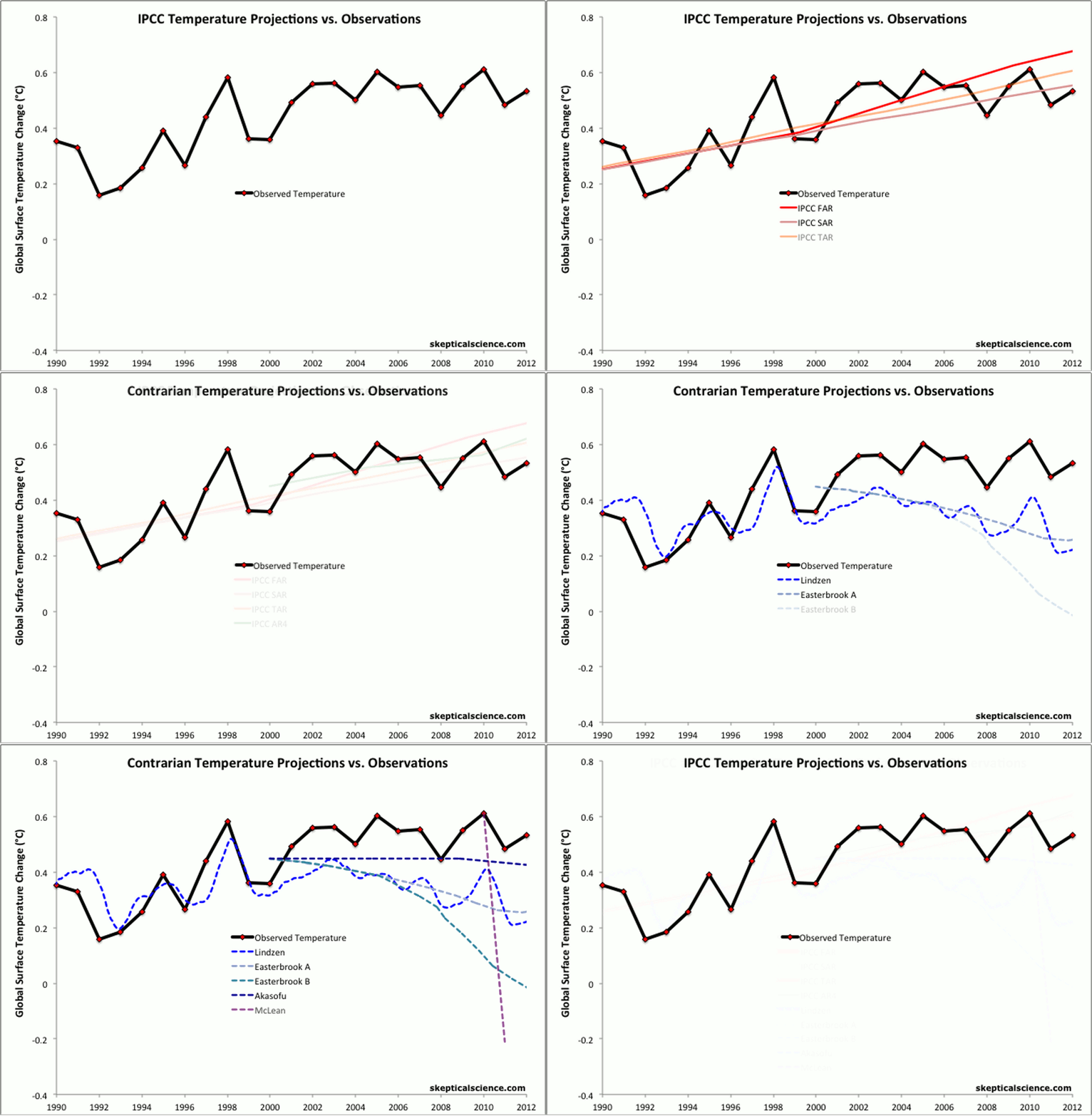
So let's look at some climate change predictions from the first 4 IPCC reports:

  • FAR - 1990
  • SAR - 1995
  • TAR - 2001
  • AR4 - 2007

IPCCvsContrarians.gif


Observed temps are the average of NASA and other data, (HADCRUT,
GISS,etc)
The other predictions are from climate change contrarian a scientists.

Looks like even IPCC FAR 1990 was reasonably accurate, no?
So maybe yours and TLCs concerns with accuracy aren't so much with the actual analysis and more with what the media made headlines with?

I mean look at the link in the OP. They said solar activity would drop by 60%. If that was correct the sun would no longer produce enough outward pressure to balance gravity. The sun would collapse and trigger a nova. Since that's obviously bullshit I decided to see what they really meant.

From some tweets by a climate scientist it looks like they meant a 60% reduction in the suns magnetic activity. Sunspots are cooler than the surroundings but the lips around them are hotter and overall increase solar output. They also require magnetic activity so a reduction will mean a cooling effect per the incoming radiation term in our energy balance.

According to the climate scientists the cooling effect is at most .1W/m^2 vs the .5-.7W/m^2 warming effect MMGW.

So no Ice Age. No cooling either, just a slow in warming if the new analysis is correct.
https://mobile.twitter.com/ClimateOfGavin/status/620207312993656833

You might have a problem with me using tweets to rebut the OP but since the OP is linked to a click bait article that hasn't been published......meh.
 
So let's look at some climate change predictions from the first 4 IPCC reports:

  • FAR - 1990
  • SAR - 1995
  • TAR - 2001
  • AR4 - 2007

IPCCvsContrarians.gif


Observed temps are the average of NASA and other data, (HADCRUT,
GISS,etc)
The other predictions are from climate change contrarian a scientists.

Looks like even IPCC FAR 1990 was reasonably accurate, no?
That depends. IPCC reports are based on RCPs. Does that chart plot only one of the best case scenario RCPs (2.6 or 4.5)? If so, it's a bit misrepresentative of all of the IPCC predictions.
 
I keep waiting for Believers to start pushing a gay agenda like effort to start reigning in those things that consume energy, such as goods production, non-medical airline flights, etc., in the face of no way Carbon taxes are happening anytime soon. I...well, just...never see them doing that, despite the affects of those activities to Gaia. Is that going to happen or are they going to go for the Proggie 'reach into everyones pocket to my lifestyle isn't affected' approach? Just wondering...
 
I keep waiting for Believers to start pushing a gay agenda like effort to start reigning in those things that consume energy, such as goods production, non-medical airline flights, etc., in the face of no way Carbon taxes are happening anytime soon. I...well, just...never see them doing that, despite the affects of those activities to Gaia. Is that going to happen or are they going to go for the Proggie 'reach into everyones pocket to my lifestyle isn't affected' approach? Just wondering...

When all you can do is make asinine accusations about your political opponents that amount to "they're going to take my stuff" or "he's the same person...or someone else too", then it isn't any wonder that your delusions extend to mythical libruuuls who are going to ban cars and planes because Gaia and Benghazi and limosine libruuls and moochers and looterers and Benghazi.
 
When all you can do is make asinine accusations about your political opponents that amount to "they're going to take my stuff" or "he's the same person...or someone else too", then it isn't any wonder that your delusions extend to mythical libruuuls who are going to ban cars and planes because Gaia and Benghazi and limosine libruuls and moochers and looterers and Benghazi.

So...we can read that as carbon taxes then right? I thought so, just wanted to have you Believers weigh in. Thx Jh, er, nickqt... :biggrin:
 
That depends. IPCC reports are based on RCPs. Does that chart plot only one of the best case scenario RCPs (2.6 or 4.5)? If so, it's a bit misrepresentative of all of the IPCC predictions.

Well I thought the different RCPs were to provide bounding cases. I also think they were only used in the AR5 report. Before that they used SRES for AR4. Not sure before that.

Anyway here's the page with chart and individual breakdowns on each projection.

http://www.skepticalscience.com/contary-to-contrarians-ipcc-temp-projections-accurate.html
 
Well I thought the different RCPs were to provide bounding cases. I also think they were only used in the AR5 report. Before that they used SRES for AR4. Not sure before that.

Anyway here's the page with chart and individual breakdowns on each projection.

http://www.skepticalscience.com/contary-to-contrarians-ipcc-temp-projections-accurate.html
I prefer the chart from this page:

http://arstechnica.com/science/2013/10/how-much-warming-does-new-ipcc-report-see-in-our-future/

arsgwchart.png


Note how actual observations skirt the very lowest predictions from the IPCC while realistic models should have observations somewhere in the median of predictions. Either their models are way off or something else is skewing the predictions of AGW science. I can't say definitively that there is a bias in AGW scientific community, but charts like that make me wonder why there is such a huge disparity. Either way, the alarmism needs to be reigned in.
 
Last edited:
I wouldn't say that all meteorological science is useless, I would say that meteorological science is poorly understood. However it's worth pointing out that meteorologists have gotten much better at predicting the weather than climatologists have gotten at predicting the climate. (With the obvious exception of "it's going to get hotter", which is a given in an interglacial period.)

I think I should expand or perhaps clarify Dank's comments. There is consensus that we are 1) in a warming trend, and 2) that man is the principle contributing cause of this trend. Where there isn't total consensus is how much warming there will be. That, however, is debated within a range which is fairly broad but the bottom of it is moderately concerning and the middle of it is very concerning.

Comparing short term meteorological predictions with long term climate predictions is apples to oranges. They are aiming at different areas of inquiry and basing each off very different empirical data. I don't think you're correct in your assessment of climatology. They didn't just say we we're in a warming trend. They said we are in an accelerating warming trend which is faster than average warming during an "interglacial period" and is getting faster. That's a little more specific than just saying we're in a warming trend.
 
I prefer this chart as it uses UAH/RSS data. It extends to current date. We will have an upturn this year with a strong El Nino forming now.

clip_image004.jpg
 
Back
Top