• We’re currently investigating an issue related to the forum theme and styling that is impacting page layout and visual formatting. The problem has been identified, and we are actively working on a resolution. There is no impact to user data or functionality, this is strictly a front-end display issue. We’ll post an update once the fix has been deployed. Thanks for your patience while we get this sorted.

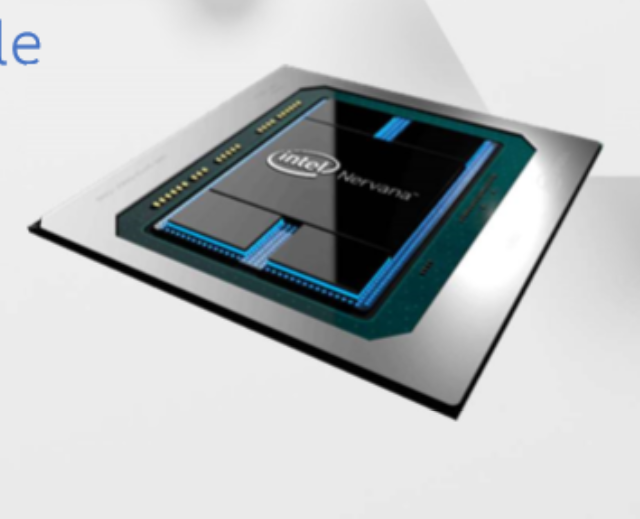
News [Toms] Intel Stops Nervana Development

As an exaggerated observation, does Intel destroy more tech than they develop?
Isn't that the normal modus operandi for big tech companies? The R&D depts of Xerox, Microsoft. Intel etc. all have had plenty exciting developments over the years that seldom get to make it into a product available on the market, even fewer with a fair chance there. This is just extended with bought up startups (which in a way are little more than sped up external R&D).
 
As an exaggerated observation, does Intel destroy more tech than they develop?

Or they have given money to startups that didn't stand a chance on their own and gave them a way out. I know founders of startups that either feel it's a way to get discovered and cash out or truly believe in their products. Like the article points out, is it wise for a business to support multiple competing products from a production stand point?
 
Or they have given money to startups that didn't stand a chance on their own and gave them a way out. I know founders of startups that either feel it's a way to get discovered and cash out or truly believe in their products. Like the article points out, is it wise for a business to support multiple competing products from a production stand point?

If they thought Nervana was any good, they wouldn't have bought Habana.
 
If they thought Nervana was any good, they wouldn't have bought Habana.
They can think both, they thought Nervana is good when they bought it, now they think Habana is better so they bought it. Maybe sometime they figure out how to expand from there (wherever "there" is at that point of time).
 
As an exaggerated observation, does Intel destroy more tech than they develop?
The problem is "marketing" where the people being marketed to is not consumers or business but instead shareholders where you say I need to acquire X, Y, Z, etc in order to remain on the leading edge and suddenly when X and Y fail the shareholder either remains confident or remains unconfident that Intel is spending their money wisely in way Wall Street feels it is happy.

Of course what is a wise purchase or not wise purchase is inherently unknowable for it requires future foresight and once the future happens hindsight in order to create a narrative that the purchase was correct way back when. My point here is understanding is not the same as knowledge for knowledge is time and space sensitive in order to act at the right time and space.
 
They can think both, they thought Nervana is good when they bought it, now they think Habana is better so they bought it. Maybe sometime they figure out how to expand from there (wherever "there" is at that point of time).

Another article I saw suggested that Intel was told basically by Facebook or whoever that Nervana wasn't good enough and Intel agreed. Doesn't mean it's true but hard to argue it wasn't.
 
As an exaggerated observation, does Intel destroy more tech than they develop?

Most promising new tech fails to navigate the Intel political gauntlet of entrenched interests. The company is largely run by myopic careerists, comfortable in their sinecures.
 
Last edited:
With NNP-T and NNP-I dead, how many current and upcoming AI products does Intel have, and how many are redundant? I'm not counting Core products with AVX512/bfloat16 either.

Also, will Intel be adding AI-centric fixed-function hardware to their Xe GPUs to increase the overlap between departments?
 
With NNP-T and NNP-I dead, how many current and upcoming AI products does Intel have, and how many are redundant? I'm not counting Core products with AVX512/bfloat16 either.

Also, will Intel be adding AI-centric fixed-function hardware to their Xe GPUs to increase the overlap between departments?

I fully believe AI and DC is the actual end goal of Xe, to lower reliance on Nvidia for those scaled up projects. Even if you don't hit the same perf/part, you can use 10,000 of your own ICs and integrate them more affordably vs say 6,000 of your competitors ICs, and not rely on supply chain, delivery delays, potentially needless sections of die space for irrelevant feature sets, etc. I am extremely apprehensive that Xe will matter at the consumer level.

As far as this other stuff, people seem to often forget the true hidden value in many of these acquisitions and investments : stacking patents for upcoming paradigms. You can use them to bargain your way into new standards and partnerships, it's a hedge against being left behind, as so many of them are nebulous enough to be called up as things develop further. It's just a fact of modern corporate semiconductor development : you REALLY need a patent stable, and breed those horses strong.

 
Xerox bought out the printer division of Tektronix in 2000 just so they could buy out their competitor. Then they killed the solid ink printers. Have not seen those since , and they were great. Photos on plain paper !

I have used some of those, still going strong even though they're quite old now. Xerox Phaser I think before they killed it. Was really strange, smelled like melting crayons when they warmed up to print, but the quality was always good.
 
I fully believe AI and DC is the actual end goal of Xe, to lower reliance on Nvidia for those scaled up projects. Even if you don't hit the same perf/part, you can use 10,000 of your own ICs and integrate them more affordably vs say 6,000 of your competitors ICs, and not rely on supply chain, delivery delays, potentially needless sections of die space for irrelevant feature sets, etc. I am extremely apprehensive that Xe will matter at the consumer level.

As far as this other stuff, people seem to often forget the true hidden value in many of these acquisitions and investments : stacking patents for upcoming paradigms. You can use them to bargain your way into new standards and partnerships, it's a hedge against being left behind, as so many of them are nebulous enough to be called up as things develop further. It's just a fact of modern corporate semiconductor development : you REALLY need a patent stable, and breed those horses strong.

If I were confident that Intel could integrate their different research initiatives coherently into one product lineup, I'd be more confident that Intel had made the right decisions in acquiring Nervana and Habana. Integrate patents from Nervana/Habana to create fixed-function hardware for Xe as an alternative to Tensor cores, and you can fight nVidia.

Or you can have three separate departments working against one another, not counting the team(s) responsible for AI-acceleration in Xeons and whoever it is working on Pohoiki Beach.

Intel has the patent stable. Not so sure if the horses are being bred for strength, though.
 
I have used some of those, still going strong even though they're quite old now. Xerox Phaser I think before they killed it. Was really strange, smelled like melting crayons when they warmed up to print, but the quality was always good.

Yeah these were great. printed m thesis on one of these (still tektronix one). I suspect they were too good but also too consumer unfriendly (long warm-up time) so they got discontinued. Also probably they hampered the main income of the printing business from ink cartridges.
 
If I were confident that Intel could integrate their different research initiatives coherently into one product lineup, I'd be more confident that Intel had made the right decisions in acquiring Nervana and Habana. Integrate patents from Nervana/Habana to create fixed-function hardware for Xe as an alternative to Tensor cores, and you can fight nVidia.

Or you can have three separate departments working against one another, not counting the team(s) responsible for AI-acceleration in Xeons and whoever it is working on Pohoiki Beach.

Intel has the patent stable. Not so sure if the horses are being bred for strength, though.

True. Understandably, info dissemination is quite limited on what exactly they're up to in micro and macro scales. Will be interesting to see what comes of it.
 
Yeah these were great. printed m thesis on one of these (still tektronix one). I suspect they were too good but also too consumer unfriendly (long warm-up time) so they got discontinued. Also probably they hampered the main income of the printing business from ink cartridges.
I used to work for Tektronix, technically retired from there, I still have a small pension from Them. The problem was free back ink. And the quaity was killer, and it was killing Xerox. So they bought the competition.
 
As an exaggerated observation, does Intel destroy more tech than they develop?

Nah, Intel has made some pretty fundamental contributions to both semiconductor and microprocessor tech. They just have a terrible track record whenever they try to branch out.
 
I used to work for Tektronix, technically retired from there, I still have a small pension from Them. The problem was free back ink. And the quaity was killer, and it was killing Xerox. So they bought the competition.
And now they try to buy hp who have bought samsung printing division, three companies reduced to one....

I liked a lot those printers didn't know xerox extinguished the range.
I never powered them off to cut the residues, ink was cheap and the black ink was free but you needed to buy the color ink.

My biggest nightmare at the time was when I saw the xerox guys doing the delivery of the printers, all printers still saying tektronik.
At the time i still didn't have internet access so normally all my purchases where magazine reviews based and i didn't know that xerox had bought them.
I hated the xerox people/representatives they where too cocky.
 
Last edited:
Haha yeah Xerox and IBM in the early 80s especially had the biggest stink on them from extreme arrogance.
 
via @witeken
Intel Axes Nervana Just Two Months After Launch

some quotes
The discontinuation of Nervana and the adaptation of Habana is a puzzling move for us. We have been struggling to justify it on technical grounds. For the most part, at least on paper, Nervana’s architecture is superior in terms of future scalability (future nodes and advanced packaging perspective) and in terms of workload capabilities. Specifically, Spring Crest should do better in terms of workload parallelism, especially massive scale-out parallelism.
For their first-generation, Spring Hill shares almost everything with Ice Lake. Spring Hill engineers explained that the shared architecture with Ice Lake significantly simplified development and expedited time-to-market. That’s essentially the claim Intel is making with the switch to Habana.
Beyond hardware, it’s also entirely possible that the problem boiled down to software. First-generation Nervana NNP’s (Lake Crest) encountered software-related difficulties primarily due to using the Flexpoint data type.
Perhaps the easiest way to explain this move is from the first sentence of the official statement which suggests Habana received the likes of certain, presumably large, customers (we know Facebook was one).
 
The important qualifier highlighted.
"We have been struggling to justify it on technical grounds. For the most part, at least on paper, Nervana’s architecture is superior"

I hope whoever at Intel looked at the tech and made the decision based that on actual performance. As is it looks like Habana just positioned itself better against Nvidia PR wise (though the focus on software is interesting, Nvidia's biggest strength is its proprietary software and the ecosystem around it).
 
Back
Top