• We’re currently investigating an issue related to the forum theme and styling that is impacting page layout and visual formatting. The problem has been identified, and we are actively working on a resolution. There is no impact to user data or functionality, this is strictly a front-end display issue. We’ll post an update once the fix has been deployed. Thanks for your patience while we get this sorted.

Thinking of getting a framing nailer, what's a good route to go?

Page 2 - Seeking answers? Join the AnandTech community: where nearly half-a-million members share solutions and discuss the latest tech.
Wait are nails actually better? I figured it was just a faster way of doing it and considered to code but that screws were considered best due to better pull out strength. I've always used screws for floors and any sheathing myself.

Screws are better, just more labour intensive, thus more expensive.
 
Wait are nails actually better? I figured it was just a faster way of doing it and considered to code but that screws were considered best due to better pull out strength. I've always used screws for floors and any sheathing myself.
Screws are legal for sub floor in many places, just not around here in earthquake country. Anything that's used as diaphragm has to be nailed. Screws don't have the sheer strength of nails, and pull out isn't a consideration. All decks and sheer panels around here are put together with 10 shorts (.148" x 2.25"). Once in a while an engineer will spec .161's for some areas, but it's rare.
Some screws are structural rated, but the inspector will want a letter from the engineer stating that they're acceptable. Simpson strong drive screws are accepted without comment in the correct application.
 
For some screws, even the slightest shear force can cause them to fail.

A few years ago we had a little New Madrid fault moaner and groaner (I doubt it was even a 2.5) and it actually snapped a bunch of galvanized deck screws in a shelf in my brother's shop. Granted, the screws came from Lowes (and were probably made by some poor schmuck in a Chinese labor camp somewhere), but it was kind of shocking to see how easily they just snapped under such light stress.

Thankfully, it wasn't anything important and was easily fixed. It definitely taught us to stick with ring nails and not screws though.
 
Screws are legal for sub floor in many places, just not around here in earthquake country. Anything that's used as diaphragm has to be nailed. Screws don't have the sheer strength of nails, and pull out isn't a consideration. All decks and sheer panels around here are put together with 10 shorts (.148" x 2.25"). Once in a while an engineer will spec .161's for some areas, but it's rare.
Some screws are structural rated, but the inspector will want a letter from the engineer stating that they're acceptable. Simpson strong drive screws are accepted without comment in the correct application.


Interesting. Not familiar with wood construction with regards to earthquake.
 
Last edited:
I'm in the process of painting my house. Unfortunately because someone (<---) did not paint his house anywhere near as often as he should have, I had a substantial number of 1x12 trim boards that need to be replaced. For the most part I went with PVC boards and because I know my hand nailing (lack of) skills I bought an $85 Harbor Freight 21 degree framing nailer and powered it with a five year old Harbor Freight pancake compressor. Probably used it for a total of five to ten hours, everything went fine.

I got lucky though-my two year old Harbor Freight reciprocating saw gave up the ghost-I probably used it a total of two hours time.

Does Home Depot or Lowes rent nailers? You may want to go that route. I hate spending big money on tools I use once a decade or so.
 
I'm in the process of painting my house. Unfortunately because someone (<---) did not paint his house anywhere near as often as he should have, I had a substantial number of 1x12 trim boards that need to be replaced. For the most part I went with PVC boards and because I know my hand nailing (lack of) skills I bought an $85 Harbor Freight 21 degree framing nailer and powered it with a five year old Harbor Freight pancake compressor. Probably used it for a total of five to ten hours, everything went fine.

I got lucky though-my two year old Harbor Freight reciprocating saw gave up the ghost-I probably used it a total of two hours time.

Does Home Depot or Lowes rent nailers? You may want to go that route. I hate spending big money on tools I use once a decade or so.

Yes they do, there are other tool rental places as well.
 
Screws are legal for sub floor in many places, just not around here in earthquake country. Anything that's used as diaphragm has to be nailed. Screws don't have the sheer strength of nails, and pull out isn't a consideration. All decks and sheer panels around here are put together with 10 shorts (.148" x 2.25"). Once in a while an engineer will spec .161's for some areas, but it's rare.
Some screws are structural rated, but the inspector will want a letter from the engineer stating that they're acceptable. Simpson strong drive screws are accepted without comment in the correct application.

Oh I see yeah I guess the requirements would be totally different there, needs to be able to withstand side to side movement too from basically being shook to hell. Not an issue here. I'd probably use nails to get the boards down good enough then come back and put in screws to fill in. I feel nails only would result in squeaky floors.

The screws I normally buy for general purpose are called "construction screws" but not sure if that's just a generic term or if it actually means they're rated for structural.

 
The biggest problem with any air tool is the hose. The damn hose. It's worse than any cord ever. I hate the friggin hose.

Second issue in the great iceberg region in water in the system. There is always water from condensation. On Earth that isn't always an issue since in can be drained easily. Up there, you have to be concerned about freezing and busting something important.
 
Oh right never realized the condensation build up would start to get bad after a whole day of use I guess. At work we use air dryers to keep that from happening in the telco cables (those are pressurized) but not sure where to buy such attachment. It's basically the "do no eat" pellets inside a tube and the air is forced through it.

Decided to hold off on the purchase for now though. I will revisit this idea next year when I'm actually at a point where I want to build the cabin.
 
Oh I see yeah I guess the requirements would be totally different there, needs to be able to withstand side to side movement too from basically being shook to hell. Not an issue here. I'd probably use nails to get the boards down good enough then come back and put in screws to fill in. I feel nails only would result in squeaky floors.

The screws I normally buy for general purpose are called "construction screws" but not sure if that's just a generic term or if it actually means they're rated for structural.


O don't teally care for the Robertson square drive fasteners. I much prefer torx or star drive for building stuff.

The biggest problem with any air tool is the hose. The damn hose. It's worse than any cord ever. I hate the friggin hose.

Second issue in the great iceberg region in water in the system. There is always water from condensation. On Earth that isn't always an issue since in can be drained easily. Up there, you have to be concerned about freezing and busting something important.

Drain your sir tank AT LEAST once per day. If moisture is a real problem, add an air dryer.
 
Torx is nice, but expensive! You have to buy each screw individually at a few bucks each. They are more meant for making laminated beams I think. I personally just use regular screws for that but set them in at alternating angles/locations in a pattern. That, with the glue, is probably not going anywhere.
 
Torx is nice, but expensive! You have to buy each screw individually at a few bucks each. They are more meant for making laminated beams I think. I personally just use regular screws for that but set them in at alternating angles/locations in a pattern. That, with the glue, is probably not going anywhere.

Must be a canuck thing. For example, I use the hell out of these:


2, 2-1/2, 3, and 4" sizes
 
Must be a canuck thing. For example, I use the hell out of these:


2, 2-1/2, 3, and 4" sizes
GRK is the way to go. ICQ rated, structural rated, never strip. I buy them by the case.
 
Looks like I actually can get these here, but way more expensive than the regular screws.


What I usually get:


Though one issue I often get with the Robertson screws is the bits seem to dull out after a while and get rounded then it wants to jump. There also seems to be tons of variations in sizes, I have a bit set and as far as I can tell they all look the same size to the naked eye but guess there are slight size differences.
 
Star/Torx are fine until they strip. Then they're almost impossible to get out. Same with square drive or Allen. Over driving will strip either the screw, bit or both. Most people don't adjust their drill/driver clutch to slip to help prevent that.

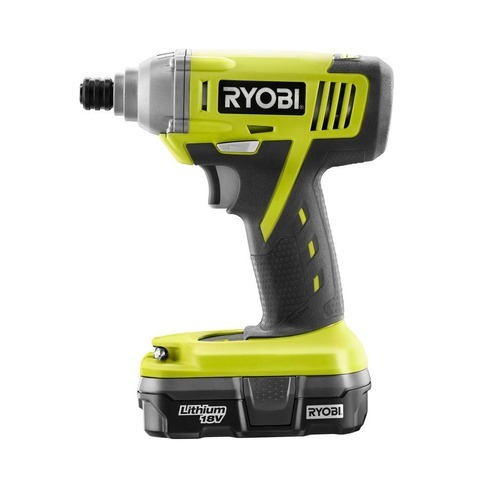
One thing that has helped me quite a bit is a 1/4" Impact driver. That thing will coax a screw into or out of stuff that a drill/driver can't. And so far, I've never stripped a screw with it, though I have wasted a few bits after several uses. Seems like the bits are almost sacrificial.


Comparing Ryobi's Cordless Drills - A Helpful Guide
 
I'm a few months away from being able to get on my property so been thinking about this again, that and there's a few jobs around the house that I could test it on before I go out in the bush. Will be a while before I get to the point that I'm actually nailing anything since I need to clear land first but may as well be prepared.

Didn't order it yet but pretty sure I will go with this one as they are considered a good brand for nailers and it's actually very cheap considering it's a higher end brand: https://www.rona.ca/en/product/meta...nailer-2-in-to-3-1-2-in-30-nr90ads1m-37815181 We don't have Rona here anymore but I can order it.

I will use 3 1/4" paper colated round offset nails (not clipped). And probably also get 2" nails for sheathing. Home Depot sells those locally. They are dewalt brand but don't think it matters? I can always go with the Dewalt air nailer if it does matter and that one is available locally for about 2x the price.

I was kinda eyeing the Dewalt cordless one even though I dismissed it at first but based on videos the ramp up is actually very quick. Faster than the time it takes me to pickup a screw and drill and line it up and start screwing it. Or same with hammer and nail. Metabo also makes a 36v version that has good reviews, and has a port to allow you to add air to it, so unlike the Milwaukee you shouldn't have to send it out for servicing. But it seems everything I read/watch so far says air is still king for contractor grade, and that's more or less what I need considering I'm doing a scratch cabin/house build and eventually a shop etc too.

So yeah pretty sure I'll go with the Metabo air nailer. Also chose to go with 30 degree as I don't really want to be polluting the area with plastic bits, since I'll be using this mostly in the bush. Ryobi (platform I'm already on now) actually does have a 18v framing nailer but for some reason it's not available in my area, can't even order it anywhere. But I will keep my eyes open for that if I feel the air nailer is too much hassle with the hose etc.

Question on hoses though, anything in particular I should be looking at, such as material and size? Thinking about things like UV light. PVC seems to be a typical material used for the lines, will that break down in the sun? What about the size is 1/4" ok for a nailer or should I go 3/8"? I'm thinking 3/8" 50-100 footer from the compressor then a shorter telephone cord style 1/4". does that seem ok?

 
Good nailer. I went with the plastic version...mostly because I already had about half a box of both the 3 1/2" (16d) and 2 1/2" (8d)

 
30 degree nails can be tough to find around here.

I have the DeWalt 21 degree 20V framing nailer, it's a very good tool, but weighs a ton. Two tons after four hours of use.
Boshtitch makes a framing nailer that's also a positive placement nailer with the addition of an optional nose piece.

For hoses, the cheapest ones work just as well as the high end stuff. I own both, and I'll never buy anything but cheap harbor Fright air hose in the future. Bear in mind I live where water is a liquid. I don't know how well cheap hose will hold up in a frozen wasteland.
 
Few weeks back while I was out on one of my daily walks, I stopped in to see a neighbor as he was working on a project. It involved attaching a 2 x 4 to a 4 x 4 to hold a piece of material between them. Wood was treated and still wet as new PT wood can be. He was using structural screws with self drilling points and a Torx head, not sure what size. But he was pre-drilling every hole, deeper than the screw. The drill bit was almost the same diameter as the screws. Then he was using a 1/2 electric power drill to drive the screws. And then he was wondering why the screws were stripping the holes and not drawing in tight.

I didn't say much because he's aging rapidly and has had a LOT of medical issues that may be affecting his thinking processes. He's one of those who doesn't really accept help willingly, so I let it go and continued on my walk.

Yeah, probably doesn't really fit the thread topic other than being a wood project using tools, but tough.
 
Few weeks back while I was out on one of my daily walks, I stopped in to see a neighbor as he was working on a project. It involved attaching a 2 x 4 to a 4 x 4 to hold a piece of material between them. Wood was treated and still wet as new PT wood can be. He was using structural screws with self drilling points and a Torx head, not sure what size. But he was pre-drilling every hole, deeper than the screw. The drill bit was almost the same diameter as the screws. Then he was using a 1/2 electric power drill to drive the screws. And then he was wondering why the screws were stripping the holes and not drawing in tight.

I didn't say much because he's aging rapidly and has had a LOT of medical issues that may be affecting his thinking processes. He's one of those who doesn't really accept help willingly, so I let it go and continued on my walk.

Yeah, probably doesn't really fit the thread topic other than being a wood project using tools, but tough.
Sometimes the right thing to say is nothing.
 
So I went ahead and ordered the Metabo and it came in today. Used it a little around the house and so far so good. I just realized I'm suppose to oil it though, so I will need to buy oil. Getting sparks every time I shoot a nail and that may partially be due to oiling. But I also read that it's normal to some extent until it's broken in or if you hit a batch of nails that is slightly different.

The nails that are not in was because my air pressure was too low.

iBN4bKB.jpg


jVDe2Zf.jpg


This is the compressor I'm using, it's pretty small so if I find myself limited by it once I'm doing a real job, I might look at getting a bigger one or even just an expansion tank.

AZ7YcE1.jpg
 
Back
Top