• We’re currently investigating an issue related to the forum theme and styling that is impacting page layout and visual formatting. The problem has been identified, and we are actively working on a resolution. There is no impact to user data or functionality, this is strictly a front-end display issue. We’ll post an update once the fix has been deployed. Thanks for your patience while we get this sorted.

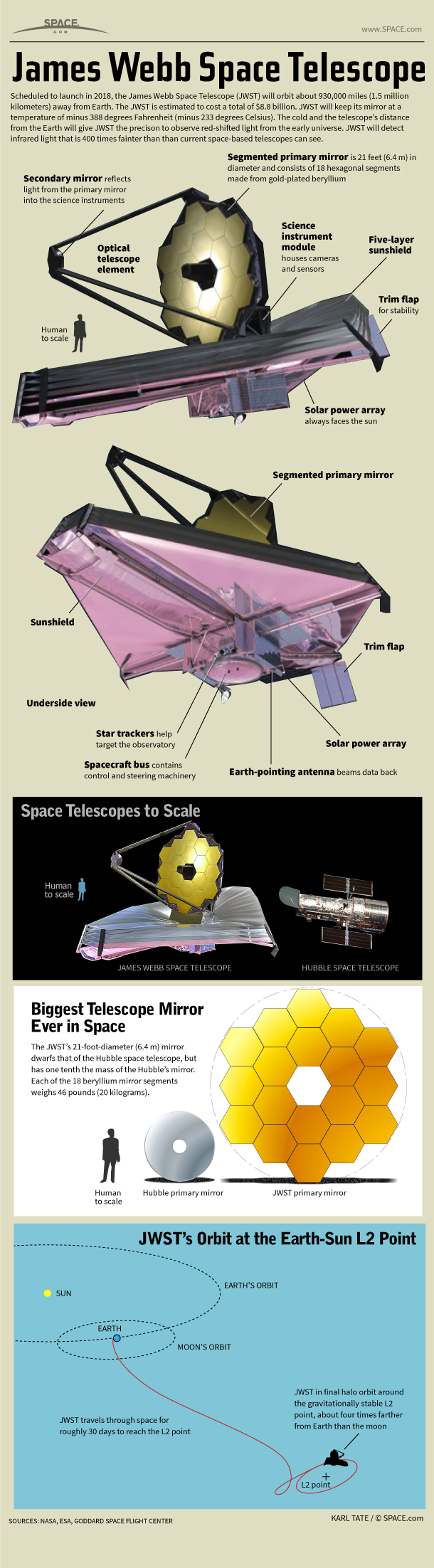
The James Webb Telescope

A new documentary is out about the JWT on the Discovery Channel. The documentary is ok, but I am still excited because I first heard about this telescope in the late 90s and now it is finally coming close to fruition. 100X the capability of the Hubble. The Pillars of Creation? Pffft. Can't wait to see what this will produce despite the major cost over-runs.
 
james-webb-space-telescope-130110b-02.jpg


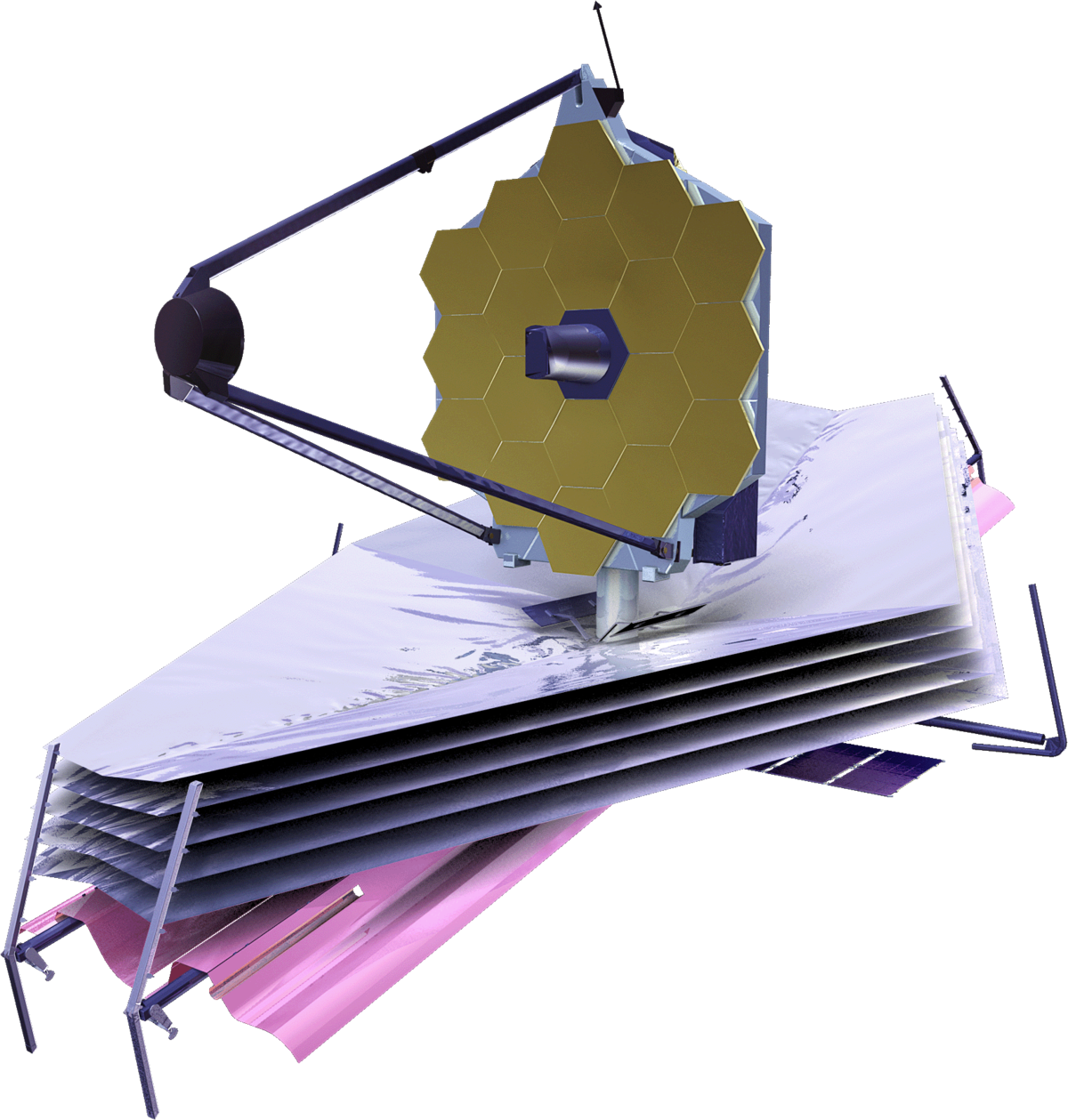
Hopefully nothing goes wrong during deployment of those 18 segmented mirrors and their alignment won't be a problem.
It's gonna be too far from Earth for any kind of service.

d48prN.gif
 
Last edited:
I worked on a nasa video for this some years ago. Glad it's coming out. First thing I thought about when NASA budget was boosted.
 
When something is in development for this long, do they change the technology to keep up with the times, or only to a point if it saves cost?
 
Had been seeing some articles about this and meaning to learn more. Giddy about what it could bring us. I'm not sure that we'll get another "whoa" moment like the Hubble Deep Field image, but you never know.

When something is in development for this long, do they change the technology to keep up with the times, or only to a point if it saves cost?

I'd say it really depends, but a lot of this stuff is basically bespoke, and the overall design is so tightly constrained around what was planned to be used that I'm not sure there's much if any leeway. The smart way of doing it would be to figure out the stuff that would be least likely to change with technology and then set that in stone, and then try to design some adaptability in other components.
 
When something is in development for this long, do they change the technology to keep up with the times, or only to a point if it saves cost?
According to the documentary many of the massive cost overruns have involved incremental tech improvements. Think about how digital imaging has improved since the late 90s when this was first conceived, and how it continues to get so much better. When even small changes/upgrades are made to a design of this complexity it can seriously impact the costs.
 
I just hope people aren't disappointed by the images in terms of what the objects look like. They won't be true color (although a lot of NASA images aren't) because it's mainly for IR wavelengths.
 
I just hope people aren't disappointed by the images in terms of what the objects look like. They won't be true color (although a lot of NASA images aren't) because it's mainly for IR wavelengths.
Depends on how dim the people are.

Even if it's a 20-pixel photo of a pebble that's 5 light years away, there'll still be some people complaining about the lousy quality.

And people who will cry conspiracy garbage about NASA not showing the real colors, with no understanding at all about what "infrared" means, or why it can be more useful than the limited visual spectrum of human eyes.

As fancy as it is, the JWST still can't fix stupidity or willful ignorance.


I'm expecting that the images it returns will be damned impressive, like what Hubble's images were after its optics were corrected as compared to anything from a ground-based telescope up to that time. (Though adaptive optics these days can produce some really good results too.)
 
a local chapter of a professional society hosted a lead engineer and project manager from JWST. the presentation was fascinating from a design standpoint, and the capabilities are truly incredible, even as someone who really can't grasp exactly what scientists will be able to do with it.

6.5m beryllium mirrors polished to 2nm surface finish (or flatness? can't remember). either way, goddamn the thing is impressive.
 
First job out of school was doing growth for the primary and one of the secondary cameras (detectors/focal plane arrays). Saw parts of it in one of the high bays on campus years ago. One of my program managers was working on JWST comms, and she's been recently moved to a new role.

It's about time! When I left school, the launch date was supposed to be 2011 or 2012.

Glad it didn't get cancelled.
 
There were two mirrors made for the original Hubble, one for spare or backup. It is still in storage and, unlike the mirror chosen to go into Hubble SP, has been verified as perfect (not defective). I think we should use it to build Hubble 2.0 for when Hubble ST finally goes dead. Use pretty much the same design, just updated the newest sensors, processors, memory, and shit.
 
Last edited:
Back
Top