I went to a pirate museum the other day:
Discover the Whydah Pirate Museum in Cape Cod, home to the only authenticated pirate treasure. Explore shipwreck artifacts, interactive exhibits, and pirate lore.

www.discoverpirates.com
I learned a lot of surprising things:
1. Nobody really used pirate maps, that's all cartoons.
2. Nobody really buried their treasure. It was like, one dude. Cartoons win once again.
3. There were some complicated politics as to why people became pirates. Originally England would commission privateers (like mercenaries). When people got back from the war in the Navy, England had over-extended itself, so they didn't have any money to pay them, so some of the privateers turned to pirating to make money & moved on to attacking English ships.
4. Pirating was pretty fair. People got an equal share of the loot, unlike getting stiffed by England. Downside is your average life expectancy was only 2 years, whether from getting shot, stabbed, hung, or getting gangrene.
5. There were only like 2 documented pirate ships that had no black sailors. Sometimes they'd take over a slave ship & recruit people from there. They had tons of languages & nationalities represented on the pirate ships, it was a huge melting pot! All that mattered is if you were committed & did your work, then you were equal! So you had everything from runaway kids to freed slaves to disenchanted military men, and even some women who dressed up as men who snuck into the ranks!
6. The Whydah pirate ship is the only fully-authenticated pirate ship ever discovered.
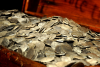
7. It's also the only pirate treasure ever recovered. So far, they've pulled over 200,000 silver coins up from the wreck, and it's estimated that there are over a million coins down there.
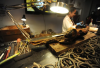
8. They also have found hundreds of copper & bronze bracelets called "manillas", which were a form of currency in West Africa. They were in the process of cleaning some of the bracelets & some of the coins & we got to hold them, so I've held real pirate treasure! The coins were mined from Bolivia & Lima and had pretty intricate stamps with lots of information on each coin.
9. The ocean builds up
concretions around buried artifacts. They take x-rays of rocks & then keep them in fishtanks or mist water on the bigger pieces, which include fragments of human bones, guns, canon balls, silver, and other artifacts.
10. Pirates would sometimes spend the equivalent of 2 year's pay on their guns (it was like their equivalent of decking out a high-end, personalized gaming PC). Each one was hand-made & unique, so you had to be careful not to lose the parts because even a gun made by the same dude wouldn't have parts that fit. The quality of the metal workmanship was amazing for the time!
11. They would often kidnap surgeons & doctors because health issues were so rampant. Barring that, they would use the ship's carpenter to amputate limbs. In the English Navy, sailors often wouldn't join up unless they had a doctor or at the very least a medical chest onboard. Because medical stuff was so hard to come by, captains would often just buy an empty medical chest to prove that they had it, only for the sailors to be screwed when their time of need came.
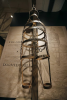
12. The gibbet system was a public execution system for hanging people in a cage. Sometimes they'd cover you in tar too! Pirating was both high-reward & high-risk...you could explore the ocean & earn your riches, but if you got caught, it was pretty bad!
The coins were very rough-cut: (not my pic)
Cleaning up some copper bracelets: (not my pic)
The gibbet public execution system:




www.birdnote.org
















 Facebook
 Twitter