
-
We’re currently investigating an issue related to the forum theme and styling that is impacting page layout and visual formatting. The problem has been identified, and we are actively working on a resolution. There is no impact to user data or functionality, this is strictly a front-end display issue. We’ll post an update once the fix has been deployed. Thanks for your patience while we get this sorted.
You are using an out of date browser. It may not display this or other websites correctly.
You should upgrade or use an alternative browser.
You should upgrade or use an alternative browser.
space travel will never work
Page 3 - Seeking answers? Join the AnandTech community: where nearly half-a-million members share solutions and discuss the latest tech.


SMOGZINN
Lifer
The real problem with space travel is that we are running out of time. We are using up our resources and easy energy reserves and destroying the environment we need to survive. As these things start to squeeze populations we will start to fight over their distribution and use, this will lead to ever more bitter and destructive wars, which will use up the limited resources faster and destroy the environment more completely. What it all adds up to is that if we don't get off this planet within the next few generations we never will, and it does not look like we have any real hope of that.

Puffnstuff
Lifer
I like this hull better.😀


JulesMaximus
No Lifer
Spacetime travel is the only kind of travel. Has anyone ever traveled outside of spacetime?
I wonder if there is anyone that has been spacetime traveling for over a month now, and would like us to make it stop...
Well, I have but I'm not uspose to talk about it.

norseamd
Lifer
While it's true space is quite empty, I'm sure before sending it on it's way NASA did some calculations to make sure it wasn't going to cross the path of any known interlopers (for lack of a better term). I doubt they would just send it off in any random direction and hope for the best.
Um, no, Im sure they didnt for anything outside the basic solar system, because none of the original mission extended out beyond Pluto.


Paratus
Lifer
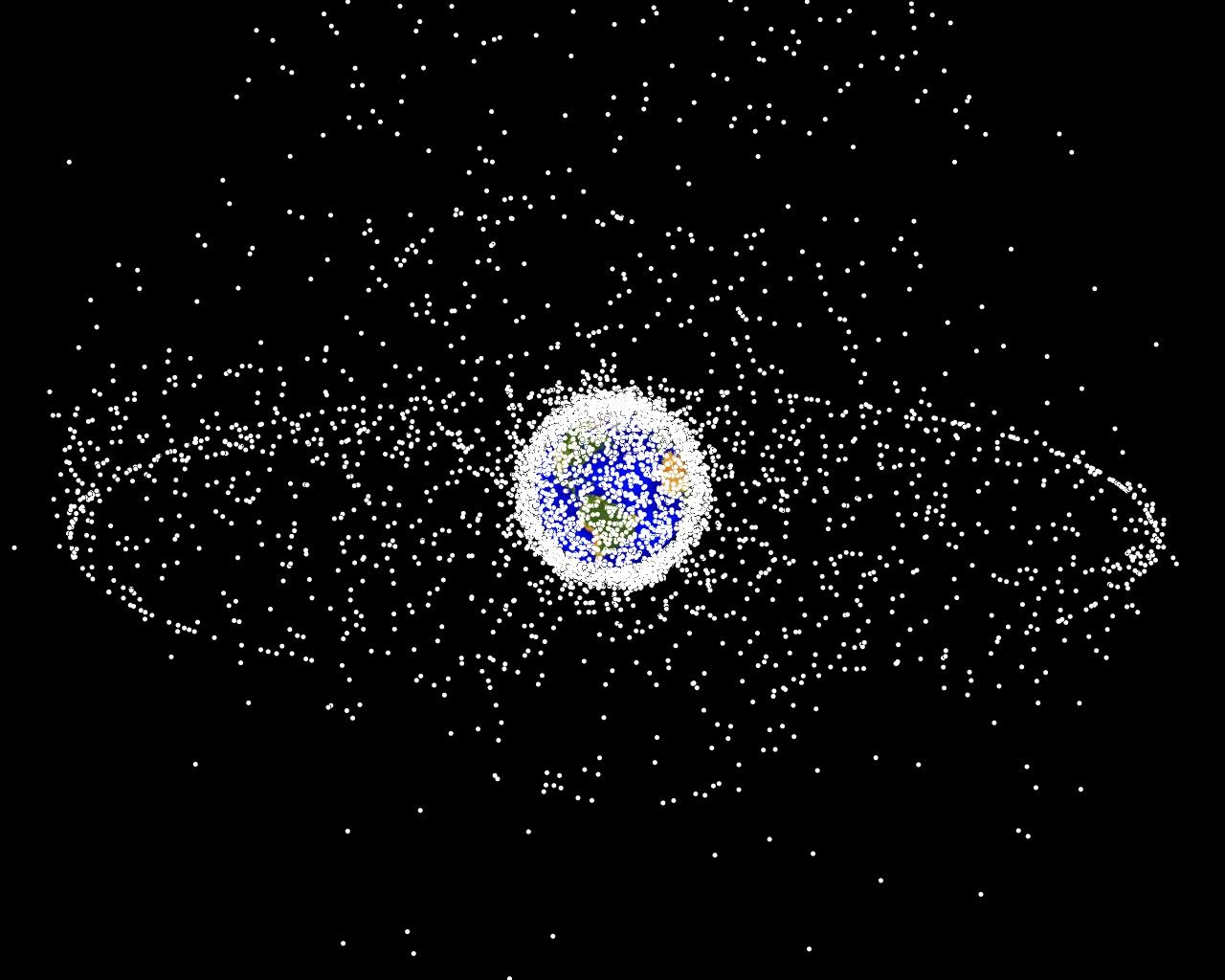
While star shot has its issues,handling space dust, micro meteorites and orbital debris (MMOD) at lower velocities is something we already no how to do.
For larger debris in orbit we pick it up from NORAD and maneuver around it.
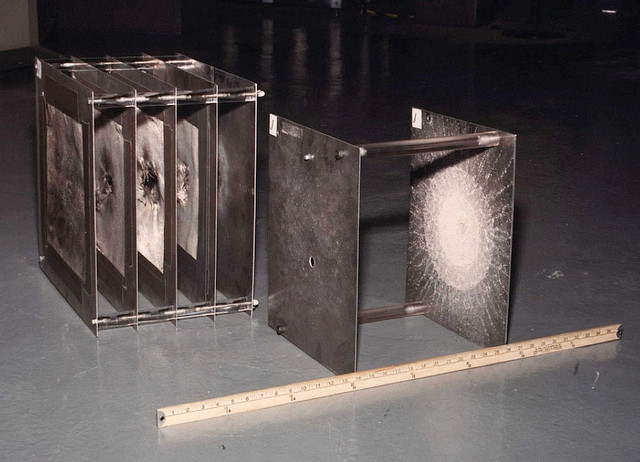
For smaller debris we can't see with radar we use Whipple Shielding. The outer plate breaks up the particle and deposits it over a greater surface area so it doesn't penetrate.
Vehicles are designed with redundancy so if critical equipment is damaged there's a spare(s) leg available.
For more advanced debris and radiation protection one group was investigating magnetic shielding. They placed a model spacecraft in plasma flow with a strong magnetic field which forces the charged particles around the model.

An interstellar trip would use parts of all of these ideas to design a mission that would have a good chance at avoiding catastrophic damage from MMOD.
For larger debris in orbit we pick it up from NORAD and maneuver around it.
For smaller debris we can't see with radar we use Whipple Shielding. The outer plate breaks up the particle and deposits it over a greater surface area so it doesn't penetrate.
Vehicles are designed with redundancy so if critical equipment is damaged there's a spare(s) leg available.
For more advanced debris and radiation protection one group was investigating magnetic shielding. They placed a model spacecraft in plasma flow with a strong magnetic field which forces the charged particles around the model.
An interstellar trip would use parts of all of these ideas to design a mission that would have a good chance at avoiding catastrophic damage from MMOD.

MrDudeMan
Lifer
Many of you are likely underestimating the impact artificial intelligence will probably have on space travel. A sufficiently intelligent AI may dramatically accelerate our space exploration capabilities, so to speak, both directly and indirectly.
This is a long read, but I highly recommend reading both parts in their entirety. It's a very well done and thought provoking series with a lot of incredibly interesting implications.
http://waitbutwhy.com/2015/01/artificial-intelligence-revolution-1.html
http://waitbutwhy.com/2015/01/artificial-intelligence-revolution-2.html
This is a long read, but I highly recommend reading both parts in their entirety. It's a very well done and thought provoking series with a lot of incredibly interesting implications.
http://waitbutwhy.com/2015/01/artificial-intelligence-revolution-1.html
http://waitbutwhy.com/2015/01/artificial-intelligence-revolution-2.html
Puffnstuff
Lifer
Next we'll have to start a hotties of star trek thread.😛


Blitzvogel
Platinum Member
Fold it.


Red Squirrel
No Lifer
They have pretty sophisticated systems to track stuff that's very far away. They will make corrections as required. The ISS has to make corrections all the time to avoid micro meteorites, space junk etc. A flake of paint is enough to put a star crack in a window. http://www.csmonitor.com/Science/20...ing-paint-flake-dings-window-of-space-station Oops. They better go see Apple Auto glass before it gets bigger! 😀
I'd imagine interplanetary craft would have similar systems to track objects as well. Not only track them, but track where they are going to be when the ship is further.
I'd imagine interplanetary craft would have similar systems to track objects as well. Not only track them, but track where they are going to be when the ship is further.

notposting
Diamond Member
There are some other ways to accomplish these goals though.
Recently read "Galactic Exploration" by Peter Cawdron (excellent, by the way, focus on realistic sci-fi for the most part. Anyway...) where some completely advanced ships were designed, built, and launched. No FTL drives, but what they did were advanced cloning techniques. The crews were all the same, more or less, as someone would come to their end and be cloned, young and fresh, but with the most recent memory backup in place...however, the memories were like ours, fickle, not always clear, took time to recall, etc.
But the ships were designed for trips lasting 1000's of years, communication delays in the hundreds, and certainly were a different take than "just wait until hyperdrive is invented!"
https://www.amazon.com/Galactic-Exploration-Peter-Cawdron-ebook/dp/B008BYN3ZG
Recently read "Galactic Exploration" by Peter Cawdron (excellent, by the way, focus on realistic sci-fi for the most part. Anyway...) where some completely advanced ships were designed, built, and launched. No FTL drives, but what they did were advanced cloning techniques. The crews were all the same, more or less, as someone would come to their end and be cloned, young and fresh, but with the most recent memory backup in place...however, the memories were like ours, fickle, not always clear, took time to recall, etc.
But the ships were designed for trips lasting 1000's of years, communication delays in the hundreds, and certainly were a different take than "just wait until hyperdrive is invented!"
https://www.amazon.com/Galactic-Exploration-Peter-Cawdron-ebook/dp/B008BYN3ZG
Red Squirrel
No Lifer
Another thing too, if you go fast enough, you can "frame skip" and even if you are heading directly at something, the next frame may happen on the other side of the object, thus not actually collide.
At least that's how it works in KSP:
😀
At least that's how it works in KSP:
TRENDING THREADS
-
 Discussion Zen 5 Speculation (EPYC Turin and Strix Point/Granite Ridge - Ryzen 9000)
- Started by DisEnchantment
- Replies: 25K
-
Discussion Intel Meteor, Arrow, Lunar & Panther Lakes + WCL Discussion Threads
- Started by Tigerick
- Replies: 25K
-
 Discussion Intel current and future Lakes & Rapids thread
- Started by TheF34RChannel
- Replies: 24K
-

-
