• We’re currently investigating an issue related to the forum theme and styling that is impacting page layout and visual formatting. The problem has been identified, and we are actively working on a resolution. There is no impact to user data or functionality, this is strictly a front-end display issue. We’ll post an update once the fix has been deployed. Thanks for your patience while we get this sorted.

Question Raptor Lake - Official Thread

Page 81 - Seeking answers? Join the AnandTech community: where nearly half-a-million members share solutions and discuss the latest tech.

Hulk

Diamond Member
Since we already have the first Raptor Lake leak I'm thinking it should have it's own thread.
What do we know so far?
From Anandtech's Intel Process Roadmap articles from July:

Built on Intel 7 with upgraded FinFET
10-15% PPW (performance-per-watt)
Last non-tiled consumer CPU as Meteor Lake will be tiled

I'm guessing this will be a minor update to ADL with just a few microarchitecture changes to the cores. The larger change will be the new process refinement allowing 8+16 at the top of the stack.

Will it work with current z690 motherboards? If yes then that could be a major selling point for people to move to ADL rather than wait.
 
Curious to see screenshot showing 6 GHz on three cores. That's on air, correct?
6 ghz? Can't really make it to 6ghz, havent tried but I was already hitting 1.61 volts for 5.8 so yeah...

Yes it's on air, single tower cooler, and the temps were actually toasty at those ST workloads. Don't remember exactly but I think the core that was boosting was at around 85c
 
6 ghz? Can't really make it to 6ghz, havent tried but I was already hitting 1.61 volts for 5.8 so yeah...

Yes it's on air, single tower cooler, and the temps were actually toasty at those ST workloads. Don't remember exactly but I think the core that was boosting was at around 85c
Sorry. I'm tired 🙂 85 degrees for 5.8 GHz is not bad.
 
Well it's not terrible but after 80c you kiss stability goodbye on Intel Cpu's, that's why it needs 1.61v. If i could keep it under 80c it can probably do it with 1.55v or something

That s not true, temp on short term reach 96°C in Prime 95 and 100°C after 2 minutes in Blender whose duration is about 4mn, so 80-85°C is still far from instability.

 
That s not true, temp on short term reach 96°C in Prime 95 and 100°C after 2 minutes in Blender whose duration is about 4mn, so 80-85°C is still far from instability.

I think you don't understand what im saying. OF COURSE at stock it's stable, Intel and AMD give the CPUS enough voltage at stock to have them work in extreme conditions, like 100C, without stability issues. That's how people can actually undervolt them.
 
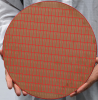
I counted 230 whole CPUs on that wafer.

It that wafer costs 20 K USD to make, that makes 87 USD per one chip cost.

If all that CPUs were powered at once each at 350W, the would put out over 80 kW of heat.
The actual wafer cost is probably closer to the $4k to $5k range. Counting previously sunk costs into the chip cost is going to lead you to incorrect conclusions.
 
It may actually be 30 thousands and not 20. These are VERY expensive. BTW those are pretty large CPUs. If 10% of them were defective, at the higher cost one would be 145 bucks.

It would be very interesting to see a breakdown of a cost of a CPU. How much of the total cost is the chip, substrate, packaging, sorting, testing, transportation, etc etc.
 
The cost is around 8k$/waffer for 7nm at TSMC, so at Intel it should be in the same ballpark given that their foundries needs for RD and production implementation are likely the same as the taiwanese firm.
 
The cost is around 8k$/waffer for 7nm at TSMC, so at Intel it should be in the same ballpark given that their foundries needs for RD and production implementation are likely the same as the taiwanese firm.
Intel's costs are likely slightly higher but not significantly. TSMC can use EUV in more steps and probably reduce cost. Also TSMC has cheaper labor in general, they pay their engineers far worse than Intel does.
 
The biggest cost by far is the upfront cost for simulation, mask, validation etc. The cost of wafers didn't rise as much. I don't even think packaging, even the more advanced ones, cost that much. What matter more there is the yield, the more complex the packaging the more costly a lower yield becomes.
Also TSMC has cheaper labor in general, they pay their engineers far worse than Intel does.
This is actually changing since TSMC suffered of engineers jumping off to mainland China due to low pay before.
 
The pass mark single thread performance was updated today. The vanilla 65w tdp 13700 (Non-K) is about 40% faster than the 12700k in integer.

 
Intel's costs are likely slightly higher but not significantly. TSMC can use EUV in more steps and probably reduce cost. Also TSMC has cheaper labor in general, they pay their engineers far worse than Intel does.

IIRC It's a little convoluted but my understanding is that Intel doesn't technically charge per wafer like a foundry. The Fab takes up all the costs of that quarter, including the nodes under development, and charges the departments proportionally based upon the wafers they received.
 
IIRC It's a little convoluted but my understanding is that Intel doesn't technically charge per wafer like a foundry. The Fab takes up all the costs of that quarter, including the nodes under development, and charges the departments proportionally based upon the wafers they received.
They probably have to have an equivalent metric of some kind, if for no other reason than to compare to TSMC and Samsung.
 
I think I saw somewhere something close to 20K per newest wafer technology recently. It may have been 17.

BTW is there easy way how to set power consumption limit in BIOS? I felt no need to change anything with my 12600K, because even the $40 air cooler has no problem cooling it well.

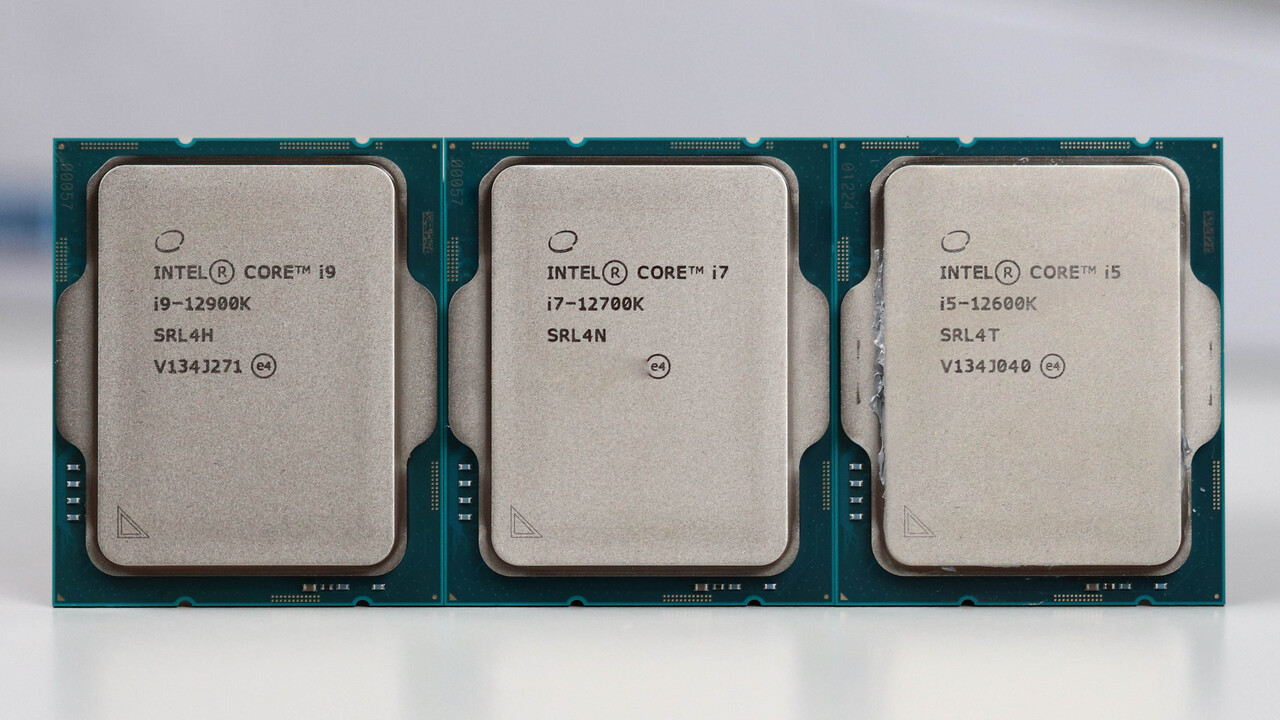
Seeing that 12600K will be resold as 13400, it seems that buying this CPU (or even buying LGA 1700 platform) was dumbest move in my PC tech buying history.
 
Seeing that 12600K will be resold as 13400, it seems that buying this CPU (or even buying LGA 1700 platform) was dumbest move in my PC tech buying history.
The 13400 isn't unlocked. So you didn't exactly make a horrible mistake. If you are not too demanding of it, it should last you 5 years easily and then you can put in a used 13900KS, giving you a couple more years of good excitement.
 
Buying the Z790 platform would be dumb this December. No upgradability. At least, Z690 owners can get a nice rush of endorphins from their investment when they upgrade to the 13th gen this year or in the next few years.
 
They probably have to have an equivalent metric of some kind, if for no other reason than to compare to TSMC and Samsung.
Nah. They are too self-obsessed for that. If they had such an internal metric to compare themselves against, they wouldn't have fallen so far behind. They would have looked at those metrics in every major meeting about the company's direction, someone with a lot of authority would have gotten alarmed and orders would have been issued to set the ship straight. Otherwise, it wouldn't have taken the firing of BK and Pat's onboarding for them to take corrective measures. They stopped smelling how bad their crap was stinking for too long.

TLDR: Intel no have internal process comparison metric.
 
Back
Top