igor_kavinski
Lifer
Prolon sends some pretty informational emails. I will reproduce some of them here as someone might find them useful.
Intermittent Fasting (IF) is a way of eating that incorporates regular periods of not eating, between periods of scheduled food intake. It’s a more structured way of eating than many other dietary approaches, but also comes with more freedoms than traditional diet programs.
While other popular ways of eating, like a ketogenic diet, a vegan diet, or a low-carb diet, focus on the type of food you’re eating, IF focuses on the periods of time you will and will not be eating. IF doesn’t require calorie counting, measuring ketones or blood sugar, or tracking your macros. Instead, IF gives you just the right amount of structure while still allowing freedom to make your everyday food choices. Regardless of which pattern you choose, the underlying reason IF works for weight loss is because you are restricting your eating period and typically your caloric intake as well. You will of course also feel better – and reap far more health benefits – if the foods you choose during eating periods are of high nutritional quality.
The prolonged fasting diet ''FMD' 'is basically fasting for an extended period; usually somewhere from 4 to 7 consecutive days. The main goal of this type of fasting diet is to initiate the stress of fasting onto the body over the course of several days which stimulates innate changes at the cellular level to help promote health. An example of a prolonged fast would be either a water fast for a series of 3-7 consecutive days (which should always be done under the care of a physician) or the potentially safer and easier to complete, Fasting Mimicking Diet (FMD), where specific foods can be eaten while still allowing the body to remain in a fasting state and experience many of the same benefits.
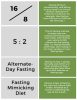

Intermittent Fasting (IF) is a way of eating that incorporates regular periods of not eating, between periods of scheduled food intake. It’s a more structured way of eating than many other dietary approaches, but also comes with more freedoms than traditional diet programs.
While other popular ways of eating, like a ketogenic diet, a vegan diet, or a low-carb diet, focus on the type of food you’re eating, IF focuses on the periods of time you will and will not be eating. IF doesn’t require calorie counting, measuring ketones or blood sugar, or tracking your macros. Instead, IF gives you just the right amount of structure while still allowing freedom to make your everyday food choices. Regardless of which pattern you choose, the underlying reason IF works for weight loss is because you are restricting your eating period and typically your caloric intake as well. You will of course also feel better – and reap far more health benefits – if the foods you choose during eating periods are of high nutritional quality.
The prolonged fasting diet ''FMD' 'is basically fasting for an extended period; usually somewhere from 4 to 7 consecutive days. The main goal of this type of fasting diet is to initiate the stress of fasting onto the body over the course of several days which stimulates innate changes at the cellular level to help promote health. An example of a prolonged fast would be either a water fast for a series of 3-7 consecutive days (which should always be done under the care of a physician) or the potentially safer and easier to complete, Fasting Mimicking Diet (FMD), where specific foods can be eaten while still allowing the body to remain in a fasting state and experience many of the same benefits.