
-
We’re currently investigating an issue related to the forum theme and styling that is impacting page layout and visual formatting. The problem has been identified, and we are actively working on a resolution. There is no impact to user data or functionality, this is strictly a front-end display issue. We’ll post an update once the fix has been deployed. Thanks for your patience while we get this sorted.
You are using an out of date browser. It may not display this or other websites correctly.
You should upgrade or use an alternative browser.
You should upgrade or use an alternative browser.
Power ISA going open
- Thread starter soresu
- Start date

moinmoin
Diamond Member
What makes the Power platform interesting is that with this step it's fully open source, including BIOS and hardware. That a unique quality for such a mature platform. It's unfortunate it's essentially non-existing in consumer space these days, which may make this a case of "too little too late".
zir_blazer
Golden Member
Well, there is the Talos 2. But it cost more than x86 for the same performance, plus you can't expect to run Windows on it. The only people that can successfully use that platform are Linux power users.It's unfortunate it's essentially non-existing in consumer space these days, which may make this a case of "too little too late".

Not necessarily true, China has been all over the map on ISA of natively designed CPU cores - at least Alpha (Shunwei), MIPS (Loongson) and ARM (Phytium).I think it is too late. A similar effort didn't save SPARC, though I suppose it helped keep it alive in Japan. Power isn't dead, won't die soon, but being open isn't going to increase the number of implementations.
It would not surprise me to see this spur them to action for POWER too, especially if the pre-existing software base is worth it.
Also SPARC never really penetrated beyond the server space if I'm not mistaken, while POWER was in 3 generations of Nintendo consoles, and 1 each of Sony and MS respectively, that's well over a decade of consumer hardware optimised to death, even if far from the latest version of the ISA.
Given its new open status, we might see Nintendo fabbing a new small POWER cpu at 8nm or something to cover the classics of Gamecube onwards.
Last edited:
There's no reason that the same setup used for Windows on ARM can't be ported to other ISA's like POWER and RISC-V.Well, there is the Talos 2. But it cost more than x86 for the same performance, plus you can't expect to run Windows on it. The only people that can successfully use that platform are Linux power users.
I think I heard they had ported it to EDGE already, not a surprise given MS Research has published papers on the E2 uArch based on it.
moinmoin
Diamond Member
It's now royalty free.Okay, what am I missing? I thought POWER went open in 2013? All they did was join the Linux Foundation last week . . . it changes their governance but um, not sure what else that really means?
nicalandia
Diamond Member
The Only reason the Dreaded "Power ISA" was not entirely forgotten long ago is because it has been backed by IBM one of the huge corporation that still standing for more than a century, but just like the OpenSPARC, nobody really cares about it.

DrMrLordX
Lifer
It's now royalty free.
Okay, thanks. That wasn't immediately obvious from the press release I read. Either that or I just skimmed too much.
The Only reason the Dreaded "Power ISA" was not entirely forgotten long ago is because it has been backed by IBM one of the huge corporation that still standing for more than a century, but just like the OpenSPARC, nobody really cares about it.
POWER9 found its way into Summit. It's interesting(ish), and had both AMD and Intel flubbed starting in 2017, POWER might have made sort of a comeback in some parts of the server room. But you know. That's not entirely what happened.
DrMrLordX
Lifer
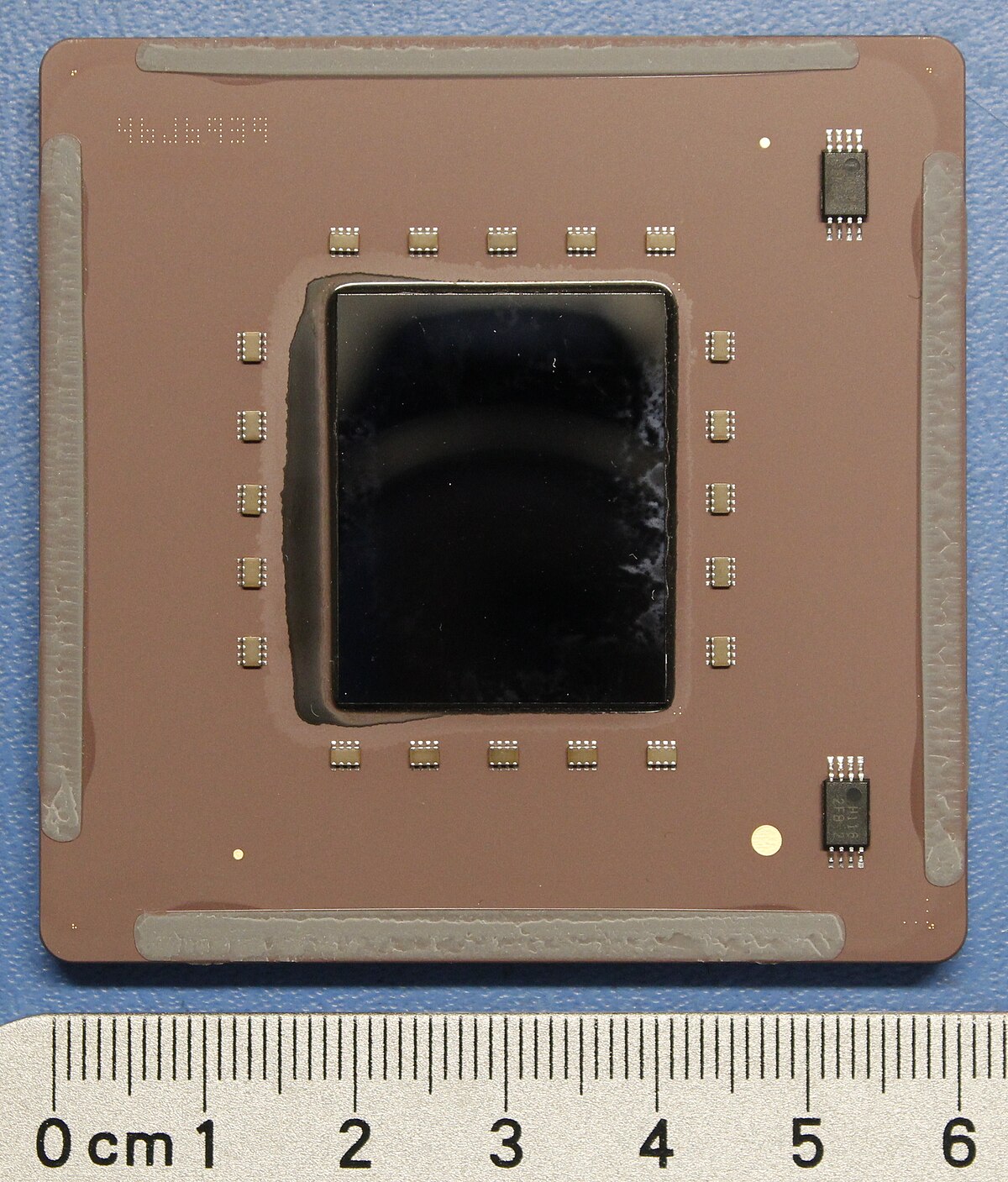
POWER7 - Wikipedia
 en.wikipedia.org
read.
Ugh, don't remind me of that - still stinging from Nintendo misleading us into thinking that the WiiU CPU was POWER7 with that WATSON comment.POWER7 - Wikipedia
read.
DrMrLordX
Lifer
Ugh, don't remind me of that - still stinging from Nintendo misleading us into thinking that the WiiU CPU was POWER7 with that WATSON comment.
Nintendo hasn't done anything close to cutting-edge with their CPUS since . . . eh . . . erm . . . well it's been awhile.
Probably the initial Gekko chip which was a customised variant of PowerPC 750CX, more or less state of the art at the time the GameCube came out.Nintendo hasn't done anything close to cutting-edge with their CPUS since . . . eh . . . erm . . . well it's been awhile.
Everything after that was either the same thing higher clocked (Wii), higher clocked with more cores (WiiU), or an off the shelf SoC using standard ARM cores repurposed from a 2 year old product of the SoC's designer (Switch).
It would be nice to see Nintendo really taking a swing at serious gaming for once in the last 15-20 years.
Maybe their decision to allow more 'hardcore' games on the Switch could be them testing the waters to that end - it would certainly be interesting to see a Switch using state of the art CPU and GPU uArch on a state of the art chip process, or at least a 7nm variant.
DrMrLordX
Lifer
Probably the initial Gekko chip which was a customised variant of PowerPC 750CX, more or less state of the art at the time the GameCube came out.
Sounds about right. N64 had a pretty interesting set of hardware as well. Everything after the GameCube though? Meh.
TRENDING THREADS
-
 Discussion Zen 5 Speculation (EPYC Turin and Strix Point/Granite Ridge - Ryzen 9000)
- Started by DisEnchantment
- Replies: 25K
-
Discussion Intel Meteor, Arrow, Lunar & Panther Lakes + WCL Discussion Threads
- Started by Tigerick
- Replies: 25K
-
 Discussion Intel current and future Lakes & Rapids thread
- Started by TheF34RChannel
- Replies: 24K
-

-
