

Plane engineers of ATOT, what would have been a better solution than MCAS for the 737 max?
- Thread starter brainhulk
- Start date
You are using an out of date browser. It may not display this or other websites correctly.
You should upgrade or use an alternative browser.
You should upgrade or use an alternative browser.
KillerCharlie
Diamond Member
- Aug 21, 2005
- 3,691
- 68
- 91
I am an aerodynamicist for a major airplane manufacturer. I know more about this issue than all but perhaps a few dozen people. It's a far more complex issue than you'll ever read about in the news and than most non-engineers could understand.
Obviously this poll is tongue-in-cheek, but the first option shows your complete lack of understanding of basic airplane characteristics. More thrust increases nose-up pitch and excaberbates stall - the condition trying to be avoided in the first place.
Very few people have the ability to design such complicated vehicles that fly 600 mph 40,000 feet up and are flown on by 4 billion passengers a year. Those that do take it very seriously.
Everyone else likes to play armchair aerospace engineer.
That's all I'm going to say.
Obviously this poll is tongue-in-cheek, but the first option shows your complete lack of understanding of basic airplane characteristics. More thrust increases nose-up pitch and excaberbates stall - the condition trying to be avoided in the first place.
Very few people have the ability to design such complicated vehicles that fly 600 mph 40,000 feet up and are flown on by 4 billion passengers a year. Those that do take it very seriously.
Everyone else likes to play armchair aerospace engineer.
That's all I'm going to say.

nakedfrog
No Lifer
- Apr 3, 2001
- 63,075
- 19,399
- 136
...so, not Bruce Lee?I am an aerodynamicist for a major airplane manufacturer. I know more about this issue than all but perhaps a few dozen people. It's a far more complex issue than you'll ever read about in the news and than most non-engineers could understand.
Obviously this poll is tongue-in-cheek, but the first option shows your complete lack of understanding of basic airplane characteristics. More thrust increases nose-up pitch and excaberbates stall - the condition trying to be avoided in the first place.
Very few people have the ability to design such complicated vehicles that fly 600 mph 40,000 feet up and are flown on by 4 billion passengers a year. Those that do take it very seriously.
Everyone else likes to play armchair aerospace engineer.
That's all I'm going to say.

local
Golden Member
- Jun 28, 2011
- 1,852
- 517
- 136
I am an aerodynamicist for a major airplane manufacturer. I know more about this issue than all but perhaps a few dozen people. It's a far more complex issue than you'll ever read about in the news and than most non-engineers could understand.
Obviously this poll is tongue-in-cheek, but the first option shows your complete lack of understanding of basic airplane characteristics. More thrust increases nose-up pitch and excaberbates stall - the condition trying to be avoided in the first place.
Very few people have the ability to design such complicated vehicles that fly 600 mph 40,000 feet up and are flown on by 4 billion passengers a year. Those that do take it very seriously.
Everyone else likes to play armchair aerospace engineer.
That's all I'm going to say.
This.
Boeing is about to go through the modern "social media justice" style beating that is so popular these days. Now more than ever average people know the name of a specific aircraft and will be looking to avoid it, right or wrong it is going to hurt.


spacejamz
Lifer
- Mar 31, 2003
- 10,983
- 1,701
- 126
Here is the guide used by the social media justice warriors to identify the aircraft to they want to avoid....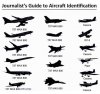

- Sep 14, 2007
- 9,376
- 454
- 126
I am an aerodynamicist for a major airplane manufacturer. I know more about this issue than all but perhaps a few dozen people. It's a far more complex issue than you'll ever read about in the news and than most non-engineers could understand.
Obviously this poll is tongue-in-cheek, but the first option shows your complete lack of understanding of basic airplane characteristics. More thrust increases nose-up pitch and excaberbates stall - the condition trying to be avoided in the first place.
Very few people have the ability to design such complicated vehicles that fly 600 mph 40,000 feet up and are flown on by 4 billion passengers a year. Those that do take it very seriously.
Everyone else likes to play armchair aerospace engineer.
That's all I'm going to say.
Since we're all family here, give us your take on the issue so us laymen can understand more clearly.

crashtech
Lifer
- Jan 4, 2013
- 10,695
- 2,294
- 146
I thought it was pretty well-known that thrust causes a pitch-up moment in these aircraft, as well as many others, actually. The procedure for stall recovery on aircraft with this tendency (generally) is to push the nose down gently before gently adding power. The stick shaker is designed to activate just before things get really out of hand and the stall gets really ass-puckering.

lxskllr
No Lifer
- Nov 30, 2004
- 60,413
- 10,801
- 126
They installed the engines backward! Fuckin' Chinese manufacture...More engines is always the answer.


BurnItDwn
Lifer
- Oct 10, 1999
- 26,354
- 1,863
- 126
Wouldnt it make sense to have 3 redundant airspeed sensors to detect potential stalls?
If 1 sensor does not agree with other 2, then, flag an error with the 1 sensor, and use the other 2
If all 3 disagree, then disable MCAS?
Furthermore, shouldnt all planes carrying more than like 10 people simply be required as start of standard equipment to have a working angle of attack indicato.
Also, the gyro should have shown that the plane was pointed to the ground right? And pilots should read their damn gyro, no?
Planes should always have redundancies so that if any 1 thing breaks or goes haywire, you have a plan B. Ideally, you will have double redundancies so that you get a good plan C if plan B fails.
If 1 sensor does not agree with other 2, then, flag an error with the 1 sensor, and use the other 2
If all 3 disagree, then disable MCAS?
Furthermore, shouldnt all planes carrying more than like 10 people simply be required as start of standard equipment to have a working angle of attack indicato.
Also, the gyro should have shown that the plane was pointed to the ground right? And pilots should read their damn gyro, no?
Planes should always have redundancies so that if any 1 thing breaks or goes haywire, you have a plan B. Ideally, you will have double redundancies so that you get a good plan C if plan B fails.

K1052
Elite Member
- Aug 21, 2003
- 53,141
- 47,342
- 136
From an entirely non-aerospace background and just reading the reports I'd say:
MCAS itself is not inherently bad.
Not including more redundancy for the AOA input was a mistake.
Not including the disagree light for the AOA sensors and a warning when MCAS is active on the base aircraft was a mistake.
Not extensively explaining howMCAS works and the procedure to disengage it fully (or that it existed) to 737 pilots was a mistake.
MCAS itself is not inherently bad.
Not including more redundancy for the AOA input was a mistake.
Not including the disagree light for the AOA sensors and a warning when MCAS is active on the base aircraft was a mistake.
Not extensively explaining howMCAS works and the procedure to disengage it fully (or that it existed) to 737 pilots was a mistake.
I am an aerodynamicist for a major airplane manufacturer. I know more about this issue than all but perhaps a few dozen people. It's a far more complex issue than you'll ever read about in the news and than most non-engineers could understand.
Obviously this poll is tongue-in-cheek, but the first option shows your complete lack of understanding of basic airplane characteristics. More thrust increases nose-up pitch and excaberbates stall - the condition trying to be avoided in the first place.
Very few people have the ability to design such complicated vehicles that fly 600 mph 40,000 feet up and are flown on by 4 billion passengers a year. Those that do take it very seriously.
Everyone else likes to play armchair aerospace engineer.
That's all I'm going to say.
But is the MCAS not by definition an automated acceleration due to risk of stall? He didn't say increased thrust, which I agree due the way they are mounted would cause an exacerbate nose up/AoA condition. He said acceleration, would that not also include automated control of the elevators or trim tab, causing a rotation on the transverse axis (pitch)? Is change of direction not also acceleration?

Since we're all family here, give us your take on the issue so us laymen can understand more clearly.
Agree with the Hulk, if you'd be willing to take the time, you might be surprised, some of us might get it more than you'd expect. News is horrible at relaying technical info, and I for one would appreciate your insight.
lxskllr
No Lifer
- Nov 30, 2004
- 60,413
- 10,801
- 126
I'm thinking ejection seats for the passengers. Then we'll see who was paying attention to the seatbelt notice.Planes should always have redundancies so that if any 1 thing breaks or goes haywire, you have a plan B. Ideally, you will have double redundancies so that you get a good plan C if plan B fails.
From an entirely non-aerospace background and just reading the reports I'd say:
MCAS itself is not inherently bad.
Not including more redundancy for the AOA input was a mistake.
Not including the disagree light for the AOA sensors and a warning when MCAS is active on the base aircraft was a mistake.
Not extensively explaining howMCAS works and the procedure to disengage it fully (or that it existed) to 737 pilots was a mistake.
All of the above. Virtually everything needed for the above is built in to the basic aircraft. But operators have to pay extra to enable the disagree light, or AoA readings themselves. Considering it was an integral part of the new design, it should not have been "optional" and now at least partially won't be going forward.
Wouldnt it make sense to have 3 redundant airspeed sensors to detect potential stalls?
If 1 sensor does not agree with other 2, then, flag an error with the 1 sensor, and use the other 2
If all 3 disagree, then disable MCAS?
Furthermore, shouldnt all planes carrying more than like 10 people simply be required as start of standard equipment to have a working angle of attack indicato.
Also, the gyro should have shown that the plane was pointed to the ground right? And pilots should read their damn gyro, no?
Planes should always have redundancies so that if any 1 thing breaks or goes haywire, you have a plan B. Ideally, you will have double redundancies so that you get a good plan C if plan B fails.
It's not speed or angle itself on these. It is the difference in angle of travel and angle of air movement. Take a look at Angle of Attack As KillerCharlie said that is not the most intuitive concept, and they have some relationships, as controls to change one thing, can effect other flight parameters, but that is what was the system in question was designed for.
nakedfrog
No Lifer
- Apr 3, 2001
- 63,075
- 19,399
- 136
I'm enjoying the mental imagery of a hundred ejection seats going off, and then the subsequent chaos as they bounce off each other.I'm thinking ejection seats for the passengers. Then we'll see who was paying attention to the seatbelt notice.
BurnItDwn
Lifer
- Oct 10, 1999
- 26,354
- 1,863
- 126
It's not speed or angle itself on these. It is the difference in angle of travel and angle of air movement. Take a look at Angle of Attack As KillerCharlie said that is not the most intuitive concept, and they have some relationships, as controls to change one thing, can effect other flight parameters, but that is what was the system in question was designed for.
Thanks, Im always glad to see people with more knowledge and experience sharing information.
Experts are awesome!

zinfamous
No Lifer
- Jul 12, 2006
- 111,904
- 31,429
- 146


Red Squirrel
No Lifer
Kerbal Space Program engineer here, I voted for putting a nose extension ballast. You can put the APU battery in there, or a science module, or mono propellant tank. Maybe even a front facing engine with side intakes with separate fuel tank for quick deceleration upon landing. Basically, add weight on the front but something that also serves a purpose.

Platypus
Lifer
- Apr 26, 2001
- 31,046
- 321
- 136
I am an aerodynamicist for a major airplane manufacturer. I know more about this issue than all but perhaps a few dozen people. It's a far more complex issue than you'll ever read about in the news and than most non-engineers could understand.
Obviously this poll is tongue-in-cheek, but the first option shows your complete lack of understanding of basic airplane characteristics. More thrust increases nose-up pitch and excaberbates stall - the condition trying to be avoided in the first place.
Very few people have the ability to design such complicated vehicles that fly 600 mph 40,000 feet up and are flown on by 4 billion passengers a year. Those that do take it very seriously.
Everyone else likes to play armchair aerospace engineer.
That's all I'm going to say.
Then please feel free to extrapolate if you can. I have seen a dozen hot takes from people claiming to have this same kind of knowledge but coming off as "you are getting the wrong information and you are completely misinformed and are playing armchair engineer" and then not providing anything of substance to justify that kind of dismissive and condescending response.

Paratus
Lifer
- Jun 4, 2004
- 17,691
- 15,939
- 146
I am an aerodynamicist for a major airplane manufacturer. I know more about this issue than all but perhaps a few dozen people. It's a far more complex issue than you'll ever read about in the news and than most non-engineers could understand.
Obviously this poll is tongue-in-cheek, but the first option shows your complete lack of understanding of basic airplane characteristics. More thrust increases nose-up pitch and excaberbates stall - the condition trying to be avoided in the first place.
Very few people have the ability to design such complicated vehicles that fly 600 mph 40,000 feet up and are flown on by 4 billion passengers a year. Those that do take it very seriously.
Everyone else likes to play armchair aerospace engineer.
That's all I'm going to say.
The decision to move the engines, change the CG, and use MCAS to compensate was fine. (Although these are still links in the error chain that lead to the failure)
For catastrophic failures system design should generally be two fault tolerant. At the bare minimum one fault tolerant with the second level of fault tolerance coming from human or software intervention.
The main egregious design failure as near as I can tell was assuming that two sensors made the system one fault tolerant. Sure it may work to swap from a failed sensor to a good sensor but this was apparently sensor disagreement. Without three sensors in a voting logic scheme it’s extremely difficult to determine which sensor has drifted and which is still true.
What should have happened was upon the two sensors disagreeing the system should have stopped functioning and/or alerted the pilots to take action.
Of course the disagree light was not included on the base Max8.
As it was the system was 0 fault tolerant to a catastrophic hazard.
Which is the second egregious failure. These hazards should have been identified and they weren’t, in part because the FAA allowed Boeing to perform the oversight function.
I’m sure this whole thing is going to be taught in hazard analysis training for years to come.
TRENDING THREADS
-
 Discussion Zen 5 Speculation (EPYC Turin and Strix Point/Granite Ridge - Ryzen 9000)
- Started by DisEnchantment
- Replies: 25K
-
Discussion Intel Meteor, Arrow, Lunar & Panther Lakes + WCL Discussion Threads
- Started by Tigerick
- Replies: 23K
-
 Discussion Intel current and future Lakes & Rapids thread
- Started by TheF34RChannel
- Replies: 23K
-

-


AnandTech is part of Future plc, an international media group and leading digital publisher. Visit our corporate site.
© Future Publishing Limited Quay House, The Ambury, Bath BA1 1UA. All rights reserved. England and Wales company registration number 2008885.
 Facebook
 Twitter