In2Photos
Platinum Member
He just did, it's called the 5090FE.Jensen should release the 4090 Ti FE with the same cooling solution as the 5090 FE. Problem solved.

He just did, it's called the 5090FE.Jensen should release the 4090 Ti FE with the same cooling solution as the 5090 FE. Problem solved.
The 4090 Ti FE 24GB for $1600 will be power capped at 450W. Could be based on the 5080 but they could call it 4090 Ti to make it sound less attractive to lure users towards 5090. Cheaper to make and runs cooler too.He just did, it's called the 5090FE.
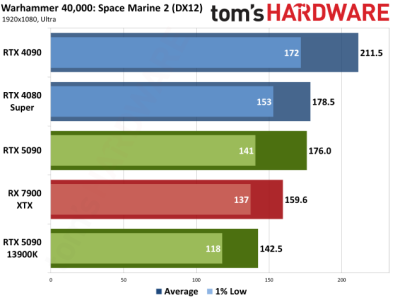
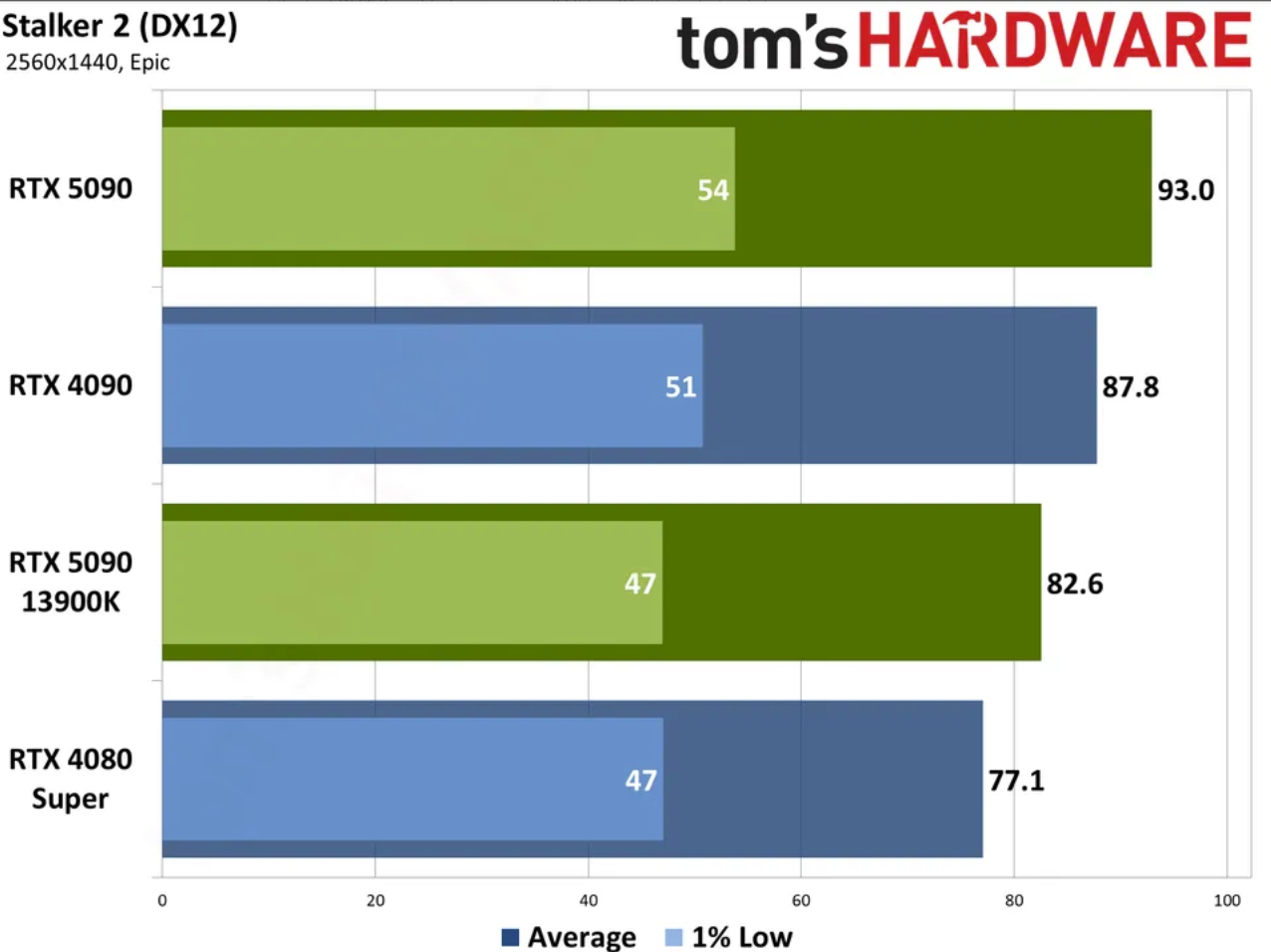
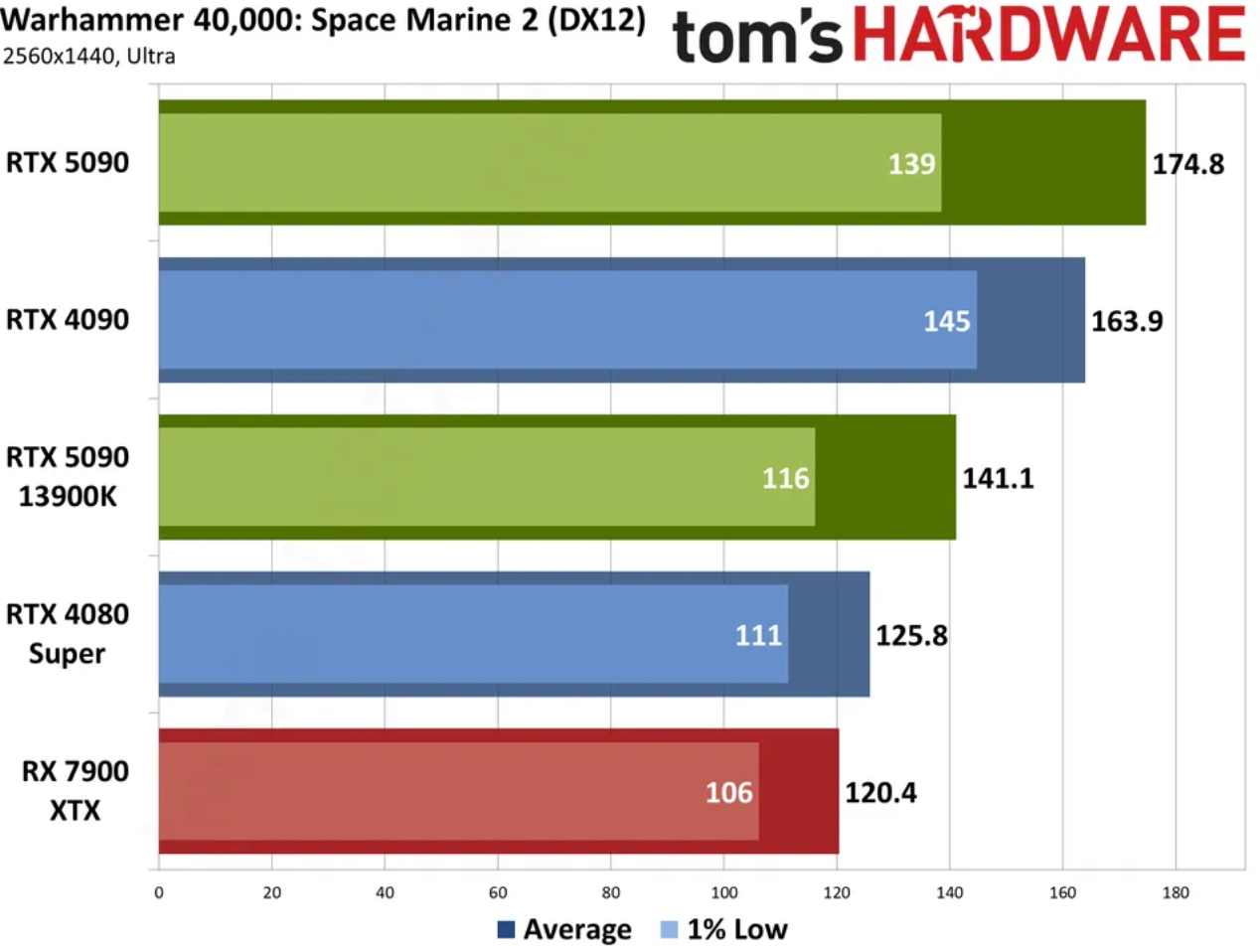
I wonder how much it can be pushed with oc. Most 4090s do 2.9-3ghz, but this new card is more likely to hit a power or heat limit first.The worse power efficiency and slightly lower FPS at extremely high native FPS... could that be caused by clock frequency somehow which is now a tad lower than 4090?
While I don't necessarily disagree with that, maybe AMD not making 550mm² RDNA4 chip does make sense - because in that scenario it would only have existed so people could buy a more powerful Nvidia card for less!AMD could've made a 550 mm2 card or so that beats the RTX 5080 convincingly, and you would have your RTX 5080 ti or at least a supercharged RTX 5080 super.
The phenomenon of coil beeping in the GeForce RTX 5090 occurs primarily in a frequency range of around 175 to 190 Hz and can also be indirectly attributed to the load changes. The coil noise is caused by mechanical vibrations in the induction coils of the VRMs, which are caused by the rapid changes in the current flow. The intensity of the coil beeping thus depends heavily on the load situation of the GPU. Under high loads, especially in applications with very high frame rates (FPS), the current consumption of the GPU increases significantly. In such scenarios, the voltage converters operate at maximum efficiency, which keeps the switching frequencies constantly high and increases the mechanical vibrations in the coils. This makes the noise more noticeable, especially in open housings or in very quiet environments.

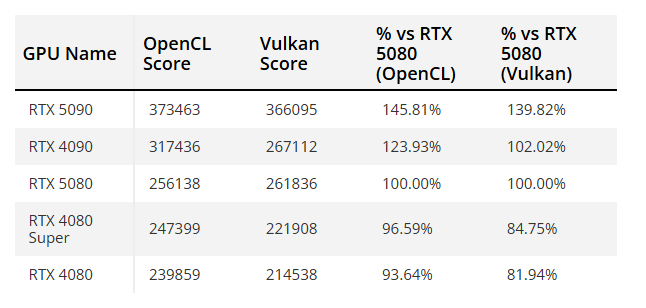
So, where's the $1500 24GB 384bit part that replaces the 4090 at 450W outright? Seems doable and there is such a gulf from 5080 to the 5090 using the 4080S as a stand in.
I know the gap was there before but the 4080 was $1200 and the 4090 was "$1600"?
Seems like if we are stuck with this for 2 years plenty of folks would want something in the middle? Or not?
Yeah, from Jensens POV, thats low-end.1600$ isn't mid-range.
It is now.1600$ isn't mid-range.
With a big enough loop you could probably daily drive it with a decent OC if you voltmodded it to get around current limits. You'd probably want to do something about that power connector first though.I wonder how much it can be pushed with oc. Most 4090s do 2.9-3ghz, but this new card is more likely to hit a power or heat limit first.


McJesus!the $1600 mid-range segment

It is only 16% of the $10K rig we all run ...1600$ isn't mid-range.

That was peak cringe. I caught that clip where he called it a command center instead of a battle station.It is only 16% of the $10K rig we all run ...

I thought so too, not even Apple is that out of touch except the Mac Pro but that’s directed at stupid people 😝That was peak cringe. I caught that clip where he called it a command center instead of a battle station.




I tried it in Cyperpunk, at 4K the new model is surprisingly good even at Ultra Performance. But look at foliage (especially cactuses and bushes in the desert) and the new model clearly hasn't solved the blurriness of those at anything except DLAA, even Quality is disappointing. They do shimmer a tad less at Ultra Performance though, but the new model shines at geometry and less ghosting mostly, only a tad better on textures, and hardly improving foliage.The transformer model seems better than I thought. It doesn’t fix some of the issues the previous versions had, but the overall IQ is significantly improved, especially in motion.
Victim of their own success. But an absurdly RICH victim.Blackwell+30%