


- Jan 5, 2017
- 3,865
- 3,730
- 136
Original PDF.
From Ars Techinca:
From Ars Techinca:
BranchScope and Spectre 2 both take advantage of different parts of the branch predictor. Spectre 2 relied on a part called the Branch Target Buffer (BTB)—the data structure within the processor that records the branch target. BranchScope, instead, leaks information using the direction of the prediction—whether it's likely to be taken or not—which is stored in the pattern history table (PHT).
The PHT keeps a kind of running score of recently taken branches to remember if those branches were taken or not. Typically, it's a two-bit counter with four states: strongly taken, weakly taken, weakly not taken, and strongly not taken. Each time a branch is taken, the counter's value is moved toward "strongly taken"; each time it's not taken, it's moved toward "strongly not taken." This design means that an occasional mispredict won't change the result of the prediction: a branch that's almost always taken will still predict as taken, even if every it's occasionally not actually taken. Changing the prediction requires two back-to-back mispredicts. This design is proven to provide better results than a one-bit counter that simply predicts a branch based on what happened the last time it was taken.
In the new attack, an attacker primes the PHT and running branch instructions so that the PHT will always assume a particular branch is taken or not taken. The victim code then runs and make a branch, which is potentially disturbing the PHT. The attacker then runs more branch instructions of its own to detect that disturbance to the PHT; the attacker knows that some branches should be predicted in a particular direction and tests to see if the victim's code has changed that prediction.
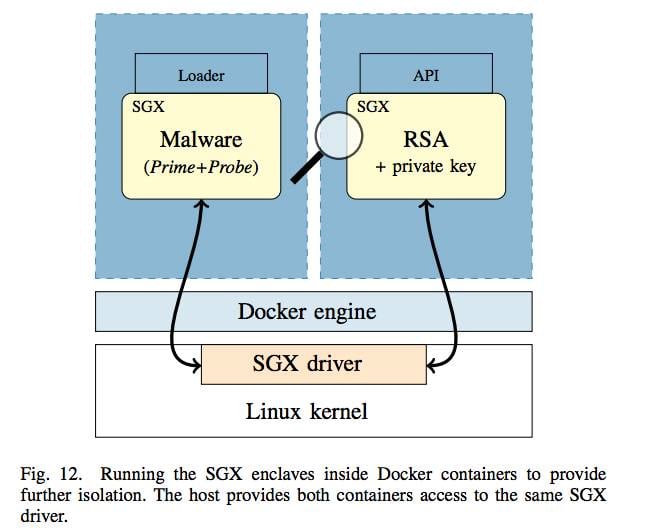
The researchers looked only at Intel processors, using the attacks to leak information protected using Intel's SGX (Software Guard Extensions), a feature found on certain chips to carve out small sections of encrypted code and data such that even the operating system (or virtualization software) cannot access it. They also described ways the attack could be used against address space layout randomization and to infer data in encryption and image libraries.





 Facebook
 Twitter