• We’re currently investigating an issue related to the forum theme and styling that is impacting page layout and visual formatting. The problem has been identified, and we are actively working on a resolution. There is no impact to user data or functionality, this is strictly a front-end display issue. We’ll post an update once the fix has been deployed. Thanks for your patience while we get this sorted.

LED lights for outdoors, long duration

JTsyo

Lifer
For my front porch light, the socket is candelabra base. I picket up some GE bulbs that was supposed to be for 13 years but has burned out in about 1 year. Reading the back of the box, the light is meant for chandeliers and sconces and the 13 year mark is based on 3 hours per day. We leave the outside light on for about 5 hours per day. Were these bulbs defective or was I just using them for the wrong application? What bulbs should I be using?
 
Last edited:
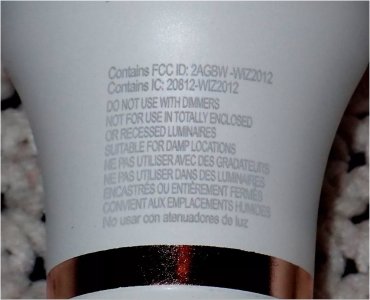
was it damp or wet rated?

i find most GE branded stuff to not be very good. my oldest led bulbs are Cree, and they have been great about warranty sending me new ones with one email if i am dissatisfied with them.

i seem to have good luck with the ecosmart ones as well. feit is hit or miss.
 
Just as WilliamM2 said. This applies both to older incandescent bulbs with filaments that burn out due to lack of cooling, AND to LED's. For LED lamps, the LED element that generates light is not the item that fails first. It is the other solid-state components in the small power supply unit in the base of the lamp that fail from lack of cooling. Even though such lamps create less waste heat that an incandescent filament lamp, what is generated is concentrated very near the base of the bulb and may not have good air circulation around that to allow cooling.

I'm speculating here a bit. As WilliamM2 says, look for lamps rated for use in enclosed fixtures.Ones with candelabra bases may be even harder to find. But MAYBE what they will look like is ones that have about half of the lamp body (nearer the base) as a solid material that almost looks ceramic, while the clear (or foggy) part farthest from the base is where the light comes out. I can't recommend any specific lamps - I don't have any fixtures like that any more. I DO use some LED lamps with the common larger "Medium" base in power levels of 15 W to 25 W (equivalent to incandescents of 100 to 150 W) in "closed" fixtures (one is outside over our front door) but they do have small slots in their upper surfaces for some hot air escape.

 
I never had any luck with candelabra-base bulbs lasting very long. We had “carriage lights” on the front of our garage that used them…3 in each fixture. At least a couple would burn out every year…some only lasted a few months. Didn’t matter if they were incandescent or CF, (before LED bulbs became “a thing.”)
 
Got a couple of boxes of GE LED B11C at a flea market for $8 for a box of 24.

Have had two in vented outdoor fixtures for several months with no problems. Switched by a photocell dusk to dawn, so on for 8 hours or more in Winter.

Put two more in two other vented outdoor fixtures also switched by photocells. So far no problems, though the first two fixtures are now turned off for other reasons.

All of mine and base down, lamp point up. Installing them base up might be a problem in some cases.
 
My house in Texas had a porch light that took a regular sized bulb, so I put one of these yellow Great Value LED's in it:

The bulb would typically last ~18 months, kept on 24/7. Which put the cost of the bulb at ~33 cents per month. Cost of electricity was about 80 cents a month. Pretty cheap, and I didn't have to mess with putting a photo receptor, or remembering to turn the light on and off.

IMHO, that's where the true savings of using LED's for outdoor lights are. The value you get from it will depend on your circumstances, of course. But for ~$1.15/month, it was worth it, to me.
 
Back
Top