
• We’re currently investigating an issue related to the forum theme and styling that is impacting page layout and visual formatting. The problem has been identified, and we are actively working on a resolution. There is no impact to user data or functionality, this is strictly a front-end display issue. We’ll post an update once the fix has been deployed. Thanks for your patience while we get this sorted.

Discussion Leading Edge Foundry Node advances (TSMC, Samsung Foundry, Intel) - [2020 - 2025]

Page 255 - Seeking answers? Join the AnandTech community: where nearly half-a-million members share solutions and discuss the latest tech.

DisEnchantment

Golden Member
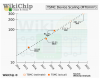
TSMC's N7 EUV is now in its second year of production and N5 is contributing to revenue for TSMC this quarter. N3 is scheduled for 2022 and I believe they have a good chance to reach that target.
1587737990547.png
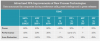
N7 performance is more or less understood.
1587739093721.png

This year and next year TSMC is mainly increasing capacity to meet demands.

For Samsung the nodes are basically the same from 7LPP to 4 LPE, they just add incremental scaling boosters while the bulk of the tech is the same.

Samsung is already shipping 7LPP and will ship 6LPP in H2. Hopefully they fix any issues if at all.
They have two more intermediate nodes in between before going to 3GAE, most likely 5LPE will ship next year but for 4LPE it will probably be back to back with 3GAA since 3GAA is a parallel development with 7LPP enhancements.

1587739615344.png

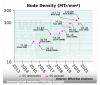
Samsung's 3GAA will go for HVM in 2022 most likely, similar timeframe to TSMC's N3.
There are major differences in how the transistor will be fabricated due to the GAA but density for sure Samsung will be behind N3.
But there might be advantages for Samsung with regards to power and performance, so it may be better suited for some applications.
But for now we don't know how much of this is true and we can only rely on the marketing material.

This year there should be a lot more available wafers due to lack of demand from Smartphone vendors and increased capacity from TSMC and Samsung.
Lots of SoCs which dont need to be top end will be fabbed with N7 or 7LPP/6LPP instead of N5, so there will be lots of wafers around.

Most of the current 7nm designs are far from the advertized density from TSMC and Samsung. There is still potential for density increase compared to currently shipping products.
N5 is going to be the leading foundry node for the next couple of years.

For a lot of fabless companies out there, the processes and capacity available are quite good.

---------------------------------------------------------------------------------------------------------------------------------------------------


FEEL FREE TO CREATE A NEW THREAD FOR 2025+ OUTLOOK, I WILL LINK IT HERE
 
Last edited:
There are two GPU tiles - 4Xe3, and 12Xe3. The 4Xe3 is made on Intel 3.
The 4 Xe core tile will be used in all panther lake chips except X series (X7/X9), and it's better than AMD's latest Ryzen 7 445, so it's at least good in that respect.
 
From what I know when Apple went to Intel for fabricating their chips they had two issues.
  1. Competition internal vs external
  2. They optimized for Overall margin so wafer cost was relatively higher and it was not suitable for mobile devices and the Volume not being enough for it to be profitable at that time so they passed it.
 
- Hey chatgpt, why is apple not friends with intel anymore?

1) July 2015: Intel admits "10nm not happening on schedule”
Cannon Lake slips, the “tick-tock” vibe starts wobbling.

2) April 2018: Intel does it again: high-volume 10nm gets punted to 2019
yields/ramp were a mess — aka “still not ready, try next year.”

3) October 18, 2021: Last Intel laptops removed from the lineup
 
- Hey chatgpt, why is apple not friends with intel anymore?

1) July 2015: Intel admits "10nm not happening on schedule”
Cannon Lake slips, the “tick-tock” vibe starts wobbling.

2) April 2018: Intel does it again: high-volume 10nm gets punted to 2019
yields/ramp were a mess — aka “still not ready, try next year.”

3) October 18, 2021: Last Intel laptops removed from the lineup
lol you won't find this info on chatgpt it's from 2009 consideration also it's missing the another reason Apple is not with Intel better to stick with facts and not use slop
 
- Hey chatgpt, why is apple not friends with intel anymore?

1) July 2015: Intel admits "10nm not happening on schedule”
Cannon Lake slips, the “tick-tock” vibe starts wobbling.

2) April 2018: Intel does it again: high-volume 10nm gets punted to 2019
yields/ramp were a mess — aka “still not ready, try next year.”

3) October 18, 2021: Last Intel laptops removed from the lineup
Even if Intel didn't get hung up on 10nm and was executing well, it's clear Apple's plan was always to vertically integrate the SoC
 
Even if Intel didn't get hung up on 10nm and was executing well, it's clear Apple's plan was always to vertically integrate the SoC

But that's fine if Intel was willing to act as a foundry. That's all Apple was looking for in the "10nm is late" timeframe, and Intel didn't have any illusions about that. There were two "Intel says no to Apple" occurrances. The first was in 2005 when Jobs wanted to use StrongARM/Xscale (which Intel then owned) cores but Intel was unwilling to sell them mobile SoCs unless they used x86 cores and Jobs told them to pound sand. Had they made that deal yes Apple would have still designed their own cores and not needed Xscale any larger (maybe they would have bought it from Intel) but they would have had Apple as a customer and grown their foundry business as the iPhone grew.

The second was in the 2013-2015 timeframe when Intel was talking about becoming a foundry but it turned out didn't really want to follow through and was a foundry in name only. Apple's volume was already so large Intel couldn't handle it without building more fabs, and they would have had to design a custom process for Apple's low power needs vs Intel's GHz uber alles marketing needs. Intel also used a bunch of custom tools which they'd have to abandon if they wanted to be a real foundry. I don't know if Apple was willing to budge on using their tooling or not, that may have been part of the reason it never happened.

Even as it was when Intel was making modems for Apple using 14nm for a subset of iPhones just that volume was causing them shortages during those production runs before a new model release. That wouldn't have happened if 10nm hadn't been delayed and they were forced to stay on 14nm much longer than planned, but had Apple made a foundry deal with them it would have been a disaster for both.
 
From what I know when Apple went to Intel for fabricating their chips they had two issues.
  1. Competition internal vs external
  2. They optimized for Overall margin so wafer cost was relatively higher and it was not suitable for mobile devices and the Volume not being enough for it to be profitable at that time so they passed it.
"Intel just does not know how to be a foundry,"

That's a culture problem, not a technical one. Apple didn't want chips designed around Intels priorities, they wanted ones designed around their priorities. Intel didn't know how to do that. I'm skeptical that has changed given how hard corporate culture is to change.
 
"Intel just does not know how to be a foundry,"

That's a culture problem, not a technical one. Apple didn't want chips designed around Intels priorities, they wanted ones designed around their priorities. Intel didn't know how to do that. I'm skeptical that has changed given how hard corporate culture is to change.
hence my 2nd point even in tech they didn't knew what to prioritize also IFS 1.0 is more than a suitable example on this.

This time there is a difference they are not forcing their tools using the industry standard tooling they even hired lots of ex foundry guys correction from past experiences.
 

TSMC possibly moving some of their old nodes to Singapore to make room for new nodes.

The land purchase was for a reason, and the reason was revealed by Lutnick today (Commerce Secretary).

TSMC is expanding its commitment to invest $250 billion, up from $165 billion after first round of negotiations, and up from ~$100 billion prior to Trump taking office.

Lutnick did not specify what the land will be used for but there were rumors of 2 additional packaging facilities. It may also be used for the rest of the first 6 phases, since TSMC did not have enough land before.

Additional $250 billion in credit guarantees announced by Taiwan government to smaller Taiwanese companies to set up shop in the US, to complete the full supply chain.

Something that people thought could no longer be feasible to do in the US is quickly turning into reality.

BTW, the person who thought this could never be done in the US is Morris Chang, the founder of TSMC. C.C. Wei, the new CEO is proving him wrong.

 
Looking at TSMC CapEx forecast and the investment commitment for the US of $250B, that can be for 10 years, and in 10 years, at the current pace, TSMC will invest $500B - $600B, TSMC will be investing nearly 50% of its CapEx in the US.

Her is the currently anticipated CapEx spending between TSMC and Intel for 2026:

Intel: $16B, down from $18B in 2025
TSMC: $52-$56B, up from $42B in 2025

Since Intel CapEx covers all its facilities across the world, and the US spending is a fraction of total, let's say $12B, TSMC will be investing in the US alone 2x of Intel is investing.
 
TSMC will still not run leading edge wafers outside of Taiwan, that policy hasn't changed. But there's now so much demand from AI that they can't build capacity fast enough to serve it. Building in multiple locations makes sense, even if the construction process is slower and more expensive in the US it still increases their global output.

They probably already have enough orders in the pipeline at the prices they're able to charge for US made wafers to fully depreciate that additional capacity so they are protected for when the bubble bursts. According to footnotes in their financial reports they've been designing fabs outside of Taiwan with the intent of potentially being downgraded to older nodes. That would address one of the biggest issues in the US, which is not leading edge capacity that gets all the headlines but mature processes you need in automotive and other markets - the thing that totally screwed US industry in the aftermath of the initial covid outbreak when worldwide supply lines seized up.
 
hat would address one of the biggest issues in the US, which is not leading edge capacity that gets all the headlines but mature processes you need in automotive and other markets - the thing that totally screwed US industry in the aftermath of the initial covid outbreak when worldwide supply lines seized up.
US has GF/TI for that
 
TSMC will still not run leading edge wafers outside of Taiwan, that policy hasn't changed. But there's now so much demand from AI that they can't build capacity fast enough to serve it. Building in multiple locations makes sense, even if the construction process is slower and more expensive in the US it still increases their global output.

I think the experience TSMC gained, after building the Phase I of the fab, learning in how to deal with the red tape in the US, dealing with US contractors, training of US workers made TSMC much more prepared for future expansion and construction.

CC Wei may just call Luntinck or Trump, and they will get things done, as far as red tape.

As far as workforce, training can now be all done in the US, with local staff, with experienced people shifted to lines that are being brought up, while newer people can be placed on more routine tasks.

From the numbers above, with nearly 1/2 of the CapEx going to the US, there is no other way that to bring the latest nodes to the US with minimum delay.

They probably already have enough orders in the pipeline at the prices they're able to charge for US made wafers to fully depreciate that additional capacity so they are protected for when the bubble bursts. According to footnotes in their financial reports they've been designing fabs outside of Taiwan with the intent of potentially being downgraded to older nodes. That would address one of the biggest issues in the US, which is not leading edge capacity that gets all the headlines but mature processes you need in automotive and other markets - the thing that totally screwed US industry in the aftermath of the initial covid outbreak when worldwide supply lines seized up.

I have not heard anything about TSMC doing that. I think that's not really part of the plan right now. They want big numbers, and big numbers are easier to deliver with shiny new equipment and advance process nodes.
 
From the numbers above, with nearly 1/2 of the CapEx going to the US, there is no other way that to bring the latest nodes to the US with minimum delay.

I have not heard anything about TSMC doing that. I think that's not really part of the plan right now. They want big numbers, and big numbers are easier to deliver with shiny new equipment and advance process nodes.
They’ve explicitly stated they wouldn’t export leading edge nodes, and the Taiwan government is trying to enshrine that into law. But one can hope.
 
They want big numbers, and big numbers are easier to deliver with shiny new equipment and advance process nodes.
But the easiest way by far to make big numbers is to put them in a press release and nothing more. Keep in mind that's the primary driver of the current AI bubble - press releases with promises of spending $xxxB over the next Y years. Press releases are far, far lower risk than actually investing in US manufacturing currently while being just as effective at meeting short term goals.
 
They’ve explicitly stated they wouldn’t export leading edge nodes, and the Taiwan government is trying to enshrine that into law. But one can hope.

Between:
- TSMC management
- US Government
- Taiwan government

Taiwan government is the least consequential entity. A medium strength fart from the two above can reverse its policy.
 
But the easiest way by far to make big numbers is to put them in a press release and nothing more. Keep in mind that's the primary driver of the current AI bubble - press releases with promises of spending $xxxB over the next Y years. Press releases are far, far lower risk than actually investing in US manufacturing currently while being just as effective at meeting short term goals.

You don't think the 1 complete and one half complete fabs TSMC Arizona are real, that they are a press release? Average fab is $20 billion, so TSMC could already be up to $30 billion invested in the US.

Similarly, the dollars companies like NVidia report on quarterly bases, you don't think those are real dollars?
 
Even as it was when Intel was making modems for Apple using 14nm for a subset of iPhones just that volume was causing them shortages during those production runs before a new model release. That wouldn't have happened if 10nm hadn't been delayed and they were forced to stay on 14nm much longer than planned, but had Apple made a foundry deal with them it would have been a disaster for both.
hence my 2nd point even in tech they didn't knew what to prioritize also IFS 1.0 is more than a suitable example on this.

This time there is a difference they are not forcing their tools using the industry standard tooling they even hired lots of ex foundry guys correction from past experiences.
There's three steps to approaching things in real life:
First: "I wanna do something"
Second: "Let's actually do it"
Third: "Oh this is how you ACTUALLY do it"

Otellini saying they wanted to fab was the First step. Gelsinger claiming they wanted to fab might be Second step. I think they are going to see what the Third step is.

In fact, Intel went through this exact step before they got an actual battery life competitive chip with Medfield.
#1. Atom
2. Atom Moorestown
3. Atom Medfield
 
You don't think the 1 complete and one half complete fabs TSMC Arizona are real, that they are a press release? Average fab is $20 billion, so TSMC could already be up to $30 billion invested in the US.

Similarly, the dollars companies like NVidia report on quarterly bases, you don't think those are real dollars?
The context of the conversation was future investments, not historical.
 
Back
Top