• We’re currently investigating an issue related to the forum theme and styling that is impacting page layout and visual formatting. The problem has been identified, and we are actively working on a resolution. There is no impact to user data or functionality, this is strictly a front-end display issue. We’ll post an update once the fix has been deployed. Thanks for your patience while we get this sorted.

James Webb Telescope - First Pics

Page 2 - Seeking answers? Join the AnandTech community: where nearly half-a-million members share solutions and discuss the latest tech.
What blows my mind is that those wider blobs are entire galaxies. The scale here is just incomprehensible.
The fact they could pull one tiny galaxy out of there and analyze it’s chemical composition from 13.1 billion years ago just…. I can’t even put it into words how incredible that is. And in a fraction of the time it took for Hubble to do the basics.
 
And it took 1/50th of the time to capture the image as well.

James Webb has already put to bed some of my views of the cosmos. I have gone from thinking of billions of galaxies to having to think along the lines of trillions of galaxies which throws off my calculations for the number of space-faring civilizations by many factors. It has gone from millions to billions if anyone is wondering.
 
James Webb has already put to bed some of my views of the cosmos. I have gone from thinking of billions of galaxies to having to think along the lines of trillions of galaxies which throws off my calculations for the number of space-faring civilizations by many factors. It has gone from millions to billions if anyone is wondering.

We're either alone, or we aren't. Both are equally terrifying.
 
The Fermi paradox has always been an interesting question to debate with others. Over the years, I've been more drawn to the Dark Forest Theory over anything else. The idea is that a fundamental tenet of any civilization is survival. When you have a first encounter with another civilization, you have no idea if they are benevolent or evil. The only way a civilization can guarantee its survival is to destroy the other civilization rather than flip a coin and hope the new contact is benevolent. This would suggest that any (most? many?) space-faring civilizations have evolved/survived by either avoiding detection or destroying upon first contact because any other civilization is a potential threat.

We are all hunters in a dark forest, hiding to avoid contact, but killing once we see a target.

Kurzgesagt has great animations on this:
 
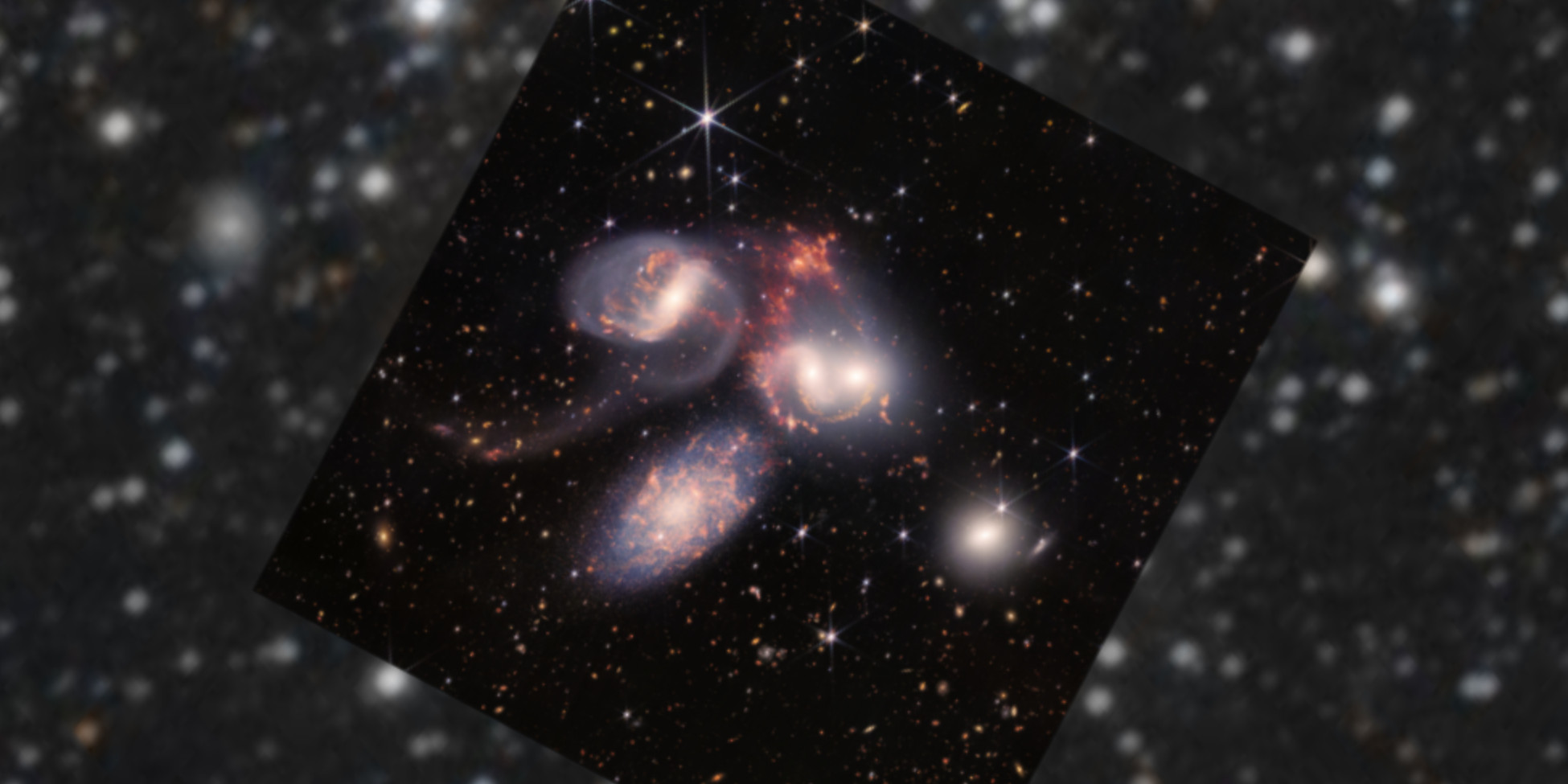
For those of us that don't know astronomy, what is the main benefit? It is certainly less grainy then Hubble, but the images aren't drastically different to the lay person.
View attachment 64366


The significant difference in resolution and detail between the images is when it gets right down to pixel peeping them.

As an aside, I wonder how many UFO's get removed from the images before being released if any are detected at all. <---Food for the conspiracy theorists to munch on.
 
The Fermi paradox has always been an interesting question to debate with others. Over the years, I've been more drawn to the Dark Forest Theory over anything else. The idea is that a fundamental tenet of any civilization is survival. When you have a first encounter with another civilization, you have no idea if they are benevolent or evil. The only way a civilization can guarantee its survival is to destroy the other civilization rather than flip a coin and hope the new contact is benevolent. This would suggest that any (most? many?) space-faring civilizations have evolved/survived by either avoiding detection or destroying upon first contact because any other civilization is a potential threat.

We are all hunters in a dark forest, hiding to avoid contact, but killing once we see a target.

Kurzgesagt has great animations on this:
Well JWST should help narrow down ne and possibly fe via measuring atmospheric constituents looking for habitable planets and ones that already potentially have life.
1350_drank-equation1280.jpg


There’s already a few gates we’ve passed through that could have significantly reduced N.

For life like us, as you well know, you need many elements on the periodic table above hydrogen and helium. That requires 2nd and more likely 3rd generation stars as supernova are required to produce elements heavier than iron. Our sun and solar system are Likely a third generation system.

It also appears that a lot of the heavier elements are more often produced via neutron star mergers via r-process nucleosynthesis

Those explosions while great for producing heavy elements from hydrogen aren’t great for life anywhere with in dozens or hundreds of light years. So habitable regions of our galaxy had to produce those elements and then settle down before life on Earth could start without being wiped out
Milky_Way_galactic_habitable_zone.gif

Single called life formed fairly quickly on Earth - within the first billion years or so. It then took almost 3 Billion more years for multicellular organisms to form.

So all of this is a long winded way of saying of the 13.7B years this universe has existed it may have taken more than 90% of that time before it was even possible for multicellular life to form. We could literally be one of the first intelligent organisms to send signals into space - at least in our local area.
LombergA1600-full_blue-56a8cd485f9b58b7d0f547a5.jpg


Of course if the reason we haven’t found anyone is because intelligent races kill themselves off before they can send signals for long or as you point out game theory says stay quiet, shoot first and ask questions later then we as a species are screwed.

I’m actually in the middle of “The Dark Forest” from the the “Three Body” series. And of course the Expanse novels and TV series cover this issue too (They literally put the Drake Equation on screen at one point.)

 
Last edited:
Well JWST should help narrow down ne and possibly fe
1350_drank-equation1280.jpg


There’s already a few gates we’ve passed through that could have significantly reduced N.

For life like us as you well know you need many elements on the periodic table above hydrogen and helium so you need 2nd and more likely 3rd generation stars as supernova are required to produce elements above iron. Our sun and solar system are Likely a third generation system.

It also appears that a lot of the heavier elements we are more often produced via neutron star mergers via r-process nucleosynthesis

Those explosions while great for producing heavy elements from hydrogen aren’t great for life anywhere with in dozens or hundreds of light years. So habitable regions of our galaxy had to produce those elements and then settle down before life on Earth could start without being wiped out
Milky_Way_galactic_habitable_zone.gif

Single called life formed fairly quickly on Earth - within the first billion years or so. It then took almost 3 Billion more years for multicellular organisms to form.

So all of this is a long winded way of saying of the 13.7B years this universe has existed it may have taken more than 90% of that time before it was even possible for multicellular life to form. We could literally be one of the first intelligent organisms to send signals into space - at least in our local area.
LombergA1600-full_blue-56a8cd485f9b58b7d0f547a5.jpg


Of course if the reason we haven’t found anyone is because intelligent races kill themselves off before they can send signals for long or as you point out game theory says stay quiet, shoot first and ask questions later then we as a species are screwed.

I’m actually in the middle of “The Dark Forest” from the the “Three Body” series. And of course the Expanse novels and TV series cover this issue too (They literally put the Drake Equation on screen at one point.)
The above ofc assumes life evolves the same way on other planets. Not an unreasonable starting point, but we shouldn't restrict ourselves so either.

We really need probes around other planets snapping pictures.
 
For those of us that don't know astronomy, what is the main benefit? It is certainly less grainy then Hubble, but the images aren't drastically different to the lay person.
View attachment 64366

It is able to see in the infrared spectrum, which means it can see through the dust clouds that surround every area we think new stars are being formed. Infrared is the only light that can penetrate these dust clouds. We can't view the infrared spectrum from Earth because our atmosphere blocks it, hence the need for a space telescope that can see in infrared. This telescope should finally give us the ability to view star formation.
 
We're either alone, or we aren't. Both are equally terrifying.

The enormous distances between things in space as well as the speed limit of c make me think it's pretty likely we will never make contact with any other advanced civilization elsewhere even though there is no way there aren't billions of them out there. Space is so empty the average temperature of it is only like 3 Kelvin. E.g. 3 degrees celsius above absolute zero.
 
The enormous distances between things in space as well as the speed limit of c make me think it's pretty likely we will never make contact with any other advanced civilization elsewhere even though there is no way there aren't billions of them out there. Space is so empty the average temperature of it is only like 3 Kelvin. E.g. 3 degrees celsius above absolute zero.
Well the point of the Drake Equation and the Fermi Paradox is that for many reasonable assumptions there should be plenty of signals from other intelligent species. In fact with a von Neumann probe, (a probe that travels to another solar system, builds a copy of itself and sends it on it's way) an intelligence could send probes across the entire galaxy in less than 10 million years.
Yes that's along time but compared to lifetime of the galaxy it's brief. Plus it would only take one race to decide to do that. Yet we see nothing.
 
The above ofc assumes life evolves the same way on other planets. Not an unreasonable starting point, but we shouldn't restrict ourselves so either.

We really need probes around other planets snapping pictures.
For this case it's even more reasonable than it may appear. Exotic sci-fi life may not even leave signals we can pick up. Even biological life may never create signals for us to detect. Picture an intelligent squid like species living on a Europa style internal ocean. No means of technology and no view of an outside cosmos to even consider "an outside".

Regardless most any kind of life we could detect at interstellar distances is going to require heavy elements and environments similar in heat and pressure to what we require. Otherwise the basics of life just aren't possible.
 
For those of us that don't know astronomy, what is the main benefit? It is certainly less grainy then Hubble, but the images aren't drastically different to the lay person.
Here's [a nice comparison](https://www.reddit.com/r/woahdude/comments/vwwkh1/zoomed_in_comparison_of_james_webb_vs_hubble_in/) between the two. One thing that's clear is that we're seeing things from much further away and things that are dimmer.
 
For those of us that don't know astronomy, what is the main benefit? It is certainly less grainy then Hubble, but the images aren't drastically different to the lay person.
View attachment 64366
I didn't see this mentioned, but the primary benefit comes from the cosmological, or isotropic, principle, which is that the universe is homogenous and uniform on a large scale in all directions. What this means is that looking at extremely distant objects is the effectively the same as looking at our own immediate reality, but in the deep past. An example of the benefits of this would be how, 100-odd years ago, analyzing the sprecta emissions of distant stars gave us quantum mechanics, which provided immeasurable benefits to society. Now what they're doing, through the JWST, is looking back into the farthest reaches of time to understand the nature of reality itself.
 
Last edited:
I didn't see this mentioned, but the primary benefit comes from the cosmological, or isotropic, principle, which is that the universe is homogenous and uniform on a large scale in all directions. What this means is that looking at extremely distant objects is the effectively the same as looking at our own immediate reality, but in the deep past. An example of the benefits of this would be how, 100-odd years ago, analyzing the sprecta emissions of distant stars gave us quantum mechanics, which provided immeasurable benefits to society. Now what they're doing, through the JWST, is looking back into farthest reaches of time to understand the nature of reality itself.
Interestingly you can’t look farther back than about 300,000 years after the Big Bang using light. The early universe was entirely opaque until then.
 
For this case it's even more reasonable than it may appear. Exotic sci-fi life may not even leave signals we can pick up. Even biological life may never create signals for us to detect. Picture an intelligent squid like species living on a Europa style internal ocean. No means of technology and no view of an outside cosmos to even consider "an outside".

Regardless most any kind of life we could detect at interstellar distances is going to require heavy elements and environments similar in heat and pressure to what we require. Otherwise the basics of life just aren't possible.

Makes me think of Ismo's bit about dolphins

 
Interestingly you can’t look farther back than about 300,000 years after the Big Bang using light. The early universe was entirely opaque until then.
They're actually using sound waves (or their inference in astronomical observations) to look back in time before the Recombination. Fanscinating stuff.

 
Last edited:
Makes me think of Ismo's bit about dolphins

Kinda off topic (and didn't watch your video), but did you know that dolphins are effectively telepathic? They can use echolocation to accurately reproduce an object in their minds (akin to our eyesight), and then they can vocally retransmit that acoustic image to another dolphin. It's like if you could take something you see and put it in another person's mind.
Sure, we use writing, photos, and technology to do that, but dolphins can do that naturally.
 
Last edited:
Poor Hubble.
KYUq2N9.jpg

But in reality both telescopes will work together.

Quite frankly with radio telescopes like VLA, JWST for IR, Hubble for visible light, Chandra for X-Rays, and Fermi for Gamma rays, we can observe astronomical phenomena across the entire electromagnetic spectrum.

Add in LIGO for gravitational waves and we should get a really complete look at black hole and neutron star mergers.
 
Last edited:
Back
Top