• We’re currently investigating an issue related to the forum theme and styling that is impacting page layout and visual formatting. The problem has been identified, and we are actively working on a resolution. There is no impact to user data or functionality, this is strictly a front-end display issue. We’ll post an update once the fix has been deployed. Thanks for your patience while we get this sorted.

Discussion Intel Meteor, Arrow, Lunar & Panther Lakes + WCL Discussion Threads

Page 983 - Seeking answers? Join the AnandTech community: where nearly half-a-million members share solutions and discuss the latest tech.

Tigerick

Senior member
Wildcat Lake (WCL) Specs

Intel Wildcat Lake (WCL) is upcoming mobile SoC replacing Raptor Lake-U. WCL consists of 2 tiles: compute tile and PCD tile. It is true single die consists of CPU, GPU and NPU that is fabbed by 18-A process. Last time I checked, PCD tile is fabbed by TSMC N6 process. They are connected through UCIe, not D2D; a first from Intel. Expecting launching in Q1 2026.
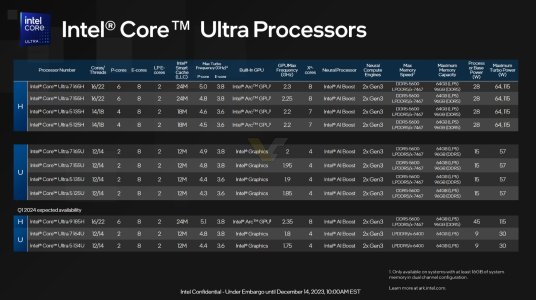
Intel Raptor Lake UIntel Wildcat Lake 15WIntel Lunar LakeIntel Panther Lake 4+0+4
Launch DateQ1-2024Q2-2026Q3-2024Q1-2026
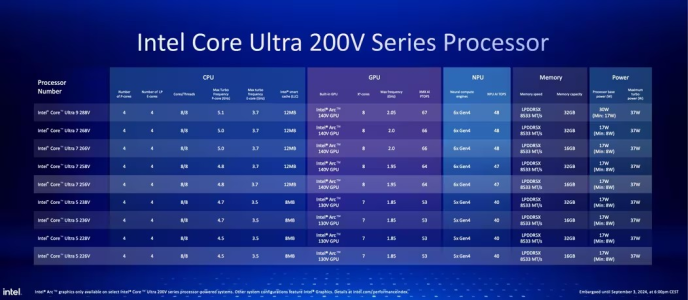
ModelIntel 150UIntel Core 7 360Core Ultra 7 268VCore Ultra 7 365
Dies2223
NodeIntel 7 + ?Intel 18-A + TSMC N6TSMC N3B + N6Intel 18-A + Intel 3 + TSMC N6
CPU2 P-core + 8 E-cores2 P-core + 4 LP E-cores4 P-core + 4 LP E-cores4 P-core + 4 LP E-cores
Threads12688
Max Clock5.4 GHz4.8 GHz5 GHz4.8 GHz
L3 Cache12 MB6 MB12 MB12 MB
TDP15 - 55 W15 - 35 W17 - 37 W25 - 55 W
Memory128-bit LPDDR5-520064-bit LPDDR5x-7467128-bit LPDDR5x-8533128-bit LPDDR5x-7467
Size96 GB48 GB32 GB128 GB
Bandwidth83 GB/s60 GB/s136 GB/s120 GB/s
GPUIntel GraphicsIntel GraphicsArc 140VIntel Graphics
RTNoNoYESYES
EU / Xe96 EU2 Xe8 Xe4 Xe
Max Clock1.3 GHz2.6 GHz2 GHz2.5 GHz
NPUGNA 3.017 TOPS48 TOPS49 TOPS


PPT1.jpg
PPT2.jpg
PPT3.jpg


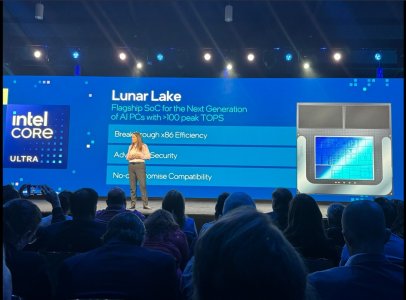
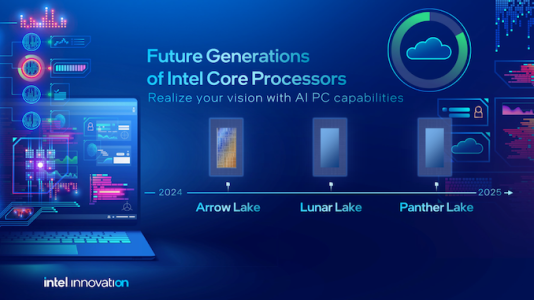
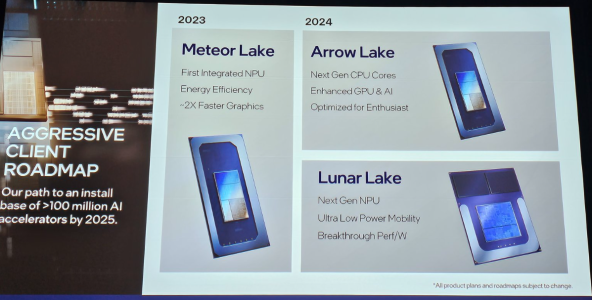
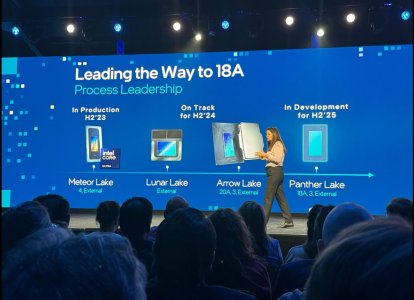
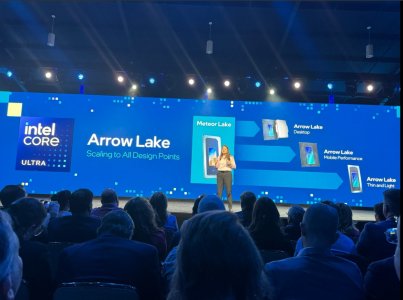
As Hot Chips 34 starting this week, Intel will unveil technical information of upcoming Meteor Lake (MTL) and Arrow Lake (ARL), new generation platform after Raptor Lake. Both MTL and ARL represent new direction which Intel will move to multiple chiplets and combine as one SoC platform.

MTL also represents new compute tile that based on Intel 4 process which is based on EUV lithography, a first from Intel. Intel expects to ship MTL mobile SoC in 2023.

ARL will come after MTL so Intel should be shipping it in 2024, that is what Intel roadmap is telling us. ARL compute tile will be manufactured by Intel 20A process, a first from Intel to use GAA transistors called RibbonFET.


LNL-MX.png
 

Attachments

  • PantherLake.png
    PantherLake.png
    283.5 KB · Views: 24,049
  • LNL.png
    LNL.png
    881.8 KB · Views: 25,534
  • INTEL-CORE-100-ULTRA-METEOR-LAKE-OFFCIAL-SLIDE-2.jpg
    INTEL-CORE-100-ULTRA-METEOR-LAKE-OFFCIAL-SLIDE-2.jpg
    181.4 KB · Views: 72,443
  • Clockspeed.png
    Clockspeed.png
    611.8 KB · Views: 72,329
Last edited:
I know this has been stated before but I think for the DIY market in particular the continual changes of socket is really hurting Intel. This isn't 15 years ago. We have an option that does keep the same socket through multiple generations that is as or more performant as Intel. The socket changes are hurting them. Put it this way. If Nova Lake is going to be the bomb and used the same socket as Arrow Lake I might consider selling my 9950X and mobo and moving to a 270K. Why? Well, I'd get to fool around with Arrow Lake for a bit, maybe put a few dollars in my pocket, and be able to make a smooth transition to NL.
 
This is the least news thing ever.
Turin is >40% of AMD server shipments.
GNR is below 20%.

Interesting info on shipments (units). As far as revenue, Turin is > 50%, as of last quarter.

BTW, GNR units under 20% would not surprise me, with revenue a little better than that.

Intel cut prices of GNR up to 30% about a year ago, according to this article, so selling high ASP GNR server CPU has been an uphill battle. Maybe that will improve with the server CPU shortages:

 
Nope.
Why do you think they're powering on i7 capacity back?
Most deployments don't even have BHS qualified.

Do you know where else, besides Israel, is Intel adding I7 capacity?

Apparently, their Fab 42 in Arizona had I7 capacity but intel took it down, sold some equipment.

I wonder what is a bigger factor for Intel misfortunes, boneheaded decisions by the management or just plain bad luck...
 
Oh yeah, I forget about Alder Lake N...
I wonder if they could do a bin where each cluster has only two, opposite cores enabled? That would help with heat dissipation and cache contention. Something like a 268K+ with 8 P cores and 8 e cores in the half enabled configuration, aimed specifically at gamers. I don't have a firm handle on if it would be a worth while configuration to pursue.

That would be the same as splitting a 9950x to a two ccx 9700x 8 core. You don't want cache to sync over fabric. You want a big pool they all can spill into and slurp up when needed. I'm sure there may be some work that would work, but that would far from the norm.
 
If the socket could get NVL then I'm not sure that'd be true. This miss is a contributing factor to ARL's low prices.
Very good. You are correct. I can't change one parameter of the equation and act like it's still the same equation! I was operating in a vacuum. Not reality.

That's why I love this place. I'm generally considered "smart" in my circle, but get corrected all the time here. It's good to get knocked down a peg every now and then, keeps you thinking, and more importantly listening.
 
Last edited:
I see @Geddagod posted an interesting analysis from Semiwiki. I'm including the reddit link because it contains commentary.

The interesting takeaways for me are:
  • Intel 7 supply issue is mostly about Intel ramping down capacity while failing to convince customers to chose newer & more expensive products on their new nodes. Customers either want cheap Intel or move to AMD for better products if they decide to pay more.
  • Panther Lake is supply limited not only due to yields, but also because Intel isn't willing to take the margin hit on higher volumes until yields improve.
To me this sounds like Intel's past attempt to flood the market with cheap produce and keep AMD out has finally caught up with them. Customers either want sweet deals from Intel or (expensive) performance from the competition.

Btw this applies to Intel's mainstream consumer market as well. Let's hope Wildcat Lake comes out in proper numbers.
It's also good to see Semiwiki expects WCL to be profitable and the key 18A part. Intel should have a great incentive to make a lot of it. On the other hand, it does suggest it won't be as low price as ADL-N. But it should still increase perf/$ significantly.

This is a cost reduced Panther lake and our cost model shows it can be a solid replacement for Raptor lake at a competitive price and still make money (Panther lake is in a different market with limited volume)
 
That would be the same as splitting a 9950x to a two ccx 9700x 8 core. You don't want cache to sync over fabric. You want a big pool they all can spill into and slurp up when needed. I'm sure there may be some work that would work, but that would far from the norm.
That's... not quite what I'm proposing. There are no new connections or expansions to the fabric. This is for a nromal 8 + 16 core Arrow Lake CCD. This is a die recovery project for dies that have one or more out of spec e-cores. Instead of having all 16 e cores enabled, only enable 8 of them, 2 per quad cluster. Instead of having 4 cores splitting a single 4MB L2 slice, there are now just 2 e cores splitting that same 4MB pool, effectively giving 2MB per core when symmetrically loaded, and up to 4MB when sparsely loaded. This leads to less L2 contention between the e cores and less traffic per Ring stop overall.

Is your contention that it's a really bad idea to have two cores sharing a single L2? This might be important information for Intel's P core team as that's where they are going for Lunar Lake...
 
Here in Euroland, the only X3D you can buy for close to $200 is the Ryzen 5 7500X3D for ~$250 which indeed trades blows with Arrow Lake in games, but it's a lot worse for productivity.
Dont want to go off topic in an Intel thread, but I just bought a prebuilt from Microcenter with the 7500x3D. It's a great little chip for gaming. Comparable to or better than anything ARL except maybe top end chips, with only 65 watt TDP and, I can upgrade if needed all the way to 9850x3D or even probably Zen 6. There were Intel options in my price bracket (i5-14400 or even surprisingly, 265k), but there is no really attractive ARL upgrade, and an i5-14400 only has an upgrade path to the power hungry and still suspect, IMO, high end RL chips.

I really hope NVL bLLC materializes and gives a boost in gaming similar to what vCache does for AMD. Intel has a long way to go to even catch up with Zen 5 vCache chips much less meet or pass Zen 6.

Edit: I never really thought motherboard compatibility was an issue, until now. I was stuck on my old system with an 8700k, which was starting to show its age, and had no upgrade path.
 
Last edited:
That's... not quite what I'm proposing. There are no new connections or expansions to the fabric. This is for a nromal 8 + 16 core Arrow Lake CCD. This is a die recovery project for dies that have one or more out of spec e-cores. Instead of having all 16 e cores enabled, only enable 8 of them, 2 per quad cluster. Instead of having 4 cores splitting a single 4MB L2 slice, there are now just 2 e cores splitting that same 4MB pool, effectively giving 2MB per core when symmetrically loaded, and up to 4MB when sparsely loaded. This leads to less L2 contention between the e cores and less traffic per Ring stop overall.

Is your contention that it's a really bad idea to have two cores sharing a single L2? This might be important information for Intel's P core team as that's where they are going for Lunar Lake...

Anecdotally in systems where the cores have split data across boundaries, amd's 12 core split 5900x 7900x 9900x, gaming performance has often fell short from the norm. Rendering, encoding and the like may perform better than the flat 8 core ccx 5800, 7800x, 9700x but it skews towards the lower tier, sometimes with little or no benefit for having 4 extra cores.

I'll explain a problem using my FFT system as an example. When you get to a certain level of processing the data exceeds the L2 and it must work with the fabric to exchange data. This is usually around radix 16-17 depending on the L2 size. (512k, 1mb respectively) If you have 2 L2s filled with adjacent data, the lower L2 will pass its higher data to the higher L2 and the higher L2 will pass its lower data to the lower L2. In reality this is just addressing but the data moves in.

0 1 | 2 3 -> 0 2 | 1 3

This is why bit-reverse sequence is the nature of the FFT. First few sequences

0 2 1 3
0 4 2 6 1 5 3 7
0 8 4 12 2 10 6 14 1 9 5 13 3 11 7 15

This basically maps out the exchange within the processing.

Though this is one example where one is forced by the algorithm to do this. Many programs that may or may not be forced into this exchange, implement a producer consumer model where one core prepares the data for another, aka they exchange data

Down the line. If we assign 1x to L1 and 2x to L2 in terms of cost. L3 would be 8-15x and memory/fabric would be 50-100x.

(note these are arbitrary numbers based on the latency of x86 4 12 45 150+ and throughput could be less. This is only meant to show the level of cost of the system)

TLDR: To sum what I am saying. There maybe a few cases where a split complex can do more. More often than not a single complex with a large LLC cache will rule the day.
 
Last edited:
Edit: I never really thought motherboard compatibility was an issue, until now. I was stuck on my old system with an 8700k, which was starting to show its age, and had no upgrade path.
I felt stuck with the i7 8700 as well, I remember being annoyed that I could not jump on the 10th gen, although in hindsight it was better this way. The 12700K was a much better choice, even better than the 5800X3D for me in particular. (workload related)

The 250K is a fantastic value proposition for anyone looking to build a system and not upgrade it further. We're talking about people who value productivity more than gaming. That CPU will have an absurd amount of compute per dollar spent, and it's perfect for repurposing into some kind of home server later. Think of it as a CPU with a free motherboard, Intel's platform longevity problem is mitigated by the insane value at launch.

For the average gamer that may not matter though, it's a different use case with different planning and priorities. If I was just a gamer with a moderate budget, I would definitely plan around a potential CPU upgrade. NVL should (partially) help here, as long as the bLLC thing is not a one-time deal.
 
Interesting info on shipments (units). As far as revenue, Turin is > 50%, as of last quarter.

BTW, GNR units under 20% would not surprise me, with revenue a little better than that.

Intel cut prices of GNR up to 30% about a year ago, according to this article, so selling high ASP GNR server CPU has been an uphill battle. Maybe that will improve with the server CPU shortages:

This was on MSRP no one buys CPUs on MSRP in DC in bulk if you do you are likely getting a bad deal
 
Last edited:
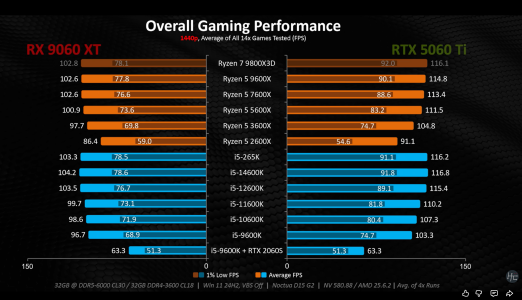
What percentage of gamers even have a GPU where the difference in performance between Intel and X3D-AMD will even be noticed? In the sub $400 GPU space particularly are there cases where a consumer is better off spending an extra $50 to get an X3D CPU rather than putting that money toward a better GPU? I think there's one category of games that see an outsized performance increase from the larger L3 cache where it matters, but outside of those?
 
This was on MSRP no one buys CPUs on MSRP in DC in bulk if you do you are likely getting a bad deal

It may have been 30% down from a customary amount, who knows. But something must have taken place if they write about it in the article, as something newsworthy.
 
What percentage of gamers even have a GPU where the difference in performance between Intel and X3D-AMD will even be noticed?
It's not just about high end GPU: Unreal Engine 5 games bottlenecked by single thread stuff, and not just those, but that's good enough reason to have nice fast CPU that does not hit crazy wattage also.
 
What percentage of gamers even have a GPU where the difference in performance between Intel and X3D-AMD will even be noticed? In the sub $400 GPU space particularly are there cases where a consumer is better off spending an extra $50 to get an X3D CPU rather than putting that money toward a better GPU? I think there's one category of games that see an outsized performance increase from the larger L3 cache where it matters, but outside of those?

Why is it that so many people are assuming gaming is all about FPS?

I see idiots in Steam forums complaining about FPS in a strategy game where you are mostly looking at a static map.
 
It's not just about high end GPU: Unreal Engine 5 games bottlenecked by single thread stuff, and not just those, but that's good enough reason to have nice fast CPU that does not hit crazy wattage also.
ARL has more or less ST performance par on Zen 5 so that's a non issue on Arrow Lake and Games are low IPC workload for the most part
 
What percentage of gamers even have a GPU where the difference in performance between Intel and X3D-AMD will even be noticed? In the sub $400 GPU space particularly are there cases where a consumer is better off spending an extra $50 to get an X3D CPU rather than putting that money toward a better GPU? I think there's one category of games that see an outsized performance increase from the larger L3 cache where it matters, but outside of those?
here is your answer
1773358958480.png
 
ARL has more or less ST performance par on Zen 5 so that's a non issue on Arrow Lake and Games are low IPC workload for the most part
Why settle for less when there is a great affordable CPU available that will be good enough for the next 5-6 years? And upgrade to it will be also available due to AM5 platform longevity.
 
Back
Top