
DrMrLordX
Lifer
Was it an ES or retail chip?
If you are referring to Fugger's chip, I think it was retail.
so can you overclock the IGP or not? all results I see on hwbot are with the stock IGP
Fugger couldn't get it running faster than 1300 mhz.

Was it an ES or retail chip?
so can you overclock the IGP or not? all results I see on hwbot are with the stock IGP

If Intel comes with their own version of HBM... no one would need nVIDIA anymore too 😀

Better performance and efficiency, plus if I'm building HTPC, I want small & no discreet card..
Otherwise e.g. a combo like frozentundra123456 mentioned here would be a better option, i.e. a i7-860k + 260x combo for around $175. But that's just one example, there are lots of other options that are better than the 5675C.


He was refering to AMD 860K :biggrin:
Fugger validated an ES chip: http://valid.canardpc.com/4wgfse
Well NVidia doesn't have a HBM card out....only AMD does. It performs about equivalent to a GTX 980 but slightly less than a GTX 980 Ti.
The CrystalWell embedded DRAM (128 MB) also doubles as an L4 Cache for the CPU.
I'm really convinced with this type of performance we might see a console from Intel for the 9th generation - and it could potentially be backwards compatible with PS4 / XBOX One.


Lol! And even Godavari manages to beat Broadwell (with low margin).... with a process 3 generations behind!
If AMD could move Bristol Ridge on 22 nm SOI.... only to make time to squash Intel with their HBM Zen APU on GPU (remember that the GPU is really strong... they need dedicated RAM... I am wondering what happens if that GPU has 128 Mb eDRAM)

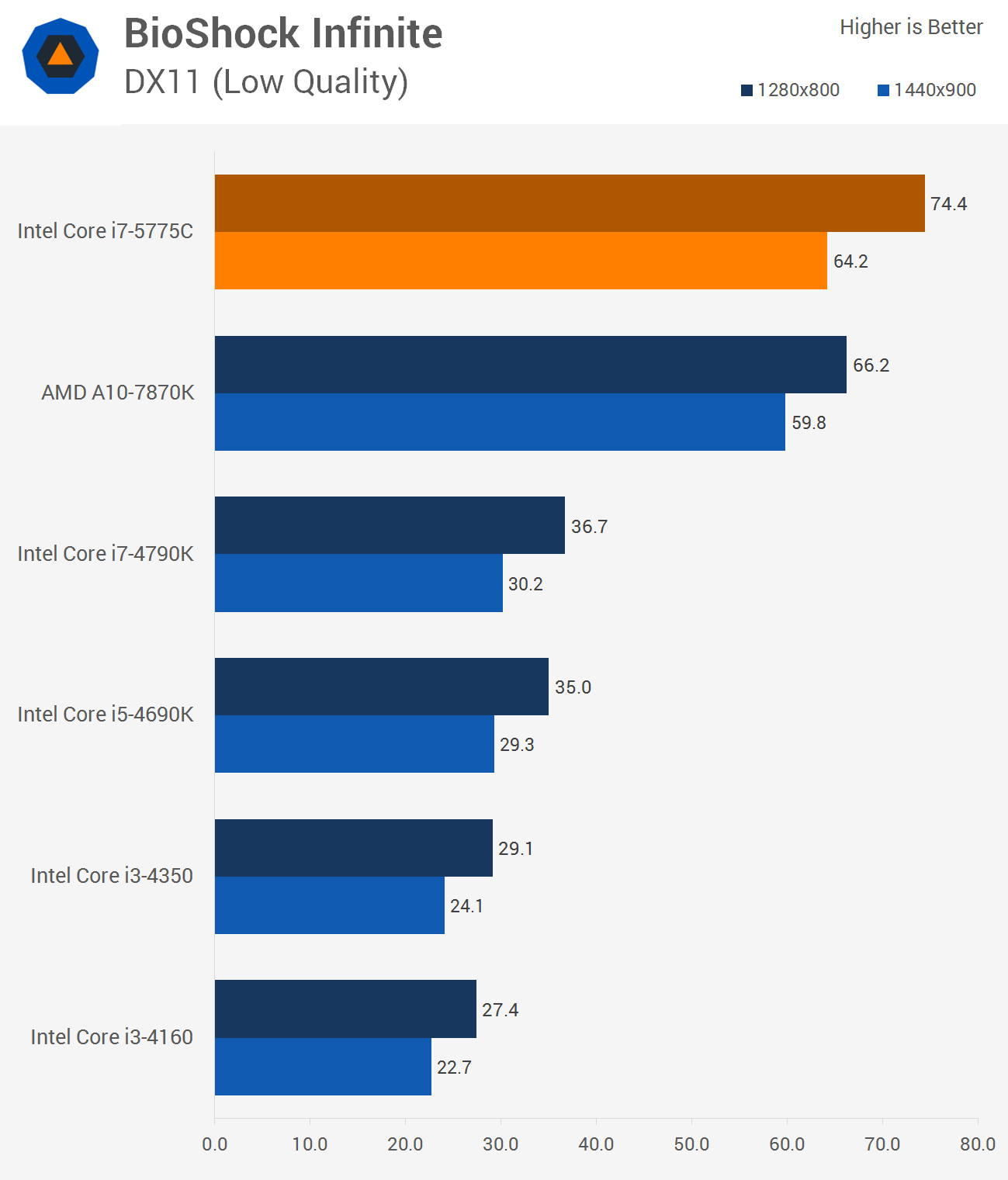
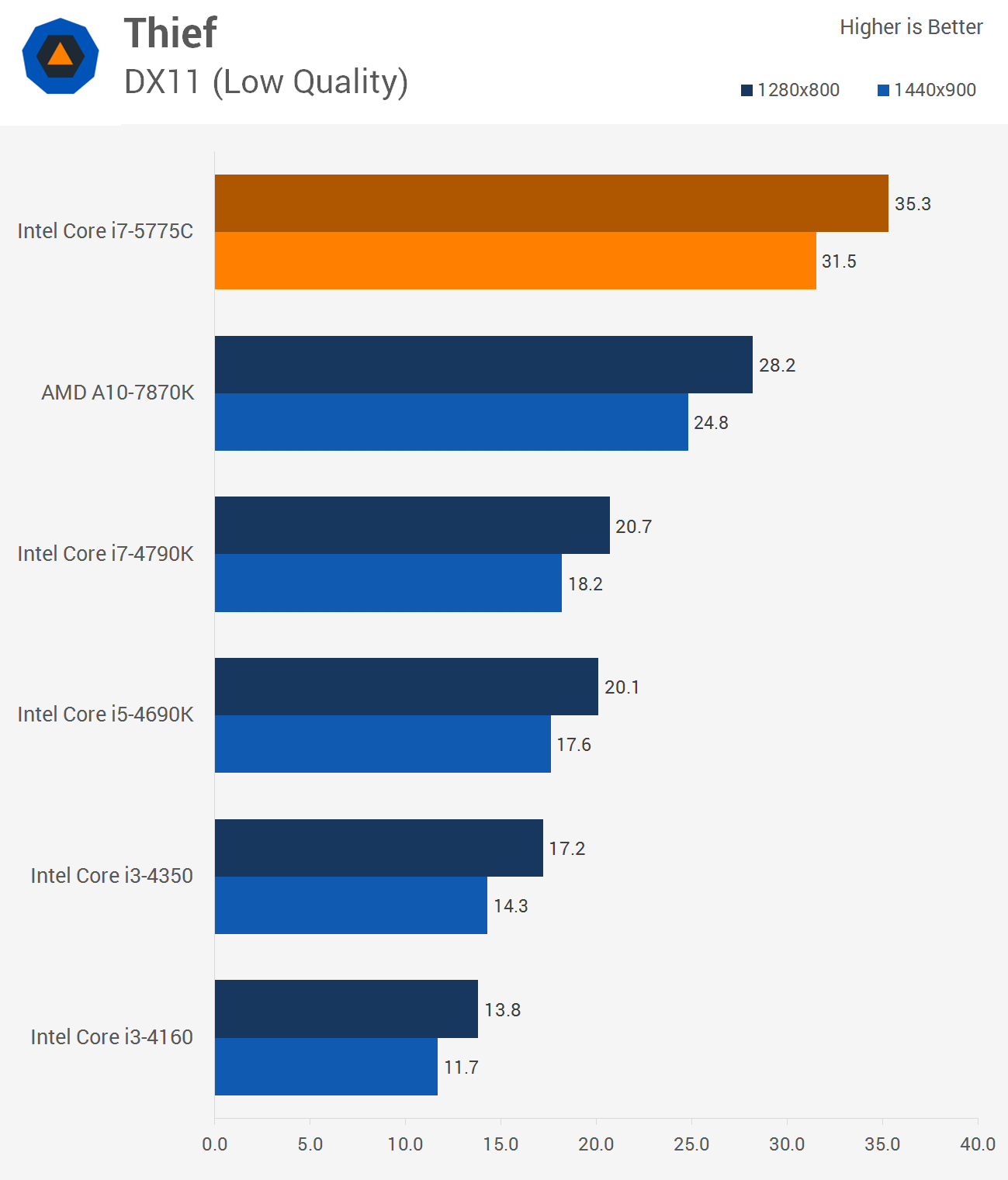
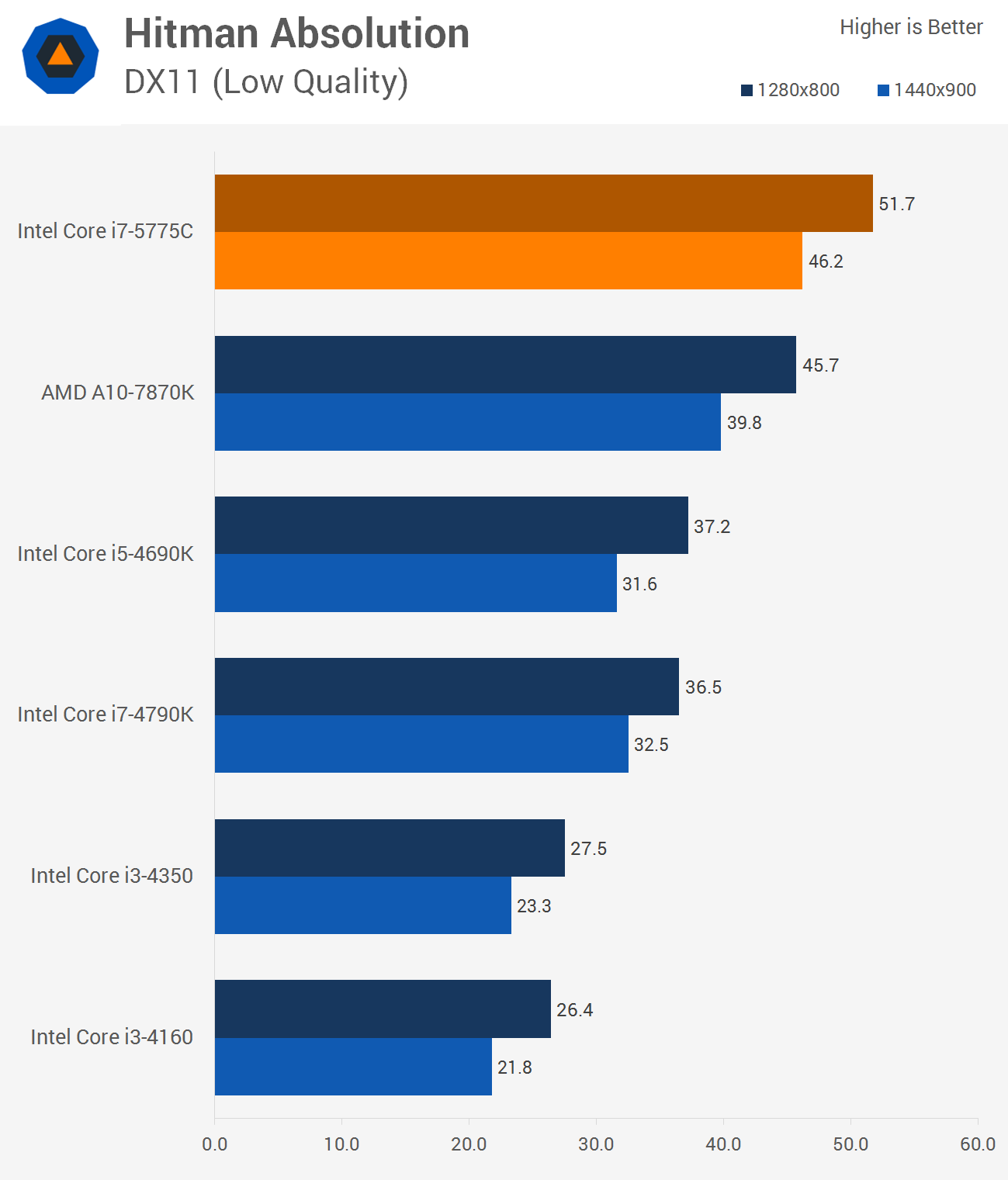


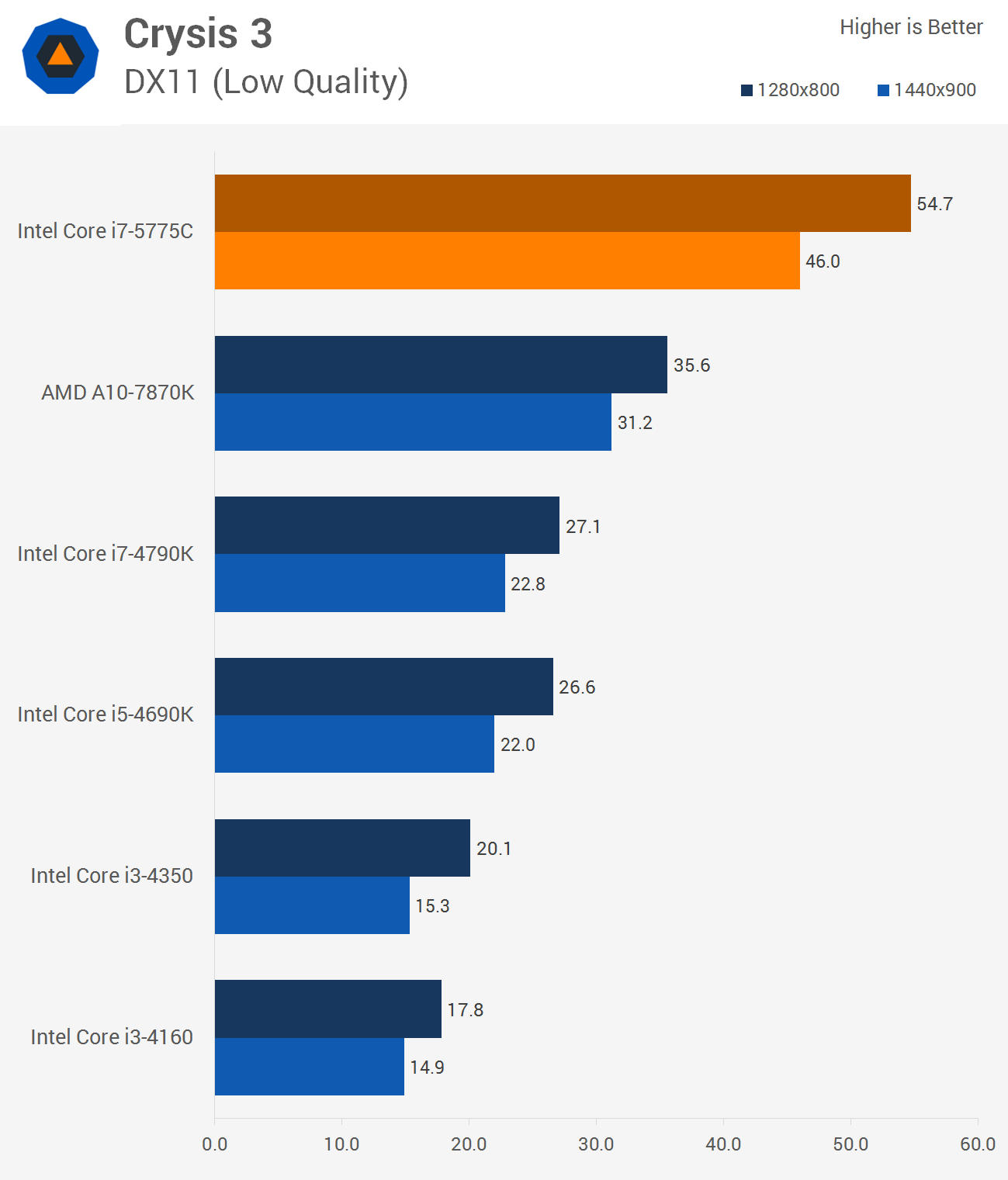

Where the 5775C shines is in its 3D performance, and we hope AMD has been taking note. The Iris Pro 6200 makes the 5775C the fastest socketed processor available when it comes to 3D rendering. AMD’s A10-7870K was simply no match for the i7-5775C in any of the games we tested.
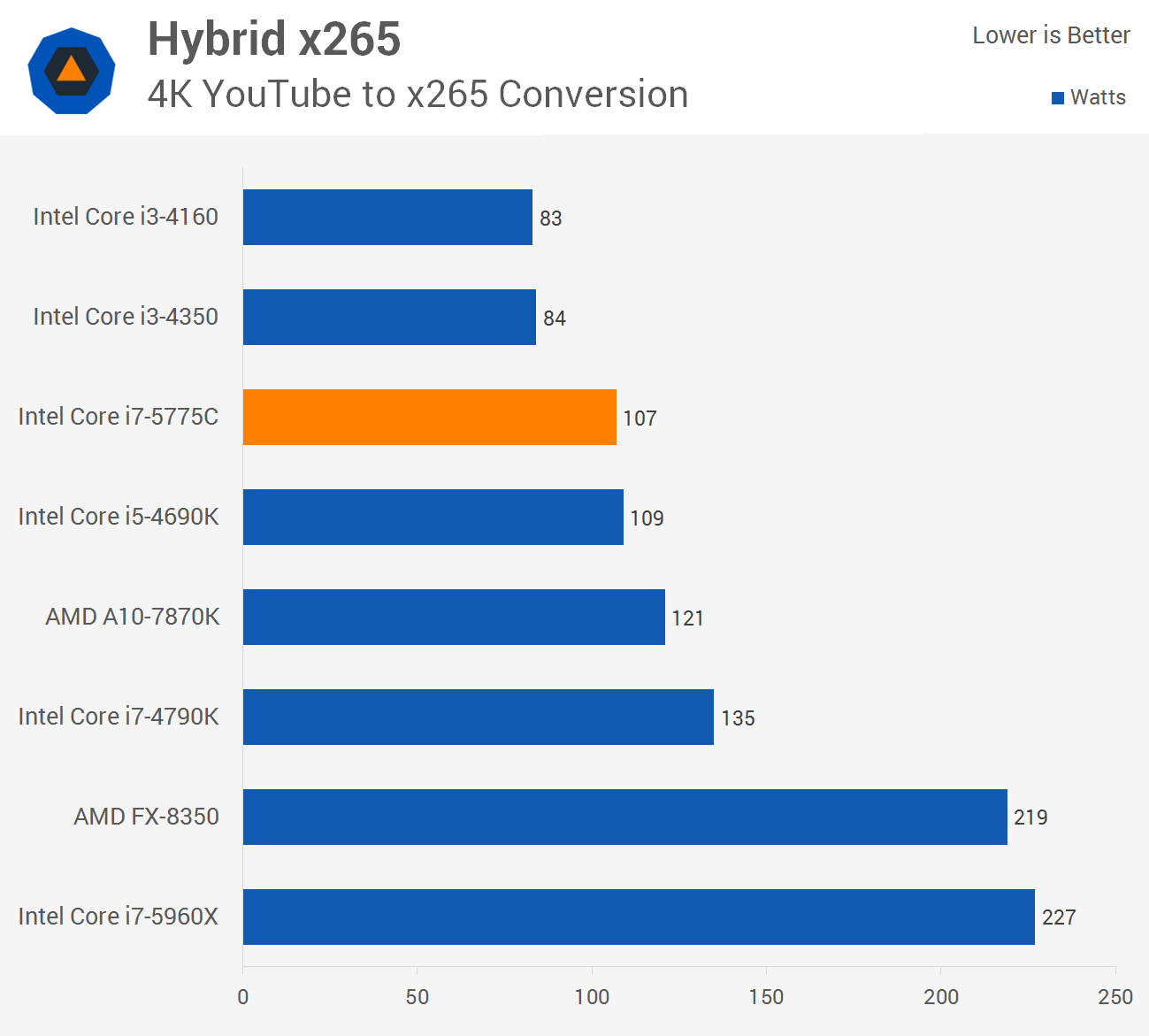
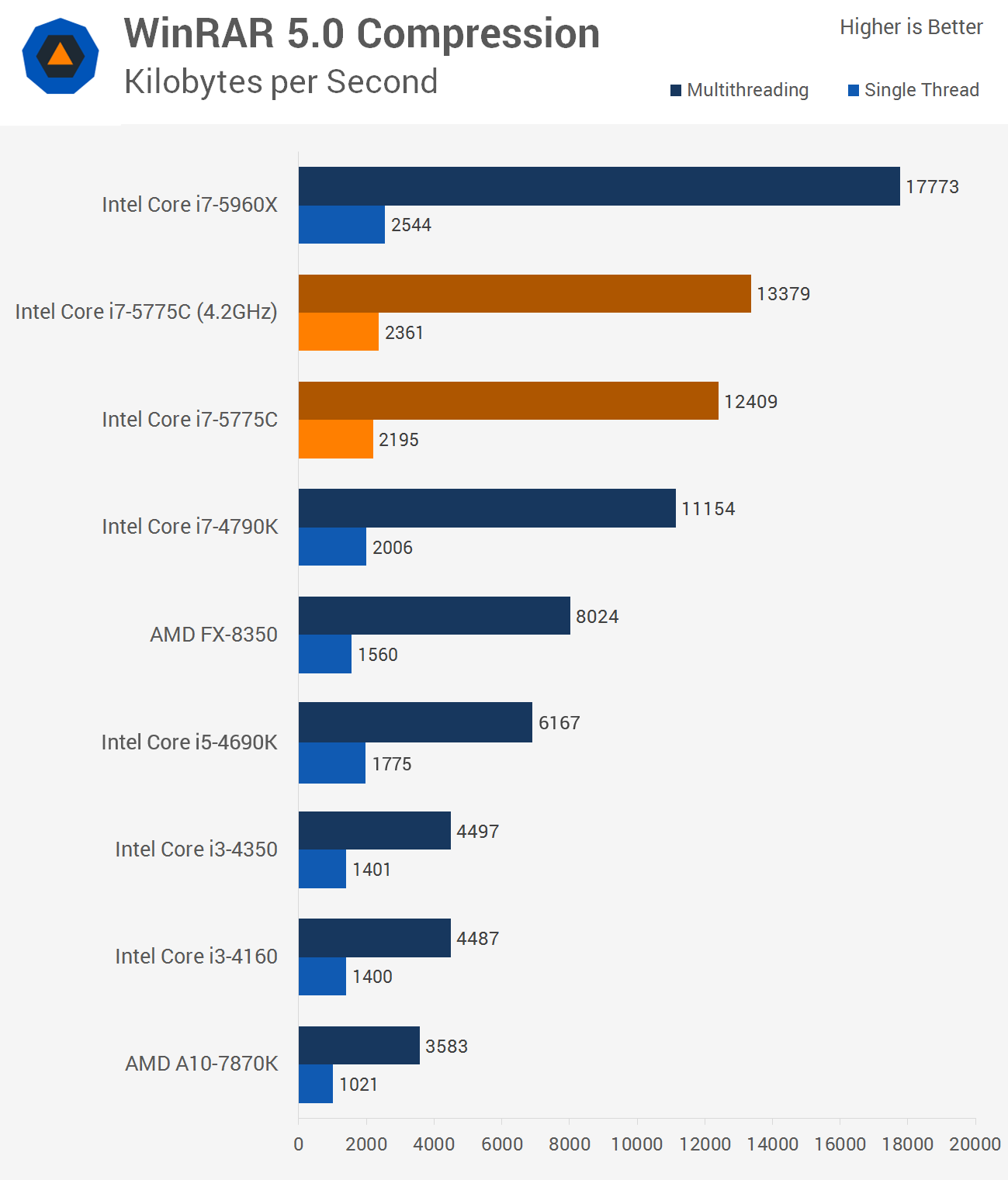
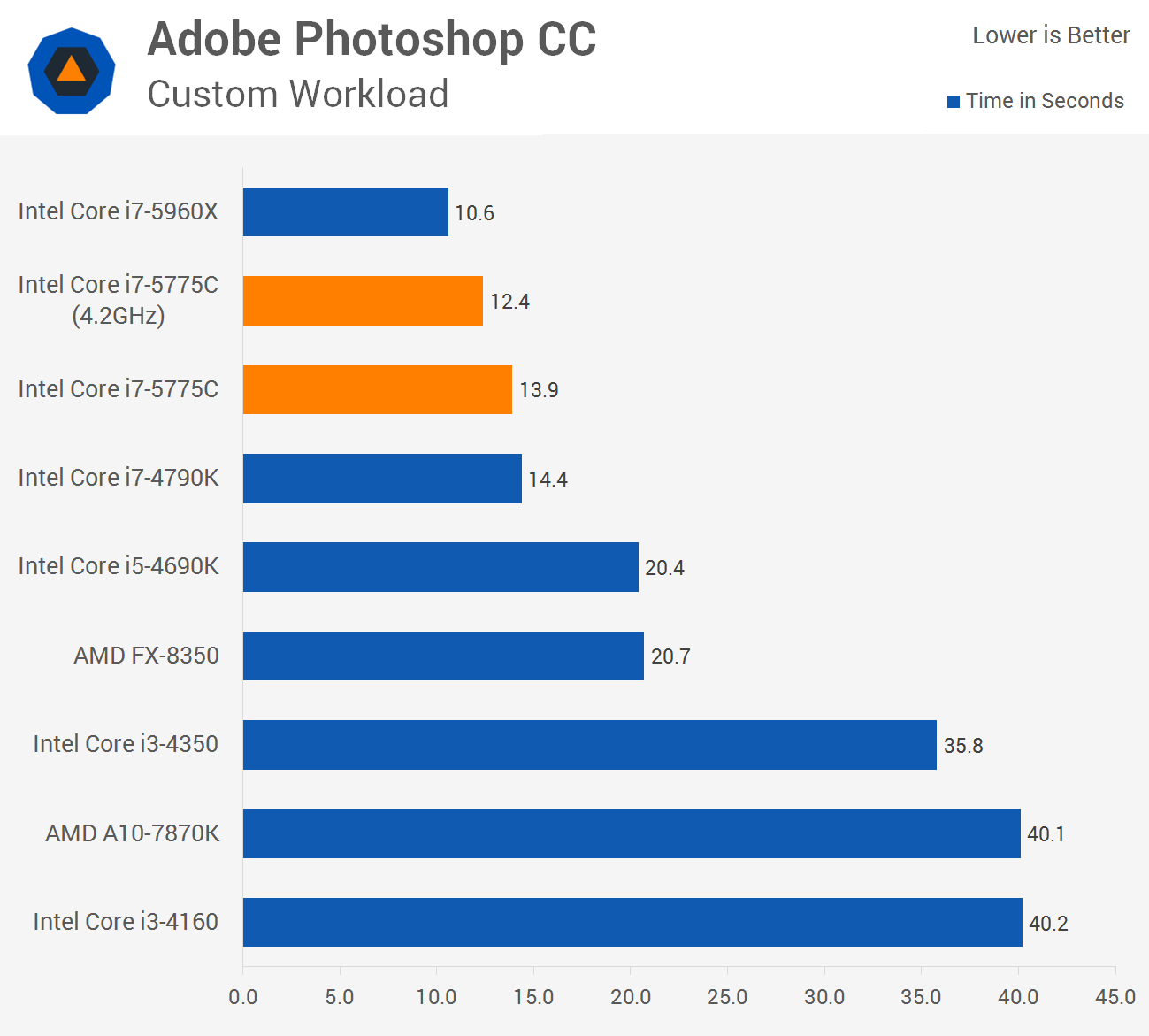
The 128MB of eDRAM which acts a bit like a L4 cache was the key to the 5775C’s amazing 3D performance. That said, we suspect it came in handy on the CPU side of things when running a few of our application tests, where the 5775C was surprisingly fast.
The GT3e GPU that is embedded alongside the L4 cache chip is powerful opposed to what Intel has been releasing for years now. I mean to date there hasn't been a desktop processor from Intel that was capable beating AMD APUs. Broadwell-H Desktop processors come with a very feisty solution, and if you stick to mid-range quality settings, you can actually play games at 1080 reasonably well. Truth of course remains, everybody that purchases a flag-ship quad-core processor, will likely already have a dedicated graphics card. But yeah the GT3e IGP is good, really good. We also need to separate gaming from the graphics core, realize that it is a multipurpose graphics processor. You'll have no issues with Blu-ray playback, heck it can even deal with 3D TV, post-process your media files and help out with video en/trans and decoding. The GPU is compatible with HDMI 1.4 and Display Port 1.2 next to the regular DSUB and DVI connectors of course. Unfortunately HDMI 2.0 is not supported meaning 60Hz on an Ultra HDTV will max out at 30Hz.
The biggest benefits for Broadwell-H are twofold: impressive integrated graphics performance and a notch gained in power efficiency. Somehow I have the feeling that Broadwell-H for desktop is sort of a initial tryout to see how 14nm is behaving. As a result the performance is good, but relatively clocked low. And then overclocking results are a bit dull. The performance increment overall is close to NIL. So with that said, if you already are on Sandy-Bridge, Ivy-Bridge or Haswell, we would not recommend you to upgrade. See, what you want to wait for is Skylake, which is launching very soon already. That desktop processor series promises new motherboards platforms with new features and a processor that will get you a fair bit more in performance and tweakability as well. In retrospect I do have to mention that the maximum turbo allowance for the 5775C is 3.7 GHz, and it can keep up with say a 4790 really well. So in that respect the per core performance has increased a bit.
Hardware.fr Core i5 5675C Review
Their efficiency test also puts Broadwell-K largely ahead of any previous chip.
www.hardware.fr/focus/112/core-i5-5675c-broadwell-cote-cpu-test.html

For the price, it dang well better.Holy crap that thing just crushes any CPU from AMD.
The fastest unobtainable mainstream CPU ever produced.
If this week's leaked roadmap is correct higher clocked Broadwell-K arrives in Q3. Skylake GT4e should follow next year.
Looks like you don't understand Intels Roadmap. Intel might look into a higher clocking variant option but there is no definite hint from the >= sign that it comes. In the past we didn't see higher clocking variants even with this sign in a Roadmap.
Well NVidia doesn't have a HBM card out....only AMD does. It performs about equivalent to a GTX 980 but slightly less than a GTX 980 Ti.
The CrystalWell embedded DRAM (128 MB) also doubles as an L4 Cache for the CPU.
I'm really convinced with this type of performance we might see a console from Intel for the 9th generation - and it could potentially be backwards compatible with PS4 / XBOX One.

The fastest unobtainable mainstream CPU ever produced.


