• We’re currently investigating an issue related to the forum theme and styling that is impacting page layout and visual formatting. The problem has been identified, and we are actively working on a resolution. There is no impact to user data or functionality, this is strictly a front-end display issue. We’ll post an update once the fix has been deployed. Thanks for your patience while we get this sorted.

Intel Broadwell-K & Skylake (non-K) desktop CPUs to launch in Q2-2015

Page 8 - Seeking answers? Join the AnandTech community: where nearly half-a-million members share solutions and discuss the latest tech.
To achieve similar performance you'd need a 4.4-4.8GHz 88W 4C/8T IB with HD4000 graphics enabled (HD4600 is faster). Good luck on that. 😛

IB would achieve the same perf/clock if speed binned @ 88 W, minus the ~8% IPC improvement that Haswell provides.

Actually IB could likely be clocked higher than Haswell at the same TDP, since it has a slightly less fat CPU core.
 
Fastest quad-core Ivy Bridge is a 87W TDP Xeon E3 V2 @ 3.7GHz that doesn't even pack an iGPU. Rumoured 88W TDP Core i7 4790K runs @ 4GHz, packs a GT2 iGPU and offers close to ~10% better perf/clock than IB (overall). So no, it wouldn't.

You have to include the improved TIM and packaging materials Devils Canyon has. Im sure the Xeon E3 V2 is the same as an ordinary Ivy Core i7. Getting better TIM would make it hit higher frequency at 88W TDP. Also, it seams that Devils Canyon is also re-engineered to allow that higher clocks than vanilla Haswell.
 
If new design generations based on the existing Core uArch no longer brings much performance improvement, eventually you have to start thinking about a completely new uArch design.

I'm not an Intel CPU architect, so I can't really comment on this, but Core is very successful, and I don't know if they're going to make it substantially better, with a complete redesign. If it ain't broke... just keep improving, optimizing.
 
To achieve similar performance you'd need a 4.4-4.8GHz 88W 4C/8T IB with HD4000 graphics enabled (HD4600 is faster). Good luck on that. 😛


Yep, it's amazing that they managed to deliver similar perf/clock improvement to AMD's Kaveri (vs Richland), despite already offering impressive IPC & single-thread performance with IB, isn't it?

Not to mention they didnt have to lower the clocks like AMD did on Kaveri.
 
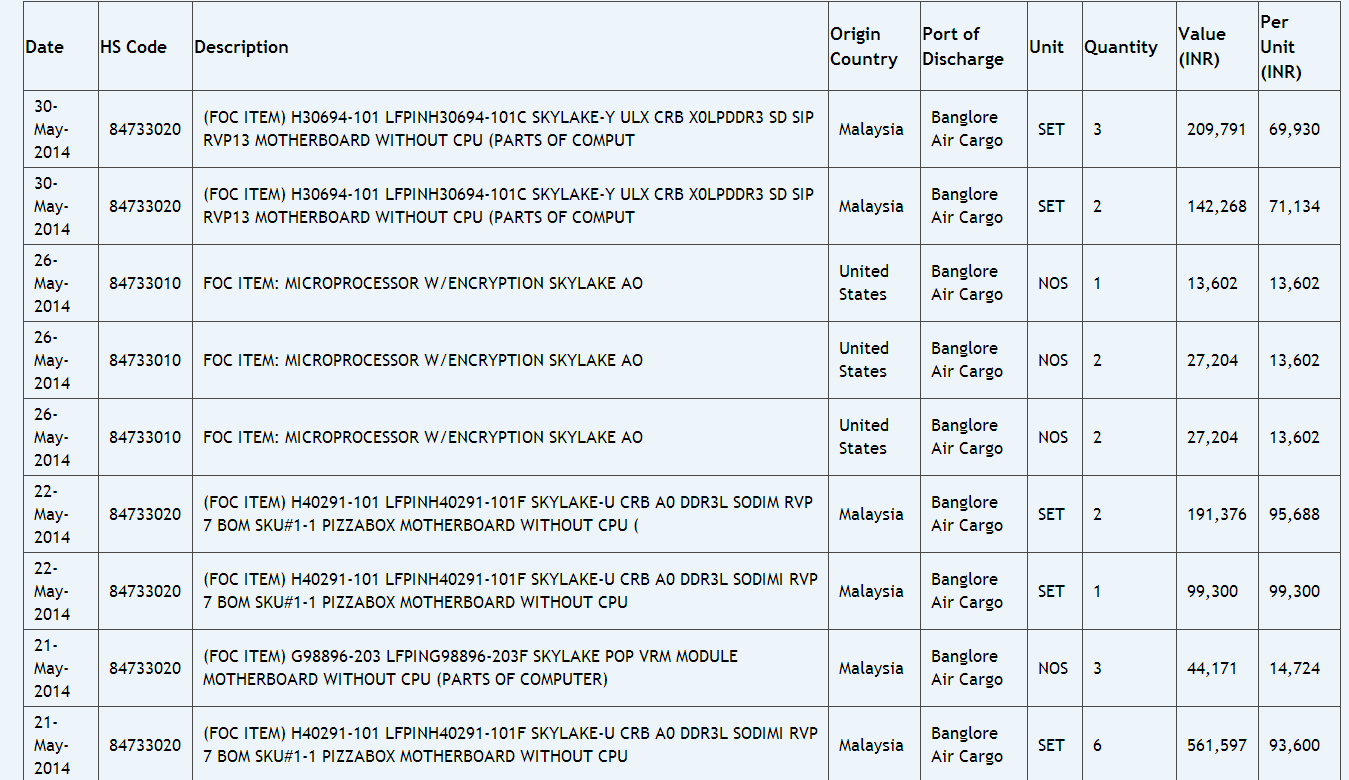
Skylake stuff:

298ab49c_1.png


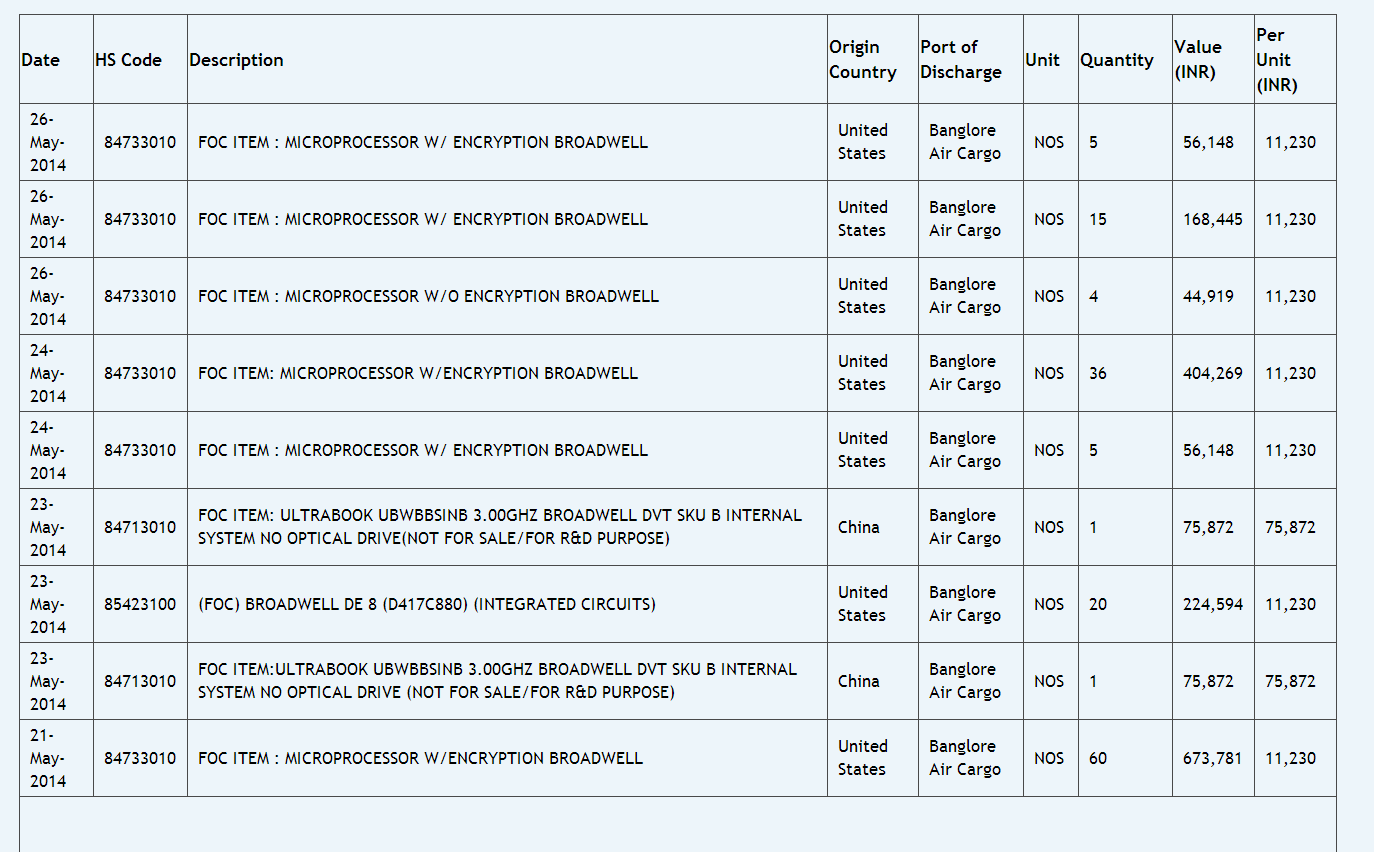
broadwell stuff:

e8c3f298_1.png


http://www.overclock.net/t/1487654/...ng-lab-features-8-gb-memory/140#post_22348088
 
I'm trying to see what info can be extracted from those two slides:

* Skylake-Y/U is LPDDR3/DDR3L, not LPDDR4/DDR4L. That is on mobile though, so it doesn't mean desktop Skylake will have not DDR4.

* No frequency specified for the Skylake parts.

* There is a Broadwell Ultrabook where the frequency is specified @ 3.00 GHz. Since neither the TDP, nor the CPU series is specified it's hard to tell whether that is good or bad. For example there are already Haswell U-series CPUs at higher frequency, e.g. 4600U @ 3.3 GHz (Turbo).

Am I missing some more info that can be extracted from the slides?
 
I'm trying to see what info can be extracted from those two slides:

* Skylake-Y/U is LPDDR3/DDR3L, not LPDDR4/DDR4L. That is on mobile though, so it doesn't mean desktop Skylake will have not DDR4.
I can't really imagine Skylake not supporting DDR4, considering RAM manufacturers have claimed mainstream adoption taking place in 2015. While Intel is obviously not the only company that has processors that utilize DDR4, they're definitely one of the largest. In addition, Haswell-E will have support for it, which is this year, well ahead of Skylake's launch date.

One final bit... even Broadwell has been rumored to have DDR4 support to some extent. There was a leaked Texas Instruments VRM slide deck that had mentioning of DDR4 enabled on some Broadwell models (think they were Broadwell-H). This was quite some time ago... so who knows if those parts and plans were axed. That deck isn't available anymore, I believe... got taken down, and I wasn't clever enough to save it.

Found the old thread: http://forums.anandtech.com/showthread.php?t=2355711

So Broadwell-Y and Broadwell-H will have DDR4 to some extent, potentially.

What you're looking at with those logs are only a small subset of the SKUs, so it doesn't make sense to write off DDR4 support as a whole. One final bit: typically low power DDRx ICs/modules stick around much longer than their high power cousins... LPDDR3 only came out last year, IIRC.

I believe I saw somewhere that an upcoming AMD product line is slated to use memory controllers supporting both DDR3 and DDR4, and I'm inclined to think Intel will do the same. I have a feeling DDR3 won't be so hastily abandoned, at least in certain form factors, so continued support for DDR3 would be wise. DDR3 is pretty expensive as it is right now, and I don't think DDR4 will improve the situation.
 
Last edited:
I do like how they state A0 for the Skylake parts, but Broadwell? Nope, they're not gonna reveal what stepping it's on quite so easily.
 
I can't really imagine Skylake not supporting DDR4, considering RAM manufacturers have claimed mainstream adoption taking place in 2015.


Skylake should support both. The zauba stuff is no surprise, vr-zone already hinted that most Y and U models will remain on DDR3 whilst the desktop stuff most likely are DDR4 parts.

which Skylake section also will support DDR3 and DDR4 identified two memory.

Skylake code processor will contain H, Y, U and S series, which SKL-S series is pin LGA, which is what we generally use common desktop processors will be used to determine which part of the DDR4 memory, in addition to Y and U series processors will remain in the vast majority of DDR3 memory specification.
http://chinese.vr-zone.com/111256/w...el-skylake-platform-confirm-in-2015-05042014/

One final bit... even Broadwell has been rumored to have DDR4 support to some extent. There was a leaked Texas Instruments VRM slide deck that had mentioning of DDR4 enabled on some Broadwell models (think they were Broadwell-H).

That changed a bit. DDR4 is too early/expensive for initial Y and U models I guess. Broadwell-DE supports both DDR3 and DDR4.
 
Hmm nice new nomenclature, makes even more sense than before... wasn't Z only part of unlocked CPUs names?
 
Z170 is the chipset name I think. And there is a translation mistake. They are saying current name is Z170 and not Z107. You can remove Z107.
 
Z170 is the chipset name I think. And there is a translation mistake. They are saying current name is Z170 and not Z107. You can remove Z107.

Ok this makes much more sense, I was worried because similar names appeared for some broadwell chips, the 5Y10 and 5Y70. Probably the chips are part of the new -M line of CPUs so a different naming scheme is possible.
 
why not just skip broadwell and release skylake K in 2015

Because 10nm is looking to be even more delayed than 14nm and so they need a Skylake refresh "plan B" in their back pocket in case they can't reverse that progression in the next 18 months?
 
He was just making a (rather cynical 😉) suggestion....

One quite plausible option is that Broadwell K is going to be their (relatively) 'massive IGP' option for a little while.
 
I think Skylake will be a good upgrade for about almost everyone, the fact they will be switching over to DDR4 is a tale in itself. Almost every platform in pc history with a new supported memory saw some kind of decent to great improvement. Of course these days we are still sitting on quads while years back we were moving from single to dual cores so the outcome could be a little less dramatic then ever before.
 
Well that's a shame.
Indeed.
Without knowledge of the reasons I wouldn't say this.

Enjoying those non-soldered Intel CPUs? 😛 j/k

Intel eliminates features to reduce costs anytime those features are no longer internally forecast as being "revenue growth enablers".

Why do our Intel chips have IGP? It is currently forecast to continue to be a "revenue growth enabler". Should that internal forecast turn south then the feature will be cut.

The question here is why was Intel convinced in the first place that FIVR was going to enable higher revenue growth, and what happened to change that expectation?

I personally have no insight into why Intel would be getting rid of FIVR, I thought the idea was solid and would naturally improve over time (like the IMC).
 
I personally have no insight into why Intel would be getting rid of FIVR, I thought the idea was solid and would naturally improve over time (like the IMC).

I don't either because wasn't Intel suppose to be competing with themselves? At least according to some. 😉
 
Back
Top