• We’re currently investigating an issue related to the forum theme and styling that is impacting page layout and visual formatting. The problem has been identified, and we are actively working on a resolution. There is no impact to user data or functionality, this is strictly a front-end display issue. We’ll post an update once the fix has been deployed. Thanks for your patience while we get this sorted.

Did AMD miss a big opportunity in 2017?

Page 4 - Seeking answers? Join the AnandTech community: where nearly half-a-million members share solutions and discuss the latest tech.
Why would Dell put that [hypothetical] Ryzen 3 2200G in their products when it performs the same as Intel i3s and Intel can easily give extremely large volumes compared to AMD?
So that the product exists. Especially when talking about Dell. Lets say Dell wants to offer a Ryzen 7 Optiplex to businesses. There is demand for it. More demand then there would be for a similar Precision due to Intel only offering a 6c CPU in its desktop offering. Problem is designing and qualifying a new motherboard and system configuration is expensive. With the Volume of Ryzen R7 they would sell it might cost as much as a base Precision. Dell doesn't want to do that. So they offer the an R5 and that undercuts for the most part both the i5 and i7 but because the volume on that would actually be less because it isn't as competitive they still aren't dealing with a volume that would allow the platform to be price competitive. So the next step is to offer the R3, it's competitive with the i3, but it requires a GPU, that increases costs but honestly the volume is going be a lot higher than the R7 and R5 because you are getting down to impulse purchasing level and this is always going to be a sweet spot, this is also starting to get down into the uneducated buyers level. To cap that off you offer the Lowest end APU (let's call it the 2300G) because that would be AMD's Sub $100 APU and would bring the system down Black Friday awesome deal pricing. Being there is a big key and the last two steps become volume sellers even if they aren't competitive. Now the major market points are hit, from there Dell can offer all the mid steps they want because why not?

Then to add onto that Dell wants to offer an AIO. There Choices are GT2 based Core i systems, spending out the but to get Iris CPU's, or using GT2 systems with a mobile MX150. Or they can go with AMD offer varying levels of GPU power and CPU in their APU's which would be close to the MX150, use less power and generally be comparable to the Core i products they would use CPU wise. Now since they are offering Desktops with the APU's they already have a CPU supply of the APU's. Boom another Design win for AMD.

Dell offers these systems once they can be priced competitively because it gives them the flexibility to offer everything customers might want. It's why they were dying inside when Intel was paying them upwards of nearly a billion a quarter to use Intel only on their systems. They could only take so much of not offering what customers may want before they gave in no matter what Intel was paying them. For AMD, Dell selling their product is a huge win. Even if the volume doesn't come close to Intel (because really we need to stop thinking AMD has to beat Intel to be successful), just having them offer it is going to be a huge boost in volume of their sales.
 
But so is the Intel GT2 iGPU.

So with that noted, why then would a person buy an AMD APU Pre-built desktop when AMD is not able to compete against the volume of Intel in the mainstream desktop consumer space--->https://forums.anandtech.com/threads/did-amd-miss-a-big-opportunity-in-2017.2526160/#post-39167590

This is one reason I think AMD should focus on FirePro (and workstation) if they are going to put APUs on desktop (See post #51, post #56, post #58 and post #59)

P.S. Just for the record I am not against DIY AM4 boards. (My complaints are geared solely towards how AMD positions themselves in the Pre-built market)

I'm not following you. The GPU performance is (mostly) irrelevant to the target audience that buys an APU/iGPU. They just need high enough performance for non-gamer graphic tasks. The amount of CU units activated will be irrelevant for my purchase decision for one, for all I care it's just three out of 11.

How is AMD not able to compete against Intel when they have always offered beter price to performance, and as of Raven Ridge, now also offer better performance/Watt, which is the most critical metric?
 
Last edited:
You clearly don't understand how to a business.

AMD is not in the position to pick and choose.

AMD would do just about anything to make a profit.
Of course AMD has to pick and choose. They have been trying to get a foothold in high-end gaming GPUs since 2013 and look where it got them.

Why would OEMs even want to sell AMD CPU-based systems in a market where Intel is heavily entrenched, where innovation is basically non-existent, and users simply do not care?

Is the price that AMD list for the OEMs that low that they can design and validate completely new components to support a new CPU architecture and still make the same or more profits as they do by selling minor tweaks to components for what are essentially Skylake-based CPUs for the past three years?
And there you have it: a classic straw man argument.
Spoken like somebody who's truly ignorant of the reasons why Intel has so perfectly captured the OEM market.

So what would you have AMD do? Manufacture 30-40$ dies but instead of selling them for 90-100$+ in the DIY market, sell them at maybe 50$ to OEMs AND keep up the required volume in hopes that Intel plays it clean and doesn't tighten its grip on the OEMs? All the while ensuring that Global Foundries doesn't falter in keeping up with the production?
 
  • Like
Reactions: cbn
cbn said:
But so is the Intel GT2 iGPU.

So with that noted, why then would a person buy an AMD APU Pre-built desktop when AMD is not able to compete against the volume of Intel in the mainstream desktop consumer space--->https://forums.anandtech.com/threads/did-amd-miss-a-big-opportunity-in-2017.2526160/#post-39167590

This is one reason I think AMD should focus on FirePro (and workstation) if they are going to put APUs on desktop (See post #51, post #56, post #58 and post #59)

P.S. Just for the record I am not against DIY AM4 boards. (My complaints are geared solely towards how AMD positions themselves in the Pre-built market)

I'm not following you. The GPU performance is (mostly) irrelevant to the target audience that buys an APU/iGPU. They just need high enough performance for non-gamer graphic tasks. The amount of CU units activated will be irrelevant for my purchase decision for one, for all I care it's just three out of 11.

How is AMD not able to compete against Intel when they have always offered beter price to performance, and as of Raven Ridge, now also offer better performance/Watt, which is the most critical metric?


1.) When you mention "price to performance" you are thinking of the retail box processors (the processors used in DIY builds). This same "price to performance" relationship is not reflected in the AMD vs. Intel pre-built desktops.

2.) Performance per watt matters really only for laptop.

So combine #1 and #2 and that is two reasons why I think AMD should focus on mobile first for the APUs.
 
Last edited:
Of course AMD has to pick and choose. They have been trying to get a foothold in high-end gaming GPUs since 2013 and look where it got them.

Why would OEMs even want to sell AMD CPU-based systems in a market where Intel is heavily entrenched, where innovation is basically non-existent, and users simply do not care?

Is the price that AMD list for the OEMs that low that they can design and validate completely new components to support a new CPU architecture and still make the same or more profits as they do by selling minor tweaks to components for what are essentially Skylake-based CPUs for the past three years?

Spoken like somebody who's truly ignorant of the reasons why Intel has so perfectly captured the OEM market.

So what would you have AMD do? Manufacture 30-40$ dies but instead of selling them for 90-100$+ in the DIY market, sell them at maybe 50$ to OEMs AND keep up the required volume in hopes that Intel plays it clean and doesn't tighten its grip on the OEMs? All the while ensuring that Global Foundries doesn't falter in keeping up with the production?

You clearly have ZERO understanding of how to run a business.

Businesses like to have more than one supplier for each type of products they are buying because:

1. If supply from one supplier gets interrupted, business can still get supply from other suppliers.

2. It gives business more power to negotiate prices.
 
Of course AMD has to pick and choose. They have been trying to get a foothold in high-end gaming GPUs since 2013 and look where it got them.

Why would OEMs even want to sell AMD CPU-based systems in a market where Intel is heavily entrenched, where innovation is basically non-existent, and users simply do not care?

Is the price that AMD list for the OEMs that low that they can design and validate completely new components to support a new CPU architecture and still make the same or more profits as they do by selling minor tweaks to components for what are essentially Skylake-based CPUs for the past three years?

Spoken like somebody who's truly ignorant of the reasons why Intel has so perfectly captured the OEM market.

So what would you have AMD do? Manufacture 30-40$ dies but instead of selling them for 90-100$+ in the DIY market, sell them at maybe 50$ to OEMs AND keep up the required volume in hopes that Intel plays it clean and doesn't tighten its grip on the OEMs? All the while ensuring that Global Foundries doesn't falter in keeping up with the production?

You clearly have ZERO understanding of how to run a business.

Businesses like to have more than one supplier for each type of products they are buying because:

1. If supply from one supplier gets interrupted, business can still get supply from other suppliers.

2. It gives business more power to negotiate prices.

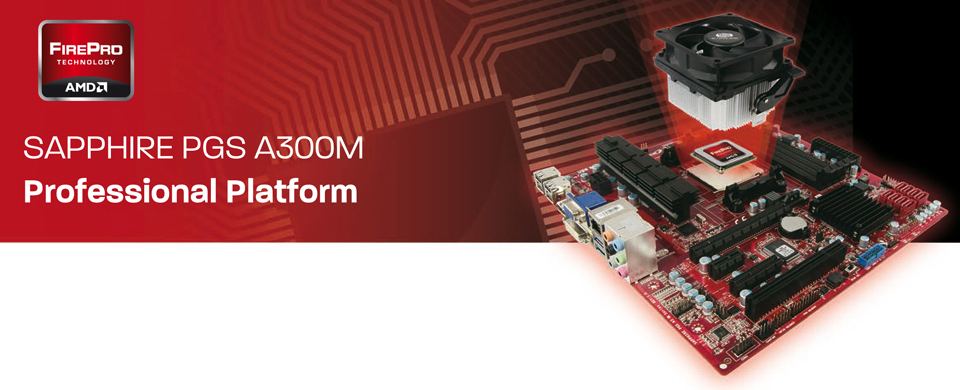
But why consumer pre-built desktop? Why not Workstation pre-built desktop instead?

Then have the increased workstation features like ECC spillover to the DIY motherboard market so they can increase their specialization. (Example below)

http://www.legitreviews.com/sapphir...platform-with-amd-a320a300-firepro-apus_14016

banner2.jpg


cbn said:
But why consumer pre-built desktop? Why not Workstation pre-built desktop instead?

Then have the increased workstation features like ECC spillover to the DIY motherboard market so they can increase their specialization. (Example below)

http://www.legitreviews.com/sapphir...platform-with-amd-a320a300-firepro-apus_14016

So, if Intel increases prices, what is Dell supposed to do?

Concede the consumer market to HP and Lenovo?

Concentrate more on workstations and servers? This with AMD processors in them?
 
Concentrate more on workstations and servers? This with AMD processors in them?

So in other words, you think that Dell should concede the consumer market.

There's an old saying and it is: "Don't put all your eggs in one basket"
 
cbn said:
But why consumer pre-built desktop? Why not Workstation pre-built desktop instead?

Then have the increased workstation features like ECC spillover to the DIY motherboard market so they can increase their specialization. (Example below)

http://www.legitreviews.com/sapphir...platform-with-amd-a320a300-firepro-apus_14016

So, if Intel increases prices, what is Dell supposed to do?

Concede the consumer market to HP and Lenovo?

Concentrate more on workstations and servers? This with AMD processors in them?

So in other words, you think that Dell should concede the consumer market.

There's an old saying and it is: "Don't put all your eggs in one basket"

First of all, the scenario you describe is hypothetical. Why would Intel increase prices on desktop processors in the first place? The only reason I can think of is that the market has shrunk down.

Secondly, Dell is already moving in the direction of Enterprise.

https://www.pcworld.com/article/319...pcs-puts-enterprise-on-top-of-the-agenda.html

Michael Dell started Dell as a PC company in 1984 when he was 19 years old. But today, the PC market is limited, and Dell's approach is much like Intel's, which is focusing on enterprise IT infrastructure. Dell is now focused more on server, storage, cloud, networking, and internet-of-things offerings.
 
First of all, the scenario you describe is hypothetical. Why would Intel increase prices on desktop processors in the first place? The only reason I can think of is that the market has shrunk down.

https://www.pcworld.com/article/319...pcs-puts-enterprise-on-top-of-the-agenda.html

Who knows? Maybe there is a huge earthquake that shutdown four of Intel's fabrication plants.

It doesn't matter.

I see that you are STILL trying your best to DEFLECT from the question.

The point is:

Why would it be better to source from a single supplier than multiple suppliers?

Most large businesses would attempt to source from at least two different suppliers.
 
Last edited:
@ Mockingbird,

Don't forget Qualcomm (and others) will be making Windows 10 devices as well.

https://www.theverge.com/2017/10/18/16495010/microsoft-windows-10-arm-laptops-battery-life

Qualcomm is still committed to getting devices in the market in December, and that Microsoft is promising multi-day battery life. “To be frank, it’s actually beyond our expectations,” says Pete Bernard, a program manager at Microsoft. “We set a high bar for [our developers], and we’re now beyond that. It’s the kind of battery life where I use it on a daily basis. I don’t take my charger with me. I may charge it every couple of days or so. It’s that kind of battery life.”

Bernard describes the ARM-powered devices as a “game-changer” for laptops, and if the claims are true then this could make up for the fiasco of Windows RT. Microsoft previously promised great battery life with ARM-powered Windows RT devices, but that largely fell short. RT was a messy and confusing experiment that included a desktop mode that couldn’t run traditional desktop apps, and Microsoft will be keen to avoid any issues again.

In a separate interview with ZDNet, Bernard also claims initial testers were reporting bugs saying the Windows battery meter wasn’t working. "It turned out not to be a bug; it just has a great battery life,” explains Bernard.
 
Who knows? Maybe there is a huge earthquake that shutdown four of Intel's fabrication plants.

It doesn't matter.

I see that you are STILL trying your best to DEFLECT from the question.

The point is:

Why would it be better to source from a single supplier than multiple suppliers?

Most large businesses would attempt to source from at least two different suppliers.
And this is the major reason Intel couldn't break into mobile. Intel has very talented CPU architechs. Who could have made a great CPU where the market was. ARM btw. But instead, they chose to try and bring the market to them, wrapping $20.00 bills around each processor to lock OEM's to a single source. PC OEM's make a sliver of the profit, but bear the burden of support. Intel and Microsoft make most of the profit in PC's. So why in the world would the mobile guys, who are on razor thin margins go to a single supplier, with a bad history?
 
Who knows? Maybe there is a huge earthquake that shutdown four of Intel's fabrication plants.

It doesn't matter.

I see that you are STILL trying your best to DEFLECT from the question.

The point is:

Why would it be better to source from a single supplier than multiple suppliers?

Most large businesses would attempt to source from at least two different suppliers.

Your assumption(s) are (1) Dell wants to sell Consumer Desktops more than other things they could sell and (2) AMD will always want to sell Consumer Desktop processors to Dell.
 
Your assumption (s) are (1) Dell wants to sell Consumer Desktops more than other things they could sell and

Yet another straw-man.

(2) AMD will always want to sell Consumer Desktop processors to Dell.

AMD will sell to literally anyone/anything that has cash.

If Blah Blah Blah Corporation want to buy processors from AMD, AMD will sell.

_________________________________________________________________________________

You are STILL trying to DEFLECT from the question.
 
Last edited:
AMD will sell to literally anyone/anything that has cash.

If Blah Blah Blah Corporation want to buy processors from AMD, AMD will sell.

You are completely missing two points though:

1. Desktop PC market is decreasing.

2. Enterprise is increasing.

So with demand shifting it is AMD's best interest to shift as well. (Ie, meet consumer need)
 
You are completely missing two points though:

1. Desktop PC market is decreasing.

2. Enterprise is increasing.

So with demand shifting it is AMD's best interest to shift as well. (Ie, meet consumer need)

And you are STILL trying to DEFLECT from the question.
 
AND you STILL haven't answer the question:

Mockingbird
Why would it be better to source from a single supplier than multiple suppliers?

Most large businesses would attempt to source from at least two different suppliers.

If no strong second supplier exists then it would be better for a large business to go with only one supplier.
 
The point is that it is irrelevant to the question.

It is relevant because Dell is already documented (in post #95 of this thread) to move away from Consumer:

https://www.pcworld.com/article/319...pcs-puts-enterprise-on-top-of-the-agenda.html

Michael Dell started Dell as a PC company in 1984 when he was 19 years old. But today, the PC market is limited, and Dell's approach is much like Intel's, which is focusing on enterprise IT infrastructure. Dell is now focused more on server, storage, cloud, networking, and internet-of-things offerings.
 
If no strong second supplier exists then it would be better for a large business to go with only one supplier.

AMD does not sell alternative to every single product that Intel sells.

Intel also does not sell alternative to every single product that AMD sells.

...but for similar products that BOTH Intel and AMD sell,

WHY WOULD IT BE BETTER TO SOURCE FROM A SINGLE SUPPLIER THAN FROM MULTIPLE SUPPLIERS?

It is relevant because Dell is already documented (in post #95 of this thread) to move away from Consumer:

https://www.pcworld.com/article/319...pcs-puts-enterprise-on-top-of-the-agenda.html

Why won't you answer the question?

Why would it be better to source from a single supplier than from multiple suppliers?
 
Last edited:
Back
Top