
-
We’re currently investigating an issue related to the forum theme and styling that is impacting page layout and visual formatting. The problem has been identified, and we are actively working on a resolution. There is no impact to user data or functionality, this is strictly a front-end display issue. We’ll post an update once the fix has been deployed. Thanks for your patience while we get this sorted.
You are using an out of date browser. It may not display this or other websites correctly.
You should upgrade or use an alternative browser.
You should upgrade or use an alternative browser.
Discussion CPU boost frequency and marketing
Page 2 - Seeking answers? Join the AnandTech community: where nearly half-a-million members share solutions and discuss the latest tech.

tamz_msc
Diamond Member
Sorry but if it doesn't boost to 4.6 GHz reliably for a large number of people, it means that boost is broken on the 3900X. Note that I'm talking specifically about the 3900X, as the lower end SKUs like the 3600 doesn't seem to have this issue.It DOES do it, but by your own words " yet it doesn't do that for many people". That means it works, but if it does not do it for everyone, that does not mean its broken or defective.
As I said, if you don;t like the 3900x, go buy Intel.

Atari2600
Golden Member
The 3900X is supposed to do 4.6 GHz on one thread, according to AMD, yet it doesn't do that for many people. That means that they're not doing what they're designed to do.
Supposed to do **up to** 4.6 GHz.
Assuming that later BIOS revisions don't rectify something, I agree that they should have labelled it as 4.5 GHz - but "boost up to" does not equate to "will boost to".

IntelUser2000
Elite Member
Single core Turbos were always finicky. When I used 2600K as my main chip, I had the Intel turbo boost gadget on the top right. I rarely ever saw the single core Turbo.
It's really, really easy to knock it off the 1-core Boost. That's why you don't see max speed on Ryzen.
You are off by 100MHz on a 4GHz chip. It's no big deal.
That's because both AMD/Intel are flying past the TDP limits and the motherboard manufacturers are putting by default much higher power targets.
If it was behaving as TDP, in a really demanding scenario(Something like LinX that fully saturates the AVX units), it might have to work at base.
Base clocks are really a guarantee that it'll be working at that speed no matter the circumstance. You'll see that's very much true in mobile chips where its thermally and power constrained.
It's really, really easy to knock it off the 1-core Boost. That's why you don't see max speed on Ryzen.
You are off by 100MHz on a 4GHz chip. It's no big deal.
but I find the low base clock that is never used by default also annoying,
That's because both AMD/Intel are flying past the TDP limits and the motherboard manufacturers are putting by default much higher power targets.
If it was behaving as TDP, in a really demanding scenario(Something like LinX that fully saturates the AVX units), it might have to work at base.
Base clocks are really a guarantee that it'll be working at that speed no matter the circumstance. You'll see that's very much true in mobile chips where its thermally and power constrained.
Last edited:
Stuff like Cinebench single core benchmark, GB4, etc. all use single core at advertised clocks. You can even observe it at work. As long as there's no substantial load on any other core. Even Zen and Zen+ single boost worked without hiccups and there were no disgruntled buyers. All of a sudden, Zen2 launches with chips struggling to hit single-thread boost clocks and you have people trying to be all apologetic about it. It's quite interesting to observe.Single core Turbos were always finicky. When I used 2600K as my main chip, I had the Intel turbo boost gadget on the top right. I rarely ever saw the single core Turbo.
It's really, really easy to knock it off the 1-core Boost. That's why you don't see max speed on Ryzen.

moinmoin
Diamond Member
Ryzen 3k's behavior defies common expectations for CPUs in several ways. While they are technically correct, AMD should have prepared the public better for this changes and generally have been more transparent about this to let it not taint them.
As is AMD simply took the Max Boost meaning, changed the boosting behavior to something very volatile. Meanwhile the public is used to some stable (average/capped) boost speed and not some random few spikes as the max boost speed. Confusion commences.
As is AMD simply took the Max Boost meaning, changed the boosting behavior to something very volatile. Meanwhile the public is used to some stable (average/capped) boost speed and not some random few spikes as the max boost speed. Confusion commences.
Atari2600
Golden Member
Stuff like Cinebench single core benchmark, GB4, etc. all use single core at advertised clocks. You can even observe it at work. As long as there's no substantial load on any other core. Even Zen and Zen+ single boost worked without hiccups and there were no disgruntled buyers. All of a sudden, Zen2 launches with chips struggling to hit single-thread boost clocks and you have people trying to be all apologetic about it. It's quite interesting to observe.
About the only place I think it is important is in the 3700X vs. 3800X. If the higher priced CPU is not delivering tangibly more performance, then the owner has lost out and AMD are badly in the wrong.
Otherwise, the product stack is fairly clearly differentiated between core count and/or unlocked CPU.
At the end of the day, you are buying compute performance, as long as the CPUs in the wild reflect those given to reviewers so any buyer knows what they are getting then I have no issue. If that is *not* the case, I have a massive issue.

Markfw
Moderator Emeritus, Elite Member
So becuase YOU have an unreasonable ASSumption about the cpu, you think its broken. Not AMD's fault.Sorry but if it doesn't boost to 4.6 GHz reliably for a large number of people, it means that boost is broken on the 3900X. Note that I'm talking specifically about the 3900X, as the lower end SKUs like the 3600 doesn't seem to have this issue.
tamz_msc
Diamond Member
Nothing is unreasonable about my assumption, it's based on what AMD is stating in the reviewers guide. And I'm not even talking about the blatantly misleading nature of the Robert Hallock video on PBO and Auto OC.So becuase YOU have an unreasonable ASSumption about the cpu, you think its broken. Not AMD's fault.

fleshconsumed
Diamond Member
Meh, it is misleading, but single core boost of 4.6 vs 4.5 will not have any tangible effect on performance. I'm still looking to pick up 3900X on BF sale or an open box at Microcenter before the end of the year.
beginner99
Diamond Member
Meh, it is misleading, but single core boost of 4.6 vs 4.5 will not have any tangible effect on performance. I'm still looking to pick up 3900X on BF sale or an open box at Microcenter before the end of the year.
True but then they advertise PBO which should give additional 200mhz and we can safely say it's BS. It's a non-feature. It simply taints the launch a bit.
I gimped my 3600 by putting it into ECO mode and initiated a single core run of CB R20 to see if I too can be disgruntled.
According to Ryzen Master this will effectively turn my 3600 into a 45w offering. I guess it's new feature for the 3xxx series.
All core run I lost 300 pts and have become somewhat disgruntled.
Single core run is painful to watch so I walked away, but that dang thing looked to have been locked on to core #2 at a steady 4200MHz!
I'll be pissed if it holds! /s
According to Ryzen Master this will effectively turn my 3600 into a 45w offering. I guess it's new feature for the 3xxx series.
All core run I lost 300 pts and have become somewhat disgruntled.
Single core run is painful to watch so I walked away, but that dang thing looked to have been locked on to core #2 at a steady 4200MHz!
I'll be pissed if it holds! /s
moinmoin
Diamond Member
Sounds like ECO mode is the easy button to switch to the most power efficient frequency of this gen (which is around 3.2GHz).I gimped my 3600 by putting it into ECO mode and initiated a single core run of CB R20 to see if I too can be disgruntled.
According to Ryzen Master this will effectively turn my 3600 into a 45w offering. I guess it's new feature for the 3xxx series.
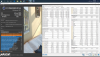
It's abundantly clear by now that the lower core chips with their lower boost clocks have no problem boosting to advertised clocks. 4.2GHz falls within the fmax territory of this gen though.I gimped my 3600 by putting it into ECO mode and initiated a single core run of CB R20 to see if I too can be disgruntled.
According to Ryzen Master this will effectively turn my 3600 into a 45w offering. I guess it's new feature for the 3xxx series.
All core run I lost 300 pts and have become somewhat disgruntled.
Single core run is painful to watch so I walked away, but that dang thing looked to have been locked on to core #2 at a steady 4200MHz!
I'll be pissed if it holds! /s
Try 4.6GHz with AOC/Manual overclocking /s
Sounds like ECO mode is the easy button to switch to the most power efficient frequency of this gen (which is around 3.2GHz).
It's abundantly clear by now that the lower core chips with their lower boost clocks have no problem boosting to advertised clocks. 4.2GHz falls within the fmax territory of this gen though.
Try 4.6GHz with AOC/Manual overclocking /s
I'm gonna shoot for the moon and try 5GHz, just gotta find a deal on all the LN2 stuff 1st. /s

Vattila
Senior member
Thanks for all the replies!
For those of you slightly annoyed by the fuss about this issue, I want to emphasise that this thread is meant to be about marketing. The Ryzen 3000 series CPUs are excellent performers, whatever boost frequency is printed on the box. However, it would be beneficial to both AMD and customers if the marketing message is clear and no one feels cheated.
So far — yet with a small sample size — over 60% of the poll voters want the stated boost frequency to be achievable in prolonged workloads (Cinebench Single-Thread, as suggested in the poll). So what should AMD do?
For those of you slightly annoyed by the fuss about this issue, I want to emphasise that this thread is meant to be about marketing. The Ryzen 3000 series CPUs are excellent performers, whatever boost frequency is printed on the box. However, it would be beneficial to both AMD and customers if the marketing message is clear and no one feels cheated.
So far — yet with a small sample size — over 60% of the poll voters want the stated boost frequency to be achievable in prolonged workloads (Cinebench Single-Thread, as suggested in the poll). So what should AMD do?
- Cap the boosting behaviour. Get rid of the opportunistic momentary boost from idle and cold conditions, even if that means some lost opportunity for increased responsiveness and power saving. Instead limit maximum boost frequency to what is achievable throughout Cinebench Single-Thread.
- Keep the maximum boost frequency and the opportunistic boost behaviour for maximum responsiveness and power saving, but also specify ST Boost and MT Boost frequencies for prolonged workloads, as suggested in my original post.
Last edited:
Markfw
Moderator Emeritus, Elite Member
Speaking of exaggerating, 58.3% is not over 60%,Thanks for all the replies!
For those of you slightly annoyed by the fuzz about this issue, I want to emphasise that this thread is meant to be about marketing. The Ryzen 3000 series CPUs are excellent performers, whatever boost frequency is printed on the box. However, it would be beneficial to both AMD and customers if the marketing message is clear and no one feels cheated.
So far — yet with a small sample size — over 60% of the poll voters want the stated boost frequency to be achievable in prolonged workloads (Cinebench Single-Thread, as suggested in the poll). So what should AMD do?
AMD CEO Lisa Su has stated on many occasions that we would be surprised how much of the AMD commentary she follows, so perhaps she or others at AMD will take notice.
- Cap the boosting behaviour. Get rid of the opportunistic momentary boost from idle and cold conditions, even if that means some lost opportunity for increased responsiveness and power saving. Instead limit maximum boost frequency to what is achievable throughout Cinebench Single-Thread.
- Keep the maximum boost frequency and the opportunistic boost behaviour for maximum responsiveness and power saving, but also specify ST Boost and MT Boost frequencies for prolonged workloads, as suggested in my original post.
Vattila
Senior member
Speaking of exaggerating, 58.3% is not over 60%,
Ah. It fell back since I posted. 🙂
However, I did not include the 2 voters that think AMD is lying. So the negative sentiment is closer to 70% if those are included.
Markfw
Moderator Emeritus, Elite Member
I think this is how it will work...up and down. It should be very close IMO, but we won't know until the sample size is far greater. I grew into IT on statistics. 1 o2 2 is nothing compared to 1000/2000. Its been too long for be to calculate the 95% confidence line, but right now you can't tell anything with these stats.Ah. It fell back since I posted. 🙂
However, I did not include the 2 voters that think AMD is lying. So the negative sentiment is closer to 70% if those are included.
Vattila
Senior member
right now you can't tell anything with these stats.
Very true. And considering the number of views this thread has had, with so few bothering to even vote, I would guess the negative sentiment is much lower than the votes indicate.
IntelUser2000
Elite Member
I'm pretty sure that if the vast majority of 9900Ks were only hitting 4.8-4.9GHz single core despite Intel advertising the maximum turbo speed as 5.0Ghz, people would be flaming Intel to a crisp. I don't think it's entirely unreasonable to hold AMD to the same standard.
The 9900K can also boost to 5GHz with 2 cores so it won't have that issue anyway.
AMD CEO Lisa Su has stated on many occasions that we would be surprised how much of the AMD commentary she follows, so perhaps she or others at AMD will take notice.
She does look pretty nerdy. I'd imagine she spends countless hours on the net daily/nightly. She doesn't seem like the type that would surf the web to gloat. I'd imagine she's more into how their current offerings are perceived by the general public.
What would a launch be for AMD if there weren't a few complications?
Marketing is never a AMD strong point.
I got what they said I'd get and don't have the issue. Sure it's the bottom of the barrel 3600, but one would also expect it to be the bottom of the barrel when it comes to binning. One would have to tend to believe that there's more to the situation than 1st meets the eye. There's got to be some other variables at play other than fraud, lying, stretching the truth, etc. Something went wrong somewhere at some point and I guess we'll find out eventually what the underlying cause(s) was/were.
Markfw
Moderator Emeritus, Elite Member
So one example of why you whiners about boost speed need to shut up https://forums.anandtech.com/threads/amd-ryzen-3000-builders-thread.2565687/post-39879400 Just 25 mhz short of boost 4,6 on multiple cores.
This is only one example. In a game no less....
This is only one example. In a game no less....
TRENDING THREADS
-
 Discussion Zen 5 Speculation (EPYC Turin and Strix Point/Granite Ridge - Ryzen 9000)
- Started by DisEnchantment
- Replies: 25K
-
Discussion Intel Meteor, Arrow, Lunar & Panther Lakes + WCL Discussion Threads
- Started by Tigerick
- Replies: 25K
-
 Discussion Intel current and future Lakes & Rapids thread
- Started by TheF34RChannel
- Replies: 24K
-

-
