I don't understand why you mention 1995 so often. Some special year or what?
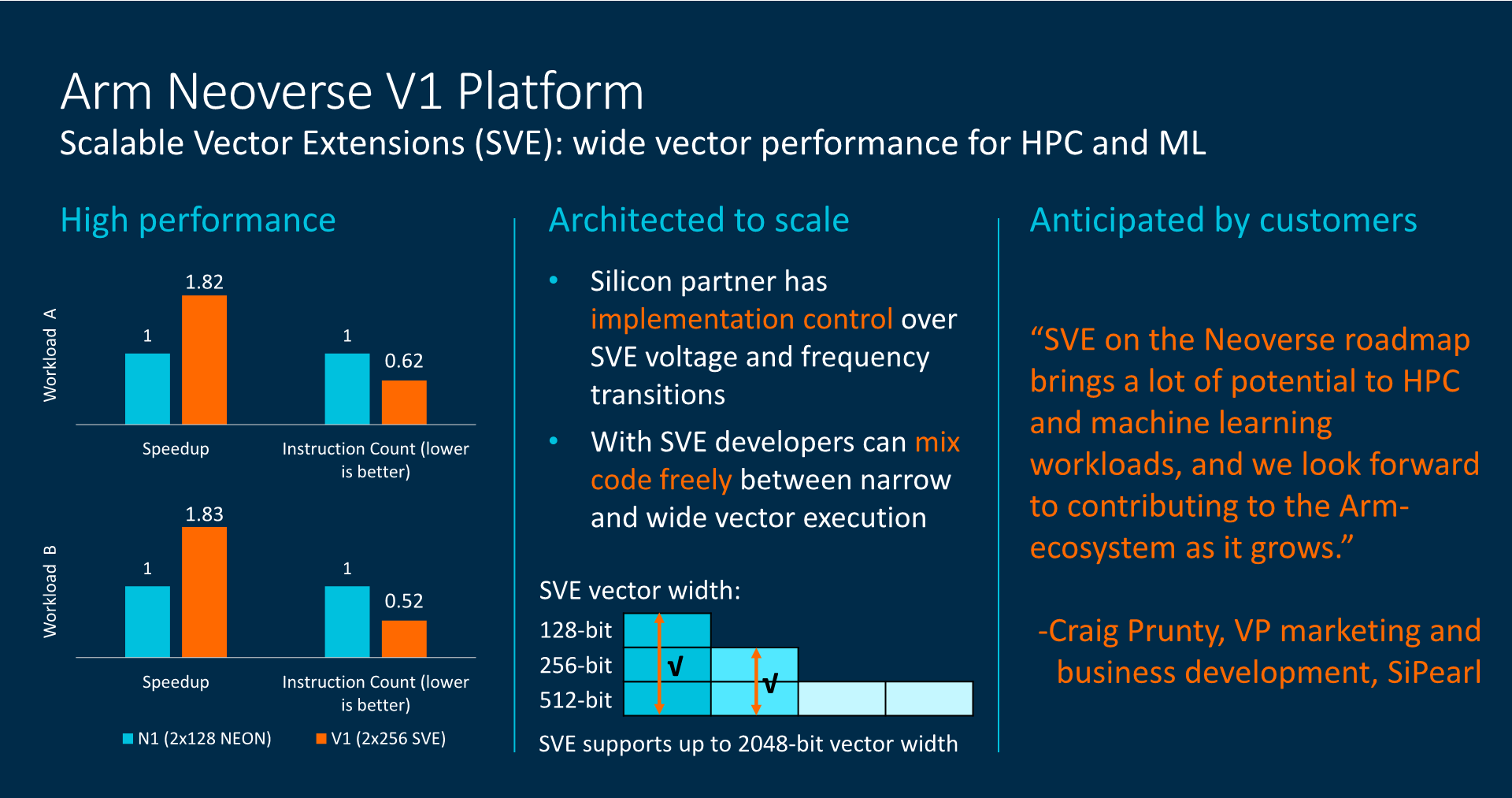
No. SVE guarantees compatibility between different vector register sizes. But the implementation impacts efficiency (both in memory and performance).
Data warehouse is a system. You probably meant:
- data centers - no, most of the time they don't compile the code that is run. You're doing it as a client.
- cloud service providers - yes, they maintain their services (but clients still take care of the VMs)
But this "fluidity" leads to exactly what I mentioned earlier: specialized, incompatible (or compatible but cumbersome) implementations.
Sure, it's all under a sexy umbrella of ARM, but so what?
And if we start to make ARM more universal, it'll start losing a lot of it's advantages - surely lightness, likely efficiency as well.
ARM is not faster. It's just more efficient in some solutions.
And yes, it's a very solid business proposition that will give x86 many years to adapt. Or Intel and AMD to drop it.
There's no doubt that x86 was a bit stagnant lately. But I don't think that's something the "enthusiast PC" community as a whole should criticize - given the shitstorm against AVX-512 or because Lakefield doesn't support AVX. This is an everyday normality in the ARM world.
Seriously, to everyone who treats ARM as a mystical golden grail of future computing - just get a cheap RPi and try setting it up as a second PC. 😉
And yes, I'm writing this on my RPi 3A+. 😉
1995 was perhaps the high water mark for the "classical windows" model of software distribution. Software distributed on physical media that you bought, the internet clearly on its way but no-one had yet internalized how much it would change things.
GPUs (the first harbinger of a new way of doing things, with on-demand finalization at the point of execution) and Java not yet big things.
Classical software distribution puts a premium on endless ISA compatibility. But all the various options I have been telling you about no longer care as much about endless ISA compatibility. Sure, you don't want a new ISA every year -- writing a compiler, writing an OS, optimization, take a LOT of work. But
- doing it once every 15 years or so is feasible. We did ARMv8 at around 2010, ARMv9 will be coming out soonish (and is likely close enough to ARMv8 that much of the tools and OS work won't be a huge ordeal).
- you can engage in annual tweaks of the ISA AND have those be of value, in the sense that code can re-compiled (in an app store), reJIT'd, reFinalized to take advantage of that new ISA right away.
I get the feeling you know nothing about SVE beyond a very superficial level.
Comparing a CPU that's deliberately optimized to be as cheap as possible in a system that's optimized to be as customizable as possible with a standardized PC seems like an attempt to score points, not top understand.
Want an ARM-based cheap PC that's easily set up and used? Buy an iPad.