

- May 3, 2012
- 4
- 0
- 71
This article basically tells you what it does (pics illustrations included)
http://rog.asus.com/101102012/maxim...r3-t-topology-design-on-z77-h77-motherboards/
And Sin822 made some further feedback regarding this feature which Anandtech was the first to point out.
Source:
http://www.overclock.net/t/1241807/asus-t-topology
In summary he concludes it's not such a big deal, and that it would require that all 4 dimm slots be occupied to be used.
I wonder what Anand has to comment regarding these 2 new sources of info i wonder :hmm:
http://rog.asus.com/101102012/maxim...r3-t-topology-design-on-z77-h77-motherboards/
And Sin822 made some further feedback regarding this feature which Anandtech was the first to point out.
Let's be VERY clear, this does NOTHING to improve clock for clock performance, it doesn't make the memory subsystem faster, it just helps OC ONLY when ALL DIMMs are filled up.
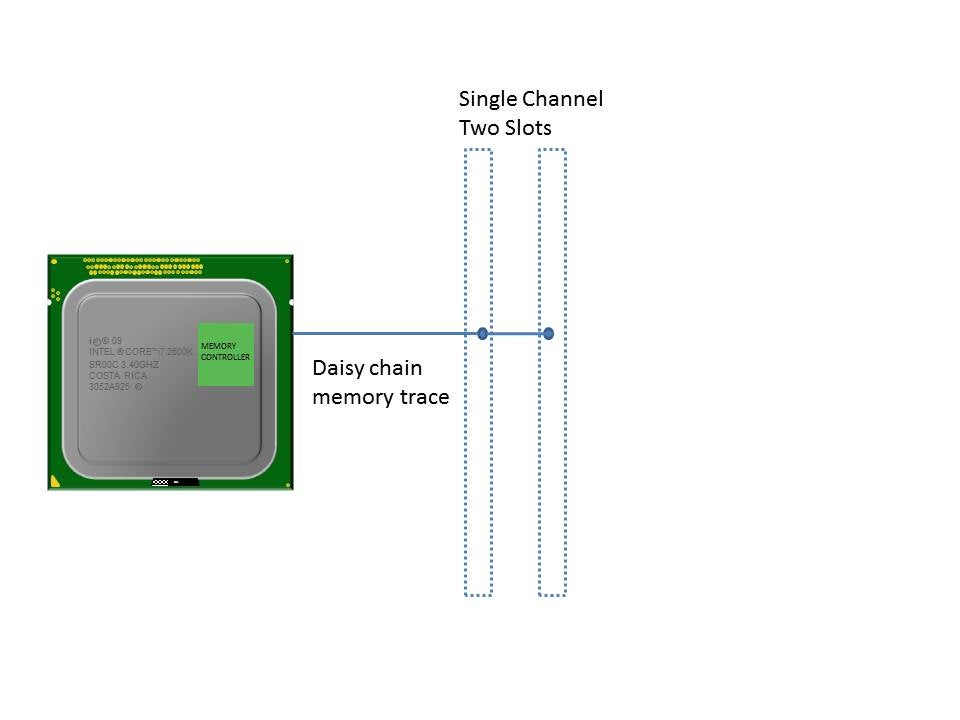
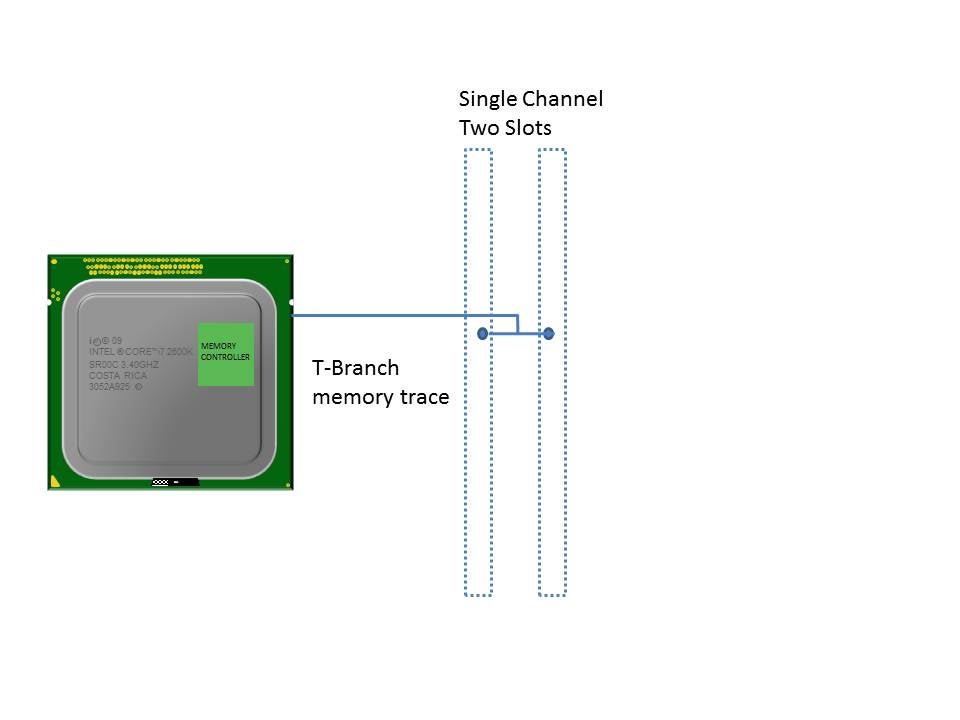
If you run the memory at 1600mhz it will run with the same performance at 1600mhz on another board. This technology is saying it can get memory upto 15% more mhz, of course only with 4DIMMs populated(as it only applies to 4-DIMMs). Bsically a channel is directly hooked up to one DIMM, that is why you skip one slot when installing 2 DIMMs. Now instead of having the second DIMM right next to the one that is directly connected to the IMC be connected to the first DIMM, it has all 4 DIMMs connected to the IMC, that isn't a breakthrough. lol.
SO this is JUST for showing off, just like I showed off 3GHz with 4-DIMMs with 16GB! lol, it has no practical benching uses b/c you would never bench with all 4DIMMs(the probability of having one stick OC less than the others increases as you increase memory stick count). There is also no practical uses for OCing memory for a 24/7 RIG or anything really especially not over 2800mhz which is easy to do on Z77 and IB, easy. Plus they don't even make memory that OCes that high, highest rated will be 2800mhz from team group and g,skill the memory i posted wasn't some random kit either.
So GIGABYTE boards can do 3GHz on the memory with 4DIMMs on Z77 with 16GB already proven, more than enough and over the top considering the best memory g,skill has doesn't goto me. I also sure ASUS will do better, for god sakes coolaler beat my score and he used the same board I did! hahahahahahaah
This is my source, Raja@ASUS: http://www.xtremesystems.org/forums/showthread.php?280224-Asus-Ivy-memory-treat backing everything i say pertaining to what this tech affects. At least he isn't making it sound like the best thing since sliced bread like andatech makes it seem.
So this technology doesn't have ANY impact when using dual channel with 2-DIMMs, it only helps when you add an extra stick to each channel, it is cool, but it also doesn't mean other companies don't already do this or something else to increase clocks
IMO this type of information, and vague placements in adnatech articles is not only deliberate, and for some reason i am not allowed to talk about the economics behind this, but let's just say when you hear it increase "performance" you think actually clock for clock memory, however that isn't true, they should say increase mhz starting at 3GHz. As that is where it would have to start as GB boards can do 3GHz.
Also if this makes Intel Engineer blsuh, i mean come on Intel you are just going to let them slander you like that?, if you make them blush enough, when you do something totally different, you are then talking about a HUGE delay in product launch as Intel will want to put it through a year of QA testing and then call it isn't own technology as that is what the partner agreement states. It isn't worth it to go beyond and above Intel spec in things like this as you wont make money off of it because your competitors will have it.. Like if ASUS was able to let's say get quad channel working on Z77, which they aren't, i am just saying, then Intel would have to provide that technology to other partners.
This t-crap is only marketing which sounds really technical, but really isn't and doesn't have any impact on 99.999999% of people, even Ln2 OCers will see no benefit from this b/c only some benchmarks like fast memory, and to run memory that cast you are going to lose out on timings. It also doesn't help for WRs for memory peed b/c llano still has better IMC, also you don't break memory WR on 4-DIMMs, you use a single DIMM lol.
Source:
http://www.overclock.net/t/1241807/asus-t-topology
In summary he concludes it's not such a big deal, and that it would require that all 4 dimm slots be occupied to be used.
I wonder what Anand has to comment regarding these 2 new sources of info i wonder :hmm:
Last edited:



 Facebook
 Twitter