• We’re currently investigating an issue related to the forum theme and styling that is impacting page layout and visual formatting. The problem has been identified, and we are actively working on a resolution. There is no impact to user data or functionality, this is strictly a front-end display issue. We’ll post an update once the fix has been deployed. Thanks for your patience while we get this sorted.

America's most expensive weapons clusterf***: The Lockheed F-35 Lightning II

Page 4 - Seeking answers? Join the AnandTech community: where nearly half-a-million members share solutions and discuss the latest tech.
You guys are too funny. The A-10 is an effective platform because it does its job. You send in some A-10s once you've secured an airspace and their targets are going to get wrecked.

You seem to love the carrier based F/A-18's, but in reality if they want to carry a weapons payload you have to launch two carrier f/a-18s and have one do an aerial refuel of the aircraft with a weapons payload for it to have an any sort of effective strike range. It's actually laughable.

The F35 lightning II program is not an engineering disaster, it's a management and political disaster. sigh
 
Someone tell me if I'm thinking of the wrong plane. I was at Miramar in roughly 2004ish and saw them fly what I remember as a F35A. It was the coolest plane I've ever seen since it could stop on a dime, hover, and then break the sound barrier after a simulated bombing run. That thing still hasn't entered service??!?!

Simulated bomb run would be the tip off? :awe:

They must've been flying by the heads down panel according to the article.
 
UAVs killed the manned aircraft star, just like how carriers did to battleships.

battleships were obsolete the moment Dreadnought first went down her slip. they were too expensive to be risked in combat, a lesson russia painfully learned at tsushima.
 
AV-8B top speed is Mach 1 (730mph) 🙂

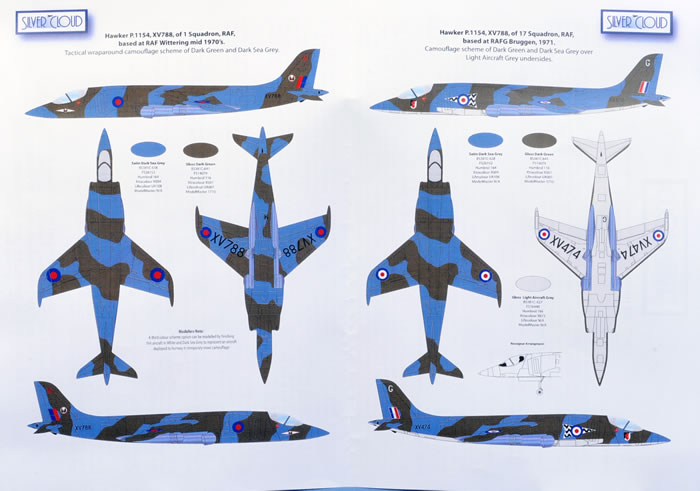
AFAIK Harrier IIs are capable of just over 660 MPH but capable of hitting Mach in a dive. Sea Harriers were the only truly Mach capable Harriers that I know of, and just barely. Their engines don't have proper intakes to slow down supersonic air before it hits the first stage fan. Being able to approach Mach is not that much worse than being able to barely nudge past it. Something like Mach 1.5 or more is a whole other story and such a Harrier type (Hawker model P.1154) got scrapped back in the late 60s. Shame.

silvercloudsck7202reviewbg_1.jpg


There is quite a bit out there on Harrier and VTOL fighter design studies. The P.1216 is particular favorite of mine:

hawkerP.1216_02.jpg
 
Last edited:
I know it's not an apples to apples comparison, and backers of the program even say as much in the article, but I still can't wrap my head around the fact that the proposal for the Lightweight Fighter Program was instituted in 1972, the YF-16 first flew in 1974, the YF-16 was chosen over the YF-17 in 1974, and the F-16A entered operational service in 1980.

The JSF program was initiated in 1996, the X-35 first flew in 2000, contract was awarded in 2001, and the earliest IOC for any F-35 variant is December 2015 (and you know that will be probably pushed back multiple times).

WTF?

If you worked in defense, this wouldn't surprise you in the least bit. The amount of red tape in defense acquisitions has gone up a ridiculous amount. Does it surprise you that some of our more interesting planes came out of Lockheed's Skunk Works division, whose claim to fame is rapid development because they are given "free reign" (relatively).

Aircraft were a lot less complex then.

Still, this is a huge boondoggle. How many trillions of dollars do you continue to throw at a project before you pull the plug?

http://en.wikipedia.org/wiki/Nunn-McCurdy
 
Just finished reading More Than My Share of it All by Kelly Johnson last week. He talks about how the Skunk Works model is great of quick development but couldn't really be used for the whole company with thousands of people. Seemed like he had more fun coming up with planes back during WW2 than the modern era.
 
And the idea of the F-35 replacing this just makes me LOL:

http://pics.bbzzdd.com/users/NFS4/A-10_Thunderbolt_II_In-flight-2.jpg
Let's see....

F-35: $153.1 million. (For the cheapest model, the F-35A.)

A-10: $11.8 million.

Can one F-35 do the job of 13 A-10s?

Or a smaller swarm of F-16s?


That would make sense.

America doesn't make sense.

:biggrin:

Also providing healthcare to Americans doesn't create profits for their buddies. Remember, Government serves big Business/not people.
Not for those buddies, anyway. The healthcare system allows companies to charge a ridiculously-high markup for services.

"Don't worry about how much it costs. Your insurance will pay for it!"


Lots and lots of profit to be had there, though perhaps not at the level of a delectable military contract.
 
Last edited:
plus comm bandwidth, etc. It's definitely doable, but there is a lot of resources that has to get behind them.
Crew half of them with any regular moron.
Maybe they'll kindly fly erratically, and confuse the hell out of any enemies.
 
holy shit this A-10 is amazing

the gun is such a beast:

The GAU-8/A is extremely accurate and can fire 4,200 rounds per minute without complications. The 30-mm shell has twice the range, half the time to target, and three times the mass of projectiles carried by comparable Close Air Support aircraft

but the plane!

The A-10 is exceptionally tough. Its strong airframe can survive direct hits from armor-piercing and high-explosive projectiles up to 23 mm...The aircraft is designed to fly with one engine, one tail, one elevator, and half of one wing missing.[49]
 
Let's see....

F-35: $153.1 million. (For the cheapest model, the F-35A.)

A-10: $11.8 million.

Can one F-35 do the job of 13 A-10s?

Or a smaller swarm of F-16s?

Out of curiosity, does that $11.8 million figure include all of the extra work that's been done to keep the Warthog somewhat modernized? That's one of the hardest things for people to wrap their mind around -- the intangibles of development. Regardless of what model you choose for your software development lifecycle, parts of the program support another directly or indirectly. Let me tell you from experience, something will almost always happen in one area that affects another.

Another huge problem that you run into is change. I swear... government people can change their minds at the drop of a hat, and it can be a huge problem. Some minor changes aren't really a big deal, but when you're doing things that add weight to aircraft or try to increase performance specifications, you can cause serious cost increases. Most of the defense contractors have a very strict, "the customer is always right!" policy, so if the customer wants it and is willing to pay for it, everything's fun. Although, keep in mind... the customer is the Department of Defense, but they're like a teenager with their daddy's pocketbook. Congress (daddy) doesn't much like you running amok with their money. That's why I brought up Nunn-McCurdy earlier as it directly relates to congressional oversight over ballooning budgets in military programs.

Not for those buddies, anyway. The healthcare system allows companies to charge a ridiculously-high markup for services.

The will probably set off the "socialist klaxons" for a few people 🙂P), but biggest problem with health care is simply that it's a business. The easiest thing to look at is the health insurance industry. Obama came in and said, "you can't screw over your customers in these ways." The heath insurance companies said, "well, that means we have to pay out more, which means our profits will go down. Fine, we'll just raise our rates and/or reduce coverage!" They're a business. It's their job to make money for the stockholders. Unfortunately, that doesn't mean they'll be generous to us.

 
Last edited:
The Canadian Government has been trying to buy these stupid F-35s. Truth is there's really nothing wrong with the CF-18 Hornet aside from their age. It's still a perfectly decent fighter, especially since these planes are just mobile missile launch platforms now. We'd probably be better replacing them with something like the Eurofighter Typhoon, which is significantly cheaper. Or just replace them with the F-18 Super Hornet.

Seems like we're uncommitted to the F35 again, but who knows.

Unit cost can only be guessed at too, but there's no real guarantee that Typhoon's would be a lot cheaper...
 
but the plane!
The A-10 is exceptionally tough. Its strong airframe can survive direct hits from armor-piercing and high-explosive projectiles up to 23 mm...The aircraft is designed to fly with one engine, one tail, one elevator, and half of one wing missing.[49]

And that's still not tough enough, as witnessed by the multiple A-10s that have been shot down. The way to survive hostile fire is not to build a tougher plane, it's to NOT GET HIT IN THE FIRST PLACE.

The A-10's time has come and gone, low and slow = vulnerable. If you want that sort of air support, send in the drones.

The future of manned CAS is high and fast (ie the F-35). In fact, the largest A-10 upgrade effort (Precision Engagement) is primarily to allow it to engage targets at stand-off range, which basically negates all its lauded attributes.
 
The recoil force of the GAU-8/A[15] is 10,000 pounds-force (45 kN),[3] which is slightly more than the output of one of the A-10's two TF34 engines (9,065 lbf / 40.3 kN each)

:awe:!!!

While this recoil force is significant, in practice cannon fire only slows the aircraft a few miles per hour.

Awweee 🙁
 
If you play the AIX mod for BF2 the A-10 is awesome. Hearing that gun the enemy would shit their pants. They used the A-10 in Afghanistan. It was developed for the cold war as a tank buster.
 
Back
Top