DisEnchantment
Golden Member
New Patent came up today for AMD's FSR
 appft.uspto.gov
20210150669 GAMING SUPER RESOLUTION
Abstract
A processing device is provided which includes memory and a processor. The processor is configured to receive an input image having a first resolution, generate linear down-sampled versions of the input image by down-sampling the input image via a linear upscaling network and generate non-linear down-sampled versions of the input image by down-sampling the input image via a non-linear upscaling network. The processor is also configured to convert the down-sampled versions of the input image into pixels of an output image having a second resolution higher than the first resolution and provide the output image for display
It uses Inferencing for upscaling. As will all ML models, how you assemble the layers, what kind of parameters you choose, which activation functions you choose etc, matters a lot, and the difference could be night and day in accuracy, performance and memory
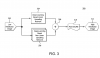
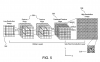
Patent Public Search | USPTO
appft.uspto.gov
20210150669 GAMING SUPER RESOLUTION
Abstract
A processing device is provided which includes memory and a processor. The processor is configured to receive an input image having a first resolution, generate linear down-sampled versions of the input image by down-sampling the input image via a linear upscaling network and generate non-linear down-sampled versions of the input image by down-sampling the input image via a non-linear upscaling network. The processor is also configured to convert the down-sampled versions of the input image into pixels of an output image having a second resolution higher than the first resolution and provide the output image for display
[0008] Conventional super-resolution techniques include a variety of conventional neural network architectures which perform super-resolution by upscaling images using linear functions. These linear functions do not, however, utilize the advantages of other types of information (e.g., non-linear information), which typically results in blurry and/or corrupted images. In addition, conventional neural network architectures are generalizable and trained to operate without significant knowledge of an immediate problem. Other conventional super-resolution techniques use deep learning approaches. The deep learning techniques do not, however, incorporate important aspects of the original image, resulting in lost color and lost detail information.
[0009] The present application provides devices and methods for efficiently super-resolving an image, which preserves the original information of the image while upscaling the image and improving fidelity. The devices and methods utilize linear and non-linear up-sampling in a wholly learned environment.
[0010] The devices and methods include a gaming super resolution (GSR) network architecture which efficiently super resolves images in a convolutional and generalizable manner. The GSR architecture employs image condensation and a combination of linear and nonlinear operations to accelerate the process to gaming viable levels. GSR renders images at a low quality scale to create high quality image approximations and achieve high framerates. High quality reference images are approximated by applying a specific configuration of convolutional layers and activation functions to a low quality reference image. The GSR network approximates more generalized problems more accurately and efficiently than conventional super resolution techniques by training the weights of the convolutional layers with a corpus of images.
[0011] A processing device is provided which includes memory and a processor. The processor is configured to receive an input image having a first resolution, generate linear down-sampled versions of the input image by down-sampling the input image via a linear upscaling network and generate non-linear down-sampled versions of the input image by down-sampling the input image via a non-linear upscaling network. The processor is also configured to convert the down-sampled versions of the input image into pixels of an output image having a second resolution higher than the first resolution and provide the output image for display.
[0012] A processing device is provided which includes memory and a processor configured to receive an input image having a first resolution. The processor is also configured to generate a plurality of non-linear down-sampled versions of the input image via a non-linear upscaling network and generate one or more linear down-sampled versions of the input image via a linear upscaling network. The processor is also configured to combine the non-linear down-sampled versions and the one or more linear down-sampled versions to provide a plurality of combined down-sampled versions. The processor is also configured to convert the combined down-sampled versions of the input image into pixels of an output image having a second resolution higher than the first resolution by assigning, to each of a plurality of pixel blocks of the output image, a co-located pixel in each of the combined down-sampled versions and provide the output image for display.
[0013] A super resolution processing method is provided which improves processing performance. The method includes receiving an input image having a first resolution, generating linear down-sampled versions of the input image by down-sampling the input image via a linear upscaling network and generating non-linear down-sampled versions of the input image by down-sampling the input image via a non-linear upscaling network. The method also includes converting the down-sampled versions of the input image into pixels of an output image having a second resolution higher than the first resolution and providing the output image for display.
It uses Inferencing for upscaling. As will all ML models, how you assemble the layers, what kind of parameters you choose, which activation functions you choose etc, matters a lot, and the difference could be night and day in accuracy, performance and memory
Last edited: