• We’re currently investigating an issue related to the forum theme and styling that is impacting page layout and visual formatting. The problem has been identified, and we are actively working on a resolution. There is no impact to user data or functionality, this is strictly a front-end display issue. We’ll post an update once the fix has been deployed. Thanks for your patience while we get this sorted.

A New Microwave Oven?

It was maybe 7 or 8 years ago that our old Sharp microwave threw sparks and died. I replaced it with an LG unit -- also 1100W and 1.6 cu ft -- and since then, the LCD readout became flakey. parts of the numbers don't light up. It still follows the parameters you set: If you want it to go 3.5 minutes (3 minutes 30 seconds) at 50% power, it will give you exactly that. But you have to "interpret" what you see on the display. It has been annoying me for some time now.

I figured I could give the LG to Good Will since it is still functional. I'm looking for its replacement, and am tentatively interested in this Farberware model.

Anyone want to offer additional recommendations? Or comment on my choice?
 
Panasonic Inverter Microwave.
We are on our second, the first lasted about 20 years and our current is 15 years old.
All of our friends that we have recommended them to, still have theirs and the "newest" is 10 years old.
There are cheaper brands, but not longer lasting.
 
Another enthusiastic vote for Panasonic Inverter microwave ovens. 👍🏻👍🏻

I particularly like the way they handle reduced power settings. Most microwave ovens can only be either "on" or "off". Power settings of less than 100% are achieved by cycling the oven between "on" and "off". As an example, a two-minute cook time at the 40% power setting might be twelve 10-second cycles where in each cycle the oven is "on" for 4 seconds and then "off" for the remaining 6 seconds. The Panasonic Inverter ovens actually reduce the microwave power instead, and so in the example you get a steady 40% power applied across the two minutes. I find this makes a huge difference when you want to slowly warm up foods, especially soups and other liquids (less chance of boiling over).
 
Another enthusiastic vote for Panasonic Inverter microwave ovens. 👍🏻👍🏻

I particularly like the way they handle reduced power settings. Most microwave ovens can only be either "on" or "off". Power settings of less than 100% are achieved by cycling the oven between "on" and "off". As an example, a two-minute cook time at the 40% power setting might be twelve 10-second cycles where in each cycle the oven is "on" for 4 seconds and then "off" for the remaining 6 seconds. The Panasonic Inverter ovens actually reduce the microwave power instead, and so in the example you get a steady 40% power applied across the two minutes. I find this makes a huge difference when you want to slowly warm up foods, especially soups and other liquids (less chance of boiling over).
I had thought all microwaves cycled off and on. Really good information to have, thank you.
 
I'd wonder if there's some ribbon cable to the display that just needs removed, contacts wiped with a dry paper towel and put back in the connector. That's assuming that it is really an LCD display and not VFD which will burn out after a certain # of hours.

I've had either a Sharp R530EKT or it's predecessor model for about 20 years, works great though in the last few months the door developed a rattle against the middle of the top cover which I remedied by shoving a little sliver of electrical tape between the door cover and inner frame.

I'm also a fan of the Panasonic Inverter models but just didn't feel that it was worth the extra money, regardless of the fact that as often as not, I'm setting my Sharp at less than 100% power so it does cycle on and off during those situations.

On a related note, I not only remember the first microwave my parents ever owned, but after a power surge took out some portion of it, the display, numbpad, timer circuit and relay to switch on the magnetron still worked, so I yanked the entire panel out - which back then was it's own modularized unit which had it's own frame around it, and threw that into an enclosure wired to a typical wall outlet at the bottom to build a timer based outlet.

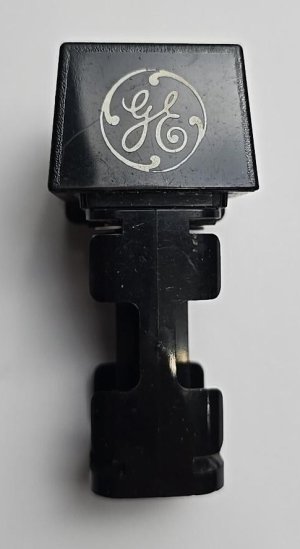
That was around 1987, I mostly used it to time limit a crude NiCd rapid charger I built, back when the typical NiCd charger as pictured below was just an unregulated transformer type GE wall wart with a 2C or D, or 4x AA or AAA battery cassette hanging off the bottom of it, took forever to trickle charge the batteries then overcharged if left running indefinitely.

ge AA.jpglitton.jpg
 
Last edited:
I'd be tempted to open it up to see if it's something simple like the ribbon cable as mentioned.

My parents had a Panasonic The Genius microwave from around 1986 and it lasted them a good 30 years. I wish I had gotten a chance to look at it but they threw it out before I even knew it died.
 
Right now, other than "interpretive" reading of the display, my only problem is making my morning Grits without a mess. "Use a bigger bowl" says the advice. Yup!

I appreciate the pointer to the Panasonic models. I'm going to take my time with this, and maybe even find the access to the ribbon connector some have mentioned.

Another nuisance I just discovered: Having acquired a Cuisinart "toast/bake/broil/air-fry" device, I was trying to air-fry a cat-fish filet with it while I ran the microwave to heat up some canned spinach (in the bowl -- not in the can!). It tripped the circuit breaker in the outdoors panel. So I've discovered that running the LG at 100% power together with the Cuisinart just overloads that circuit. I have a second microwave k-- part of my electric oven assembly, so It's just a matter of making intelligent choices when using the Cuisinart.
 
Right now, other than "interpretive" reading of the display, my only problem is making my morning Grits without a mess. "Use a bigger bowl" says the advice. Yup!

I appreciate the pointer to the Panasonic models. I'm going to take my time with this, and maybe even find the access to the ribbon connector some have mentioned.

Another nuisance I just discovered: Having acquired a Cuisinart "toast/bake/broil/air-fry" device, I was trying to air-fry a cat-fish filet with it while I ran the microwave to heat up some canned spinach (in the bowl -- not in the can!). It tripped the circuit breaker in the outdoors panel. So I've discovered that running the LG at 100% power together with the Cuisinart just overloads that circuit. I have a second microwave k-- part of my electric oven assembly, so It's just a matter of making intelligent choices when using the Cuisinart.
Your kitchen outlets should be on two separate circuits, sounds like you have both devices plugged into one.
 
Panasonic Inverter Microwave.
We are on our second, the first lasted about 20 years and our current is 15 years old.
All of our friends that we have recommended them to, still have theirs and the "newest" is 10 years old.
There are cheaper brands, but not longer lasting.
We had those at my last job.
Two of them. Worked perfectly for 8 years until we folded up shop.
I have one myself. Best microwave I ever owned.
 
Your kitchen outlets should be on two separate circuits, sounds like you have both devices plugged into one.
That is correct. The electric oven and the microwave above it is on a different circuit. Kitchen appliances on the other side of the kitchen are on the other circuit. I have experimented, even so. If I drop the power % on the microwave to 80, the combination of both appliances does not trip the circuit breaker. I seldom use full power unless told to do so by "instructions on the box".
 
SO! LATEST NEWS!

You've advised me of Panasonic and GE. I've looked at Toshiba and others. I analyzed the reviews.

They all have complaints about the child-lock on the door, even cooking and other matters. I finally settled on this one and I "pooled da stringk!" [Martin Landau as Bela Lugosi]. I pulled the string!

Magic Chef, 2.2 cu ft, 1100W

Arriving on January 28. Free Shipping. See -- the beauty of all this. I've been putting this off for a couple years, with the LG working obediently but annoying me with a display that requires "interpretation". Putting it off! And if there were ANYTHING that would prohibit me ordering it all of a sudden -- now -- in January, with tax payments due in April, $2,000 for the annual 2-car car insurance and $1,700 for homeowners insurance, it was my original ball-park estimate for owing US Treasury about $2,000 and CA Franchise Tax Board $2,000. Merrill-Lynch has yet to publish my 1099 forms, but I have analyzed my portfolio and particularly the gains made during this Trump Disaster of a year. At most the portfolio returned a total of $10,000, and I will be due two small refunds from the taxing entities.

The refunds, by themselves, make up the difference for what I'd owe in February on my Amazon card.

And some lucky poor person, or even a thrifty soul, may get my old LG, which could actually be repairable. By someone else.

I'm just getting impatient to make my first un-splattered bowl of a double buttered Grits -- MAGIC CHEF Grits, that is.
 
Regarding electrical supply and limits, most oven-type devices (air fryer, toaster oven, microwave, even toaster) can use over 1000W, which means 10 to 15 Amps current on our common 120 VAC circuits. Most circuits in North American homes are rated for 15 A with a breaker or fuse for that limit. So any ONE such appliance has not problem, but TWO of the same rating used at the same time WILL trip the breaker.

There have been several ways to evade this when electrical supply wiring is done in a kitchen. The simplest is LOTS of individual circuits to separate outlet boxes, and use only one heavy appliance per box. But most boxes have TWO sockets, so many people still have problems when they forget. Another method uses Split Duplex Receptacles. In this system each two-socket fixture is modified to keep the sockets separated, and the breaker and cable feeding that box actually carries TWO 15 Amp circuits so each single socket can supply up to 15 A. More commonly now many kitchen outlet boxes contain GFCI (Ground Fault Circuit Interrupter) devices to prevent hazardous leakage current when water is present, but they and their breaker and wiring in the wall all are rated for 20 A. So both of the two sockets can be used simultaneously as long as the total load is under 20 A.
 
Regarding electrical supply and limits, most oven-type devices (air fryer, toaster oven, microwave, even toaster) can use over 1000W, which means 10 to 15 Amps current on our common 120 VAC circuits. Most circuits in North American homes are rated for 15 A with a breaker or fuse for that limit. So any ONE such appliance has not problem, but TWO of the same rating used at the same time WILL trip the breaker.

There have been several ways to evade this when electrical supply wiring is done in a kitchen. The simplest is LOTS of individual circuits to separate outlet boxes, and use only one heavy appliance per box. But most boxes have TWO sockets, so many people still have problems when they forget. Another method uses Split Duplex Receptacles. In this system each two-socket fixture is modified to keep the sockets separated, and the breaker and cable feeding that box actually carries TWO 15 Amp circuits so each single socket can supply up to 15 A. More commonly now many kitchen outlet boxes contain GFCI (Ground Fault Circuit Interrupter) devices to prevent hazardous leakage current when water is present, but they and their breaker and wiring in the wall all are rated for 20 A. So both of the two sockets can be used simultaneously as long as the total load is under 20 A.
I wouldn't have noticed any such problem when our now-defunct Hamilton-Beach toaster oven was used. Adding the Cuisinart after discarding the former raised my attention to it.

But it's not a serious enough problem to warrant any change in the household wiring.
 
I like my low power microwave. I don't know what the wattage is without pulling it out and looking, but probably 700W. I do everything at full power, and only adjust the time. Stuff's more likely to get heated through instead of a lava hot exterior, with a crunchy ice core. If/when it goes up, I'll get another low watt small microwave. Maybe Panasonic. They've long been a favorite of mine for everything electronic. Not always the best as far as features go, but well built, and long lasting. Mine's a MonkeyWards unit, whoever made it for them.
 
I like my low power microwave. I don't know what the wattage is without pulling it out and looking, but probably 700W.
I seriously considered getting a 2nd low power microwave around that wattage, to have both it and my 1200W Sharp to use, but then my toaster oven died and I decided to size-upgrade it instead which meant too little additional counter space for that.

I couldn't have a 700W as my only microwave because I don't have the patience - I often make double or triple batch dinners and freeze them, and don't want to have to wait longer for the microwave to thaw and heat them, especially things where I want a drier outer texture so the microwave just gets it 3/4ths of the way (covered to trap steam for more even heating) then uncovered in the toaster oven brings back texture.
 
Last edited:
I seriously considered getting a 2nd low power microwave around that wattage, to have both it and my 1200W Sharp to use, but then my toaster oven died and I decided to size-upgrade it instead which meant too little additional counter space for that.

I couldn't have a 700W as my only microwave because I don't have the patience - I often make double or triple batch dinners and freeze them, and don't want to have to wait longer for the microwave to thaw and heat them, especially things where I want a drier outer texture so the microwave just gets it 3/4ths of the way (covered to trap steam for more even heating) then uncovered in the toaster oven brings back texture.
We are of like mind on the choice of microwave oven by the wattage. My first one, purchased back in the late 1980s, was small and probably only 700W. Then I educated myself about the appliance. I'd put off having one until I bought this first unit. I concluded that I needed 1100 watts.

The new Magic Chef oven arrives on Wednesday, and I'm very eager to get it. As for overloading that particular household circuit, I don't need to run the two appliances simultaneously, and experiments tell me that I can run the Cuisinart and an 1100W microwave set at 50% to 60% power. And I choose those percentages as the settings I often use for certain things.

I'm just happy that I can get that Magic Chef that I ordered and pay for it with the carefully calculated estimates of my 2025 tax return refunds. which -- I hadn't anticipated.
 
Well... I don't mean to come across as a Panasonic zealot, but the REAL power setting capabilities of their inverter microwaves eliminate any rationale for a second lower-power microwave. Set my 1200 watt to 80% power turns it into a 960 watt oven; 60% into a 720 watt oven.
 
Well... I don't mean to come across as a Panasonic zealot, but the REAL power setting capabilities of their inverter microwaves eliminate any rationale for a second lower-power microwave. Set my 1200 watt to 80% power turns it into a 960 watt oven; 60% into a 720 watt oven.
The Magic Chef is still "Out for Delivery". Something to play with during my afternoon. But the % power setting on these units indeed allows less of a draw from the wall.
 
Well... I don't mean to come across as a Panasonic zealot, but the REAL power setting capabilities of their inverter microwaves eliminate any rationale for a second lower-power microwave. Set my 1200 watt to 80% power turns it into a 960 watt oven; 60% into a 720 watt oven.
It may not eliminate that depending on your level of multi-tasking, when you have one microwave heating something gently over several minutes but have other things you also want to microwave but don't want to get out a calculator to try to determine the relative food density and % of microwaves each will take from the whole or % a single microwave is set to, to try to calculate out how long to leave multiple things in the same microwave oven cycle, if multiple things would even fit especially if you have splash-covers over them.

Similarly I don't only have one, nor only one size of stove burner, and likewise I have an oven, and a toaster oven, and a toaster. They all get used regularly so it's all about counter space to me. For tasks where I don't need more than 700W average power, I also don't want the extra cubic foot of counter space taken up by a larger 2nd microwave. I could see the same being true for someone with only one microwave, if their counter real estate is needed for something else.
 
Last edited:
It may not eliminate that depending on your level of multi-tasking, when you have one microwave heating something gently over several minutes but have other things you also want to microwave but don't want to get out a calculator to try to determine the relative food density and % of microwaves each will take from the whole or % a single microwave is set to, to try to calculate out how long to leave multiple things in the same microwave oven cycle, if multiple things would even fit especially if you have splash-covers over them.

Similarly I don't only have one, nor only one size of stove burner, and likewise I have an oven, and a toaster oven, and a toaster. They all get used regularly so it's all about counter space to me. For tasks where I don't need more than 700W average power, I also don't want the extra cubic foot of counter space taken up by a larger 2nd microwave. I could see the same being true for someone with only one microwave, if their counter real estate is needed for something else.
Yeah . . . I'm going to "break even" on counter space. And, splitting hairs as I do, I didn't want a 1200W microwave, opting for the more conventional 1100W. But I won't have anything less than that.

Some people try to tell me that "cooking with a microwave is not 'really cooking'", as if using the microwave is somehow "cheating". Well, I think if you really want to "cook", you should build yourself one of those Mexican ovens like you find in the corner of adobe houses, chop wood, and hang pots above the flames. Otherwise, you're "not really cooking".
 
Microwaves cook fine as long as you realize their limitations. Anything large, I try to space out in the container so there's empty or at least less density in the middle, and always try to trap the steam (and eliminate splatter all over the interior of the microwave) with a lid or cover, and recognize the limit of how fast I can cook something without turning the edges into rawhide but trapping the steam helps a huge amount with that, as does using a lower power microwave or more powerful one set to lower power whether a conventional on/off cycled model or the Panasonic inverter models which are more ideal for that.

The other major limitation is texture. Some foods aren't meant to have a damp surface if not even crisp, and for those I finish up in a toaster oven to drive off surface moisture. A great example of that are the homemade burritos I make in a batch to freeze, then pull some out, nuke at about 50% power for a couple minutes (x # of burritos), fire up the toaster oven about a minute into that to preheat, then toss the burritos on a seasoned, oiled metal pan to finish in the toaster oven. They're done when the surface turns slightly more than golden brown crispy. I then have to wait 1/2 as long as it took to cook them, for them to cool down enough to eat. 🙂

Back in the day the more conventional way was just use a regular oven with the dish covered, then uncover it for the last portion of the cook time. That conventional oven-only approach worked fine but takes an extra 1/2 hour or so depending on what it is.
 
Microwaves cook fine as long as you realize their limitations. Anything large, I try to space out in the container so there's empty or at least less density in the middle, and always try to trap the steam (and eliminate splatter all over the interior of the microwave) with a lid or cover, and recognize the limit of how fast I can cook something without turning the edges into rawhide but trapping the steam helps a huge amount with that, as does using a lower power microwave or more powerful one set to lower power whether a conventional on/off cycled model or the Panasonic inverter models which are more ideal for that.

The other major limitation is texture. Some foods aren't meant to have a damp surface if not even crisp, and for those I finish up in a toaster oven to drive off surface moisture. A great example of that are the homemade burritos I make in a batch to freeze, then pull some out, nuke at about 50% power for a couple minutes (x # of burritos), fire up the toaster oven about a minute into that to preheat, then toss the burritos on a seasoned, oiled metal pan to finish in the toaster oven. They're done when the surface turns slightly more than golden brown crispy. I then have to wait 1/2 as long as it took to cook them, for them to cool down enough to eat. 🙂

Back in the day the more conventional way was just use a regular oven with the dish covered, then uncover it for the last portion of the cook time. That conventional oven-only approach worked fine but takes an extra 1/2 hour or so depending on what it is.
With my Cuisinart toaster/broiler/air-fryer, I tried to fix a seasoned Tri-Tip Roast today, for which instructions told me "450F for 15 minutes with air-fryer". After about 10 minutes, it came out well done. Nothing wasted, but I would've hoped the interior meat would have more pink to it. One needs to develop an personal experience with calibrations for these devices.
 
Yes I don't try to cook raw meat to a perfect medium-rare that I prefer in the toaster oven, very hard to gauge interior done-ness based on time or outer appearance. For that I use an outdoor grill in warmer weather, or a standalone electric grill, or I have a grill insert for my stove but I hardly ever bother dragging that out, then cleanup is more of a pain for it too.
 
Yes I don't try to cook raw meat to a perfect medium-rare that I prefer in the toaster oven, very hard to gauge interior done-ness based on time or outer appearance. For that I use an outdoor grill in warmer weather, or a standalone electric grill, or I have a grill insert for my stove but I hardly ever bother dragging that out, then cleanup is more of a pain for it too.
That's just it. The Propane outdoor grill gives you more time, with greater ease in opening it to stick in a thermometer. Eventually, you have cleanup chores. The electric oven works pretty well, but you need a broiler pan -- with more cleanup. The problem with the all-purpose toaster/broiler/bake/air-fry device is -- in the matter of my Cuisinart -- it's too efficient and cooks very fast, so harder to manage a final result -- well-done versus medium rare, for instance.

There are many times when I want to "fry" chicken or catfish or a hamburger, preferring to use something handy on the kitchen counter. My Cuisinart works pretty well for that.
 
Back
Top