• We’re currently investigating an issue related to the forum theme and styling that is impacting page layout and visual formatting. The problem has been identified, and we are actively working on a resolution. There is no impact to user data or functionality, this is strictly a front-end display issue. We’ll post an update once the fix has been deployed. Thanks for your patience while we get this sorted.

A long time ago I found an article on DPReview explaining why hi-resolution on a small sensor is bad

shortylickens

No Lifer
Thanks to their lousy search page I cannot find that article anymore.
https://www.dpreview.com/features

It had excellent visuals and a thorough explanation of what happens to light as it hits large and small sensors and why too many pixels on a small area leads to lower image quality.

Anyone here remember seeing that article?
 
Nope, thats a damn good article but not the one I'm thinking of. That article is about noise and the one I remember was about image quality. as in the ability to accurately reproduce the colors seen thru the lens.
And it had a cute little image of photons bouncing off sensor pixels. It was very helpful.
 
i don't recall dpreview ever going on about the megapixel myth. that particular load of crap was mostly spouted off by david pogue at NYT (and he was wrong).

maybe you saw something about microlenses or foveon sensors?
 
i don't recall dpreview ever going on about the megapixel myth. that particular load of crap was mostly spouted off by david pogue at NYT (and he was wrong).

maybe you saw something about microlenses or foveon sensors?

No. it was a detailed article on why too many pixels on a tiny surface area led directly to lower image quality.

HOWEVER, if it turned out the writer was completely wrong, perhaps they deleted the article entirely and thats why I cant find it.
 
Nope, thats a damn good article but not the one I'm thinking of. That article is about noise and the one I remember was about image quality. as in the ability to accurately reproduce the colors seen thru the lens.
And it had a cute little image of photons bouncing off sensor pixels. It was very helpful.

Probably something about the bayer filter? You'd want the circle of confusion to cover enough pixels in a bayer grid to be able to determine accurate color.
 
Well the pixels,are like buckets bigger means it can take in more light and offer more dynamic range ie fstops
 
Well the pixels,are like buckets bigger means it can take in more light and offer more dynamic range ie fstops
what holds more gallons: 100 1 gallon buckets or 20 5 gallon buckets? because that's really a lot more like what we're discussing. they keep upping the resolution and the fps and image quality continues to increase. processor speed, buffer/card write speeds, and battery life have been the limiting factors, not the pixels themselves.

a lot of the megapixel myth myth came out of comparing tiny sensors to slr sensors. but that would be more like comparing 100 1 pint buckets to 100 1 gallon buckets. the former has worse image quality, and it turns out that was due to the fact that it was 1/8 the size.
 
OK for some reason this got bumped and made me start thinking again. I believe the issue was due to pixel pitch.
Because of pixel pitch a high resolution on a tiny sensor means you get worse image quality. BUT I still cant find that neat little diagram that showed photons hitting sensor cells.
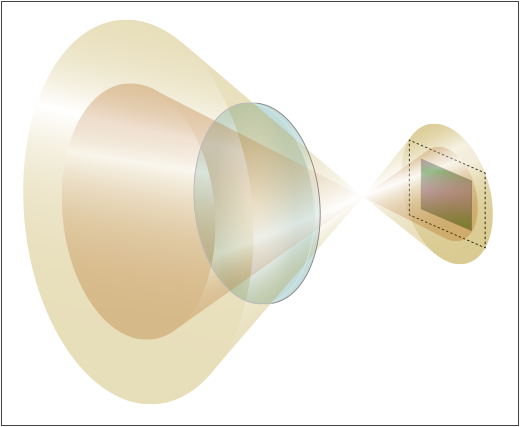
This is pretty good:


When the sensor is too tiny and the resolution too high, your photosite becomes so small its almost useless. Image quality degrades sharply.
 
the 5D4 was released the same year as the 1DX2, has 50% more pixels than the 1DX2, and the cameras are in a virtual tie on dxomark, with the 5D4 coming out slightly ahead overall, despite dxomark not having any test that benefits from more resolution. the 5D4 is marginally ahead on color depth and dynamic range, and marginally behind on low light sensitivity. and that's based on individual photosites, which are much narrower than the 1dX2.
 
maybe one of these?

 
OK for some reason this got bumped and made me start thinking again. I believe the issue was due to pixel pitch.
Because of pixel pitch a high resolution on a tiny sensor means you get worse image quality. BUT I still cant find that neat little diagram that showed photons hitting sensor cells.
This is pretty good:


When the sensor is too tiny and the resolution too high, your photosite becomes so small its almost useless. Image quality degrades sharply.

Something like this?

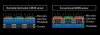
Pixel pitch technically isn't even the right metric to use, as the below diagrams would have the same pixel pitch, but the BSI sensors have the ability to gather more light.

1582148364644.png
 
Back
Top