• We’re currently investigating an issue related to the forum theme and styling that is impacting page layout and visual formatting. The problem has been identified, and we are actively working on a resolution. There is no impact to user data or functionality, this is strictly a front-end display issue. We’ll post an update once the fix has been deployed. Thanks for your patience while we get this sorted.

Wall mount screws for TV mount?

pete6032

Diamond Member
I bought a TV from a classified ad and the TV came with a wall mount kit, but the previous owner did not have the bolts/screws needed to attach the mount to the wall. The wall mount is already bolted to the television. The TV is 32 inches LED and I want to mount it to drywall. Anyone know what I need to achieve this? Do I need to mount into stud with screws or can I use screws with drywall anchor or do I need toggle bolts?
 
Last edited:
You need to hit at least 1 stud, 2 would be better. 1/4" x 2 1/2" lags will do the trick. Even #12 x 3" screws would do it.
 
the screw in plastic anchors would be fine. maybe 6 of them. toggles would be fine as well. my favorite are the zip tie type anchors. yes, a stud is better, you should use a screw that is about 1.5 inches long max if you think there are wires or water lines in the wall near your spot.
 
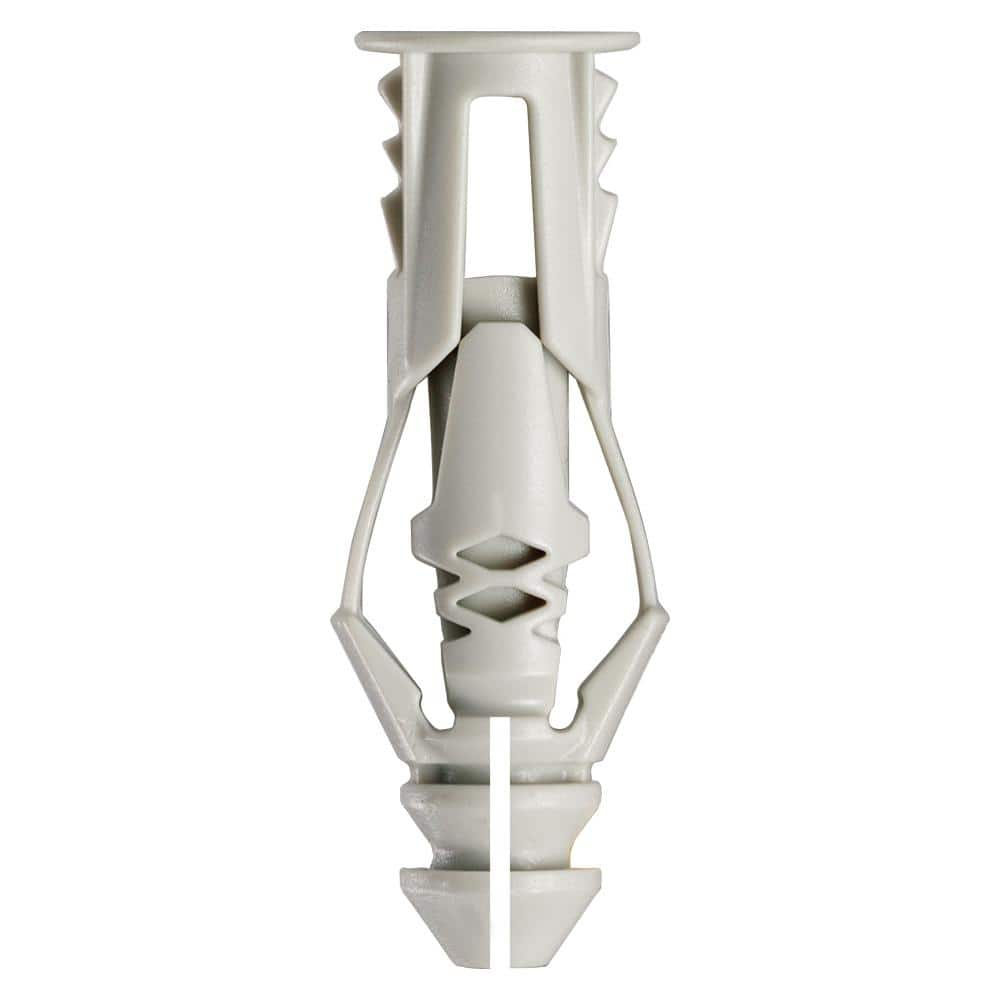
How much does it weigh? If semi-modern, I'd think about 20lbs or less, and you could get away with basic, little drywall anchors. I mean the cheap, ribbed (circumferential not longitudinal ribs) plastic tap-in type, as long as you drill the hole only large enough, not oversized. This assumes at least a 3 point attachment to wall. In context, those can have ratings of about 25+lbs each for #6 screw sized, or higher still if using the larger ones made for #8 or #10 screws, so a pretty big margin.

Above approx 30lbs, or if it were a more valuable, bigger/new TV, I'd want the larger screw in anchors since the cost increase isn't much, OR to hit a stud on one side, if that didn't put it too far to one side or the other compared to where I wanted it.
 
Last edited:
^ Sure but 32" TV... bought used... probably not worth the bother. I was being generous when I estimated 20lbs, they're more like 10lbs these days.


Assuming at least a 4 point mount from bracket to wall, even if the holes aren't precisely aligned, at a minimum two fasteners would be supporting the majority of the weight, (other two as backup) and rated at 2 fasteners x 35lbs ea. = 70lbs. Note: They copy/pasted a 29lb spec from their #6 screw anchors erroneously, the #8 are 35lb. ea. Not that it really matters, #6 anchors would be plenty for ~10lb TV too.
 
Last edited:
^ Sure but 32" TV... bought used... probably not worth the bother. I was being generous when I estimated 20lbs, they're more like 10lbs these days.


Assuming at least a 4 point mount from bracket to wall, even if the holes aren't precisely aligned, at a minimum two fasteners would be supporting the majority of the weight, (other two as backup) and rated at 2 fasteners x 35lbs ea. = 70lbs. Note: They copy/pasted a 29lb spec from their #6 screw anchors erroneously, the #8 are 35lb. ea. Not that it really matters, #6 anchors would be plenty for ~10lb TV too.
32" tv pretty much has to cross a stud. It doesn't make sense not to use it.
 
We'd need more info. I'd only get a TV as small as 32" if there was limited space available. If there's plenty of wiggle room to shift it left or right, then a larger TV might fit. Granted, depending on the design of the bracket, might be able to drill new mount holes for alignment instead of moving it left or right to hit a stud.

I could counter and state it doesn't make much sense to go for something more than using anchors alone when they can support multiple times the weight of the TV.

Where would it end if everything needed to be over-engineered that much? The mounting bracket probably isn't, nor the housing of the TV. If you hit the TV with a sledge hammer, it is more likely to break into pieces before it comes off the wall.
 
Last edited:
How much does it weigh? If semi-modern, I'd think about 20lbs or less, and you could get away with basic, little drywall anchors.
The TV weighs 11.7 lbs. The part of the mount that attaches to the wall has two screw holes aligned vertically.
 
The TV weighs 11.7 lbs. The part of the mount that attaches to the wall has two screw holes aligned vertically.
I'd just use tap in anchors with the wings that flip out once tightened, like that $1.25 pack I linked previously. Others would go the extra mile to support 200lbs by screwing into studs. Your call. It'll work either way.
 
I'd just use tap in anchors with the wings that flip out once tightened, like that $1.25 pack I linked previously. Others would go the extra mile to support 200lbs by screwing into studs. Your call. It'll work either way.
My parents got a wall mount for their TV that came with some cheap tap in anchors. Those things were absolute garbage. They started to spin in their holes as I screwed in the bolts. Went to the local HD and picked up a set of this type of screw in anchors (I think the ones I got were for a little larger hole/higher weight rating) that worked fantastically.
 
^ I'd suspect the holes were drilled too large. In drywall I like to use a bit a tad smaller than the diameter of the anchor, as the hole can end up a little oversized. You can always use the next size up bit if it's too tight a fit. Anchor then gets tapped into the hole with a hammer.

Then again as you stated, might just be garbage anchors.
 
^ I'd suspect the holes were drilled too large. In drywall I like to use a bit a tad smaller than the diameter of the anchor, as the hole can end up a little oversized. You can always use the next size up bit if it's too tight a fit. Anchor then gets tapped into the hole with a hammer.

Then again as you stated, might just be garbage anchors.
I drilled the holes per the directions. In retrospect, a slightly smaller than specified drill bit may have been a better choice. Either way, the screw in anchors felt more secure and gave me piece of mind.
 
I drilled the holes per the directions. In retrospect, a slightly smaller than specified drill bit may have been a better choice. Either way, the screw in anchors felt more secure and gave me piece of mind.
I like the screw in anchors a lot, but mostly because I’m lazy and don’t want to get out a second tool.
 
As I said on the other similar thread, never use any form of push in anchor for anything that even might have any pull out or tilt force. For anything that will exceed about 5 pounds, I always hit at least one stud with a substantial screw or lag.
 
Back
Top