The Starfighter is taking on a new role.

MongGrel

Lifer
Dec 3, 2013
38,466
3,067
121
It's interesting to see these still being flown, looks there is a company putting them into commercial use. I remember when I was young had a model of one next to my SR-71 model. Had a whole wall of shelves with models at one time I guess.

http://www.bbc.com/future/story/20160826-the-1950s-jet-launching-tiny-satellites

p045ym7f.jpg
 

Crono

Lifer
Aug 8, 2001
23,720
1,503
136
I thought this was going to be about a new The Last Starfighter movie, but the aircraft is awesome, too. Specs aside, it still looks like a modern jet for something that was made in the late 50s. Beautiful design. I didn't realize the lead designer was the same person who designed the SR-71 Blackbird.

Love the paint on the repurposed Starfighter:

p045yx07.jpg
 
Last edited:
  • Like
Reactions: MongGrel

Imp

Lifer
Feb 8, 2000
18,828
184
106
Oh... and I thought it was moving from last to first or anywhere but last.
 

Paratus

Lifer
Jun 4, 2004
17,754
16,091
146
It's interesting to see these still being flown, looks there is a company putting them into commercial use. I remember when I was young had a model of one next to my SR-71 model. Had a whole wall of shelves with models at one time I guess.

http://www.bbc.com/future/story/20160826-the-1950s-jet-launching-tiny-satellites

p045ym7f.jpg
Yeager was such a bad ass.

On 10 December 1963, Yeager flew his modified Starfighter above the California desert. He activated the rocket motor, which tilted the aircraft up and pushed it past 100,000ft (around 30,500m). He then prepared to use the rocket thrusters. These, however, pushed the aircraft into a flat spin. Yeager stayed inside the spinning jet, hoping that he’d be able to regain control when the Starfighter entered heavier air closer to the ground.

Yeager soon realised his Starfighter was doomed – he couldn’t stop the aircraft from spinning. He launched his ejector seat, but as his parachute opened his helmet visor was struck by the bottom of the seat. Molten propellant from the seat’s rocket motor burned through the visor, turning to flame as it reached the oxygen in Yeager’s pressure suit. The test pilot only put out the fire inside his suit by removing a glove and fanning the flames with his bare hand. Yeager floated to the ground – his face and half his hair burned out, and an eye socket cut from the collision with his chair – landing not far from the charred remains of his plane.

Artist concept of the Starfighters spin out.
qn9po3m.gif
 

lupi

Lifer
Apr 8, 2001
32,539
260
126
Awww no. They rebooted the Last Starfighter too?

Leave our childhoods alone dammit! Come up with something new!


The CGI now makes it kinda bad to watch. Great at the time, but would love so see it redone.

There is a possibility of a TV version coming out, but that can't possible be as good as a full fledged movie.
 

dawp

Lifer
Jul 2, 2005
11,347
2,710
136
I thought this was going to be about a new The Last Starfighter movie, but the aircraft is awesome, too. Specs aside, it still looks like a modern jet for something that was made in the late 50s. Beautiful design. I didn't realize the lead designer was the same person who designed the SR-71 Blackbird.

Love the paint on the repurposed Starfighter:

p045yx07.jpg
I was going either way, or was referring to this:
naeaaa.jpg
 

Blitzvogel

Platinum Member
Oct 17, 2010
2,012
23
81
Such a horrible combat aircraft outside of the interception role it was designed for (and even for interception it was limited). Germany and other countries never should have bought it, especially when the F-11F Super Tiger was available. Obviously Lockheed's bribes worked.......

index.php

index.php

One of the best combat aircraft ever built that never saw service (along with the YF-23, XB-49, F-20 Tigershark). It's just another one of those incredibly sad stories in military aviation where somebody got super-screwed. (Northrop has been screwed - ALOT).
 
Last edited:

MongGrel

Lifer
Dec 3, 2013
38,466
3,067
121
Such a horrible combat aircraft outside of the interception role it was designed for (and even for interception it was limited). Germany and other countries never should have bought it, especially when the F-11F Super Tiger was available. Obviously Lockheed's bribes worked.......

index.php

index.php

One of the best combat aircraft ever built that never saw service (along with the YF-23, XB-49, F-20 Tigershark). It's just another one of those incredibly sad stories in military aviation where somebody got super-screwed. (Northrop has been screwed - ALOT).

It really was meant to be a Nuke bomber interceptor of course. I won't disagree there.
 
Jan 25, 2011
17,172
9,695
146
The failure rate of that plane always amazed me. Here in Canada we lost almost half our widowmakers to accident. Germany was like 30% yet some countries never lost an airframe to accident.
 

Blitzvogel

Platinum Member
Oct 17, 2010
2,012
23
81
The failure rate of that plane always amazed me. Here in Canada we lost almost half our widowmakers to accident. Germany was like 30% yet some countries never lost an airframe to accident.
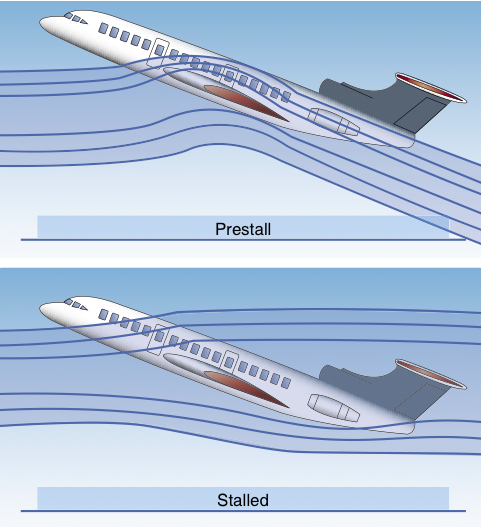
The F-104's tiny wings are not at all optimized for low speed flight and the T-Tailed elevators that could be aerodynamically "blanked" by the wings at certain angles of attack. This lack of airflow to the elevator for control in combination with a wing stall is known as a deep stall and has been the ruin of many a T-tailed aircraft. Because of the F-104's tiny wings, the problem is exacerbated by the high angle of attack needed to increase lift in performing sustained turns, especially when doing these maneuvers at relatively low speeds. The F-104 simply wasn't built for it, the T-Tail likely the solution for supersonic shock issues that otherwise could created issues had the elevator been put right behind the wing.
TtailStall.jpg

Good video on highspeed flight and how supersonic airflows effect an aircraft:
https://www.youtube.com/watch?v=4_hASWgu8EY
 

pauldun170

Diamond Member
Sep 26, 2011
9,557
5,803
136
You will read in some references that the F-104 is not very maneuverable. Well, down low and going slow, it isn't. However, high and fast - which was how it was designed to operate - it is just about untouchable. The secret is energy maneuvering, repeatedly trading speed for altitude and vice versa. Pilots of other aircraft flying practice dogfights against a Starfighter get left behind when their opponent makes a vertical maneuver they can't match. While they are trying to relocate the tiny plane, it suddenly dives on them from behind. Repeated slashing maneuvers leave opponents riddled, while providing little opportunity for retaliation. (Members of one squadron of F-105 pilots participating in dissimilar aircraft exercises complained that the only reason they came in second was that the F-104s kept going up and down, instead of turning hard like real airplanes do. One F-8 pilot in another dissimilar aircraft exercise chased down what he thought was a lone F-4 - which also used the J-79 engine - only to see an F-104 break off from close formation, going into a vertical climb. He lost that match.)

The plane is no slouch at turning, either, given the lift-enhancing mechanisms built into that small wing (including flaps which are deployable up to 540 knots under all conditions; that's above Mach 1 at high altitude). In some parts of its envelope the F-104 can actually turn inside the F-16. Of course, that statement is hardly fair, since its envelope is larger than the Falcon's. As for combat range, in Vietnam, when the F-105 Thunderchiefs flew low-level, deep penetration bombing missions, the Starfighter was the favored escort. The F-4 Phantoms could not keep up with the Thuds if they carried enough fuel for the mission, and the Thud pilots were not about to slow down. Also, as was true all during the War, when the Starfighters took off, the MiGs landed. The F-104 had a very poor kill record in 'Nam for the simple reason that the MiGs refused to engage it. Because, unlike most US fighters of the time, it was a pure fighter, not burdened with the need to drop bombs, and the Russians knew this. There are certain advantages to specialization...


Unfortunately, the Bundes Rebublik Deutschland (the Federal German Republic, ie the West German government) air force promptly crashed a large number of them. Many claimed this was because the plane was inherently dangerous. As it turned out, the problem with the German Starfighters wasn't the planes but improper pilot training. (During this same period, Spain crashed none of their Starfighters. Flying similar missions in similar conditions. Most other nations acquiring the F-104 also had a lower accident rate than that of West Germany.) Turns out the German pilots had been trained in the US high desert, with clear skies and lots of room. Once the German instruction regimen was changed to something appropriate for central Europe the safety record for the F-104 improved to something typical for fighters of the day. However, by this time the US military had already decided that the F-104 was not for it, that real fighters were big and heavy and carried bombs. (Though some A models were brought back into service and outfitted with the J79-19 engine later, as mentioned above, due to Vietnam sucking up so many military aviation resources.) This attitude would remain until the Lightweight Fighter concept became popular a few years later (the result of campaigning by what came to be known as the Fighter Mafia), eventually resulting in the adoption of the F-16.

http://www.dcr.net/~stickmak/JOHT/joht12f-104.htm
 

Blitzvogel

Platinum Member
Oct 17, 2010
2,012
23
81
I read that entire page. Interesting stuff, but I think alot of it should be taken with a grain of salt, as like most combat aircraft, it's going to have pros and cons. Used correctly, it could be effective, but one could assume the opponent is failing to use his aircraft to it's capability too. It would be nice for him to talk about the F-104 failing in dissimilar training vs other types, while also delivering his sources and performance charts (which I'm finding very hard to come by for the F-104). As a side note, F-4 pilots eventually learned to use their advantage in the vertical to combat NVAF MiGs.

"When the Starfighters took off, the MiGs landed." The North Vietnamese Air Force was very weary about when to and when to not engage, plus they didn't want to be the accidental victim of their own ground AAA and SAMs.
 

pauldun170

Diamond Member
Sep 26, 2011
9,557
5,803
136
I read that entire page. Interesting stuff, but I think alot of it should be taken with a grain of salt, as like most combat aircraft, it's going to have pros and cons. Used correctly, it could be effective, but one could assume the opponent is failing to use his aircraft to it's capability too. It would be nice for him to talk about the F-104 failing in dissimilar training vs other types, while also delivering his sources and performance charts (which I'm finding very hard to come by for the F-104). As a side note, F-4 pilots eventually learned to use their advantage in the vertical to combat NVAF MiGs.

"When the Starfighters took off, the MiGs landed." The North Vietnamese Air Force was very weary about when to and when to not engage, plus they didn't want to be the accidental victim of their own ground AAA and SAMs.

You might enjoy this thread
http://www.f-16.net/forum/viewtopic.php?t=553
Nice commentary and includes a flight evaluation from 1956
 
  • Like
Reactions: MongGrel