


- Nov 27, 2001
- 30,383
- 912
- 126
I'll start off by saying that I'm not necessarily expecting a solution for this problem, but maybe some insight as to what I'm looking at, and what things I should look into. Also, if anyone has an idea, what sort of cost I might be looking at to make repairs.
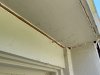
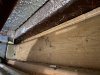
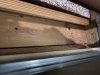
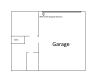
The problem started when I noticed some trim around the garage door opening coming off a bit. I didn't think a lot of it as reattaching it didn't seem like a terribly high priority. (It was just cosmetic anyway.) My garage sits below a portion of the house, and one day, I noticed a dip in the floor in a room that's above the garage. It dawned on me that the distance between this dip and the wall seemed to be about the same as the distance between the garage wall and the garage door opening. I took a look at garage door opening, and I noticed that a long header board seemed pushed out on the side that had the trim coming off where as the other side was fine.
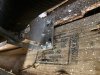
One thing that came to mind was what the repairman did for my garage door awhile back. Essentially, the steel cables on the side came loose, and the repairman reattached everything and replaced the spring. However, he also told me that he added another screw to the garage door opener's bracket where it attaches to the wall above the garage door. That block of wood that he screwed into directly presses against the wood header that is shifting. I'm looking more at that repair because of what happened when I took a mallet and hammered everything back into place... my garage door opener -- a fairly newer Chamberlain unit -- started complaining about over-torque situations and stopping until the trim and header popped back out. When a friend of mine checked out the situation, he mentioned that it looked like the nails that were supposed to keep that header board in check didn't look adequately driven on the shifting side as compared to the other side.
I've been tempted to rework the mounting of the garage door opener's rail to better disperse the pressure caused from pulling the door up. Perhaps using a large metal plate (instead of a small block of wood) that attaches to more points might serve as being a bit more helpful and potentially take the load off of that one header. Also, perhaps attempt to properly secure the header.
Ultimately, the thing that has me worried more is the dip in the floor. As noted above, it could be related to the header being dislodged, but I don't know if it could also relate to a support that exists in the middle of the garage. I haven't seen anything off about the support; however, I figure that if anything should be keeping the height properly set, it would be the support. I don't know exactly how the support attaches given that it's obfuscated by the drywall on the ceiling, but would that also a potential area to look into?
Also, I can provide photos later if anyone wants to see anything mentioned.
The problem started when I noticed some trim around the garage door opening coming off a bit. I didn't think a lot of it as reattaching it didn't seem like a terribly high priority. (It was just cosmetic anyway.) My garage sits below a portion of the house, and one day, I noticed a dip in the floor in a room that's above the garage. It dawned on me that the distance between this dip and the wall seemed to be about the same as the distance between the garage wall and the garage door opening. I took a look at garage door opening, and I noticed that a long header board seemed pushed out on the side that had the trim coming off where as the other side was fine.
One thing that came to mind was what the repairman did for my garage door awhile back. Essentially, the steel cables on the side came loose, and the repairman reattached everything and replaced the spring. However, he also told me that he added another screw to the garage door opener's bracket where it attaches to the wall above the garage door. That block of wood that he screwed into directly presses against the wood header that is shifting. I'm looking more at that repair because of what happened when I took a mallet and hammered everything back into place... my garage door opener -- a fairly newer Chamberlain unit -- started complaining about over-torque situations and stopping until the trim and header popped back out. When a friend of mine checked out the situation, he mentioned that it looked like the nails that were supposed to keep that header board in check didn't look adequately driven on the shifting side as compared to the other side.
I've been tempted to rework the mounting of the garage door opener's rail to better disperse the pressure caused from pulling the door up. Perhaps using a large metal plate (instead of a small block of wood) that attaches to more points might serve as being a bit more helpful and potentially take the load off of that one header. Also, perhaps attempt to properly secure the header.
Ultimately, the thing that has me worried more is the dip in the floor. As noted above, it could be related to the header being dislodged, but I don't know if it could also relate to a support that exists in the middle of the garage. I haven't seen anything off about the support; however, I figure that if anything should be keeping the height properly set, it would be the support. I don't know exactly how the support attaches given that it's obfuscated by the drywall on the ceiling, but would that also a potential area to look into?
Also, I can provide photos later if anyone wants to see anything mentioned.



 Facebook
 Twitter