

Analog
Lifer
The human brains power could rival any machine. And now scientists are trying to build one using the worlds most powerful computer.
It is intended to combine all the information so far uncovered about its mysterious workings - and replicate them on a screen, right down to the level of individual cells and molecules.
If it works it could be revolutionary for understanding devastating neurological diseases such as Alzheimers and Parkinsons, and even shedding light into how we think, and
make decisions.
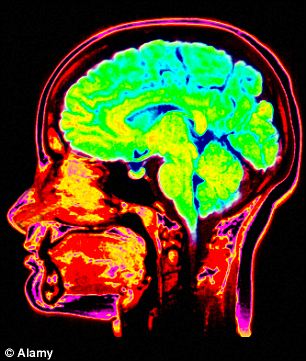
Ambitious: Scientists are hoping to build a computer that will simulate the entire human brain
Leading the project is Professor Henry Markram based in Switzerland, who will be working with scientists from across Europe including the Wellcome Trust Sanger Institute at Cambridge.
They hope to complete it within 12 years. He said: The complexity of the brain, with its billions of interconnected neurons, makes it hard for neuroscientists to truly understand how it works.
Simulating it will make it much easier allowing them to manipulate and measure any aspect of the brain.
Housed at a facility in Dusseldorf in Germany, the brain will feature thousands of three-dimensional images built around a semi-circular cockpit so scientists can virtually fly around different areas and watch how they communicate with each other.
It aims to integrate all the neuroscience research being carried out all over the world an estimated 60,000 scientific papers every year - into one platform.
http://www.dailymail.co.uk/sciencet...e-mind-exactly-help-fight-brain-diseases.html
It is intended to combine all the information so far uncovered about its mysterious workings - and replicate them on a screen, right down to the level of individual cells and molecules.
If it works it could be revolutionary for understanding devastating neurological diseases such as Alzheimers and Parkinsons, and even shedding light into how we think, and
make decisions.
Ambitious: Scientists are hoping to build a computer that will simulate the entire human brain
Leading the project is Professor Henry Markram based in Switzerland, who will be working with scientists from across Europe including the Wellcome Trust Sanger Institute at Cambridge.
They hope to complete it within 12 years. He said: The complexity of the brain, with its billions of interconnected neurons, makes it hard for neuroscientists to truly understand how it works.
Simulating it will make it much easier allowing them to manipulate and measure any aspect of the brain.
Housed at a facility in Dusseldorf in Germany, the brain will feature thousands of three-dimensional images built around a semi-circular cockpit so scientists can virtually fly around different areas and watch how they communicate with each other.
It aims to integrate all the neuroscience research being carried out all over the world an estimated 60,000 scientific papers every year - into one platform.
http://www.dailymail.co.uk/sciencet...e-mind-exactly-help-fight-brain-diseases.html


