

Quantum mechanics on the macro scale. Neurons having super position.

May 11, 2008
22,787
1,488
126
I was just wondering of in thoughts like i did years ago about how the brain might function.
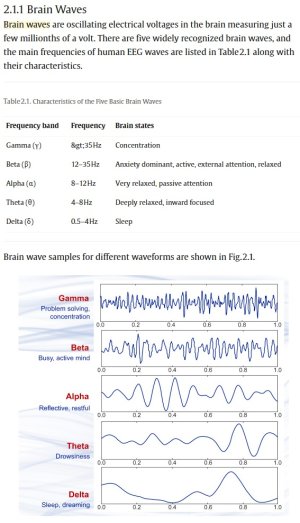
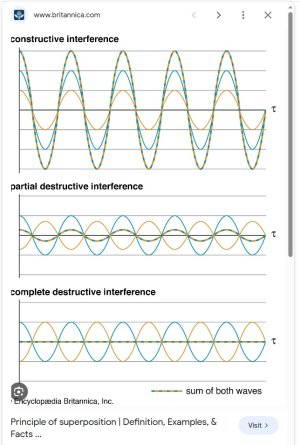
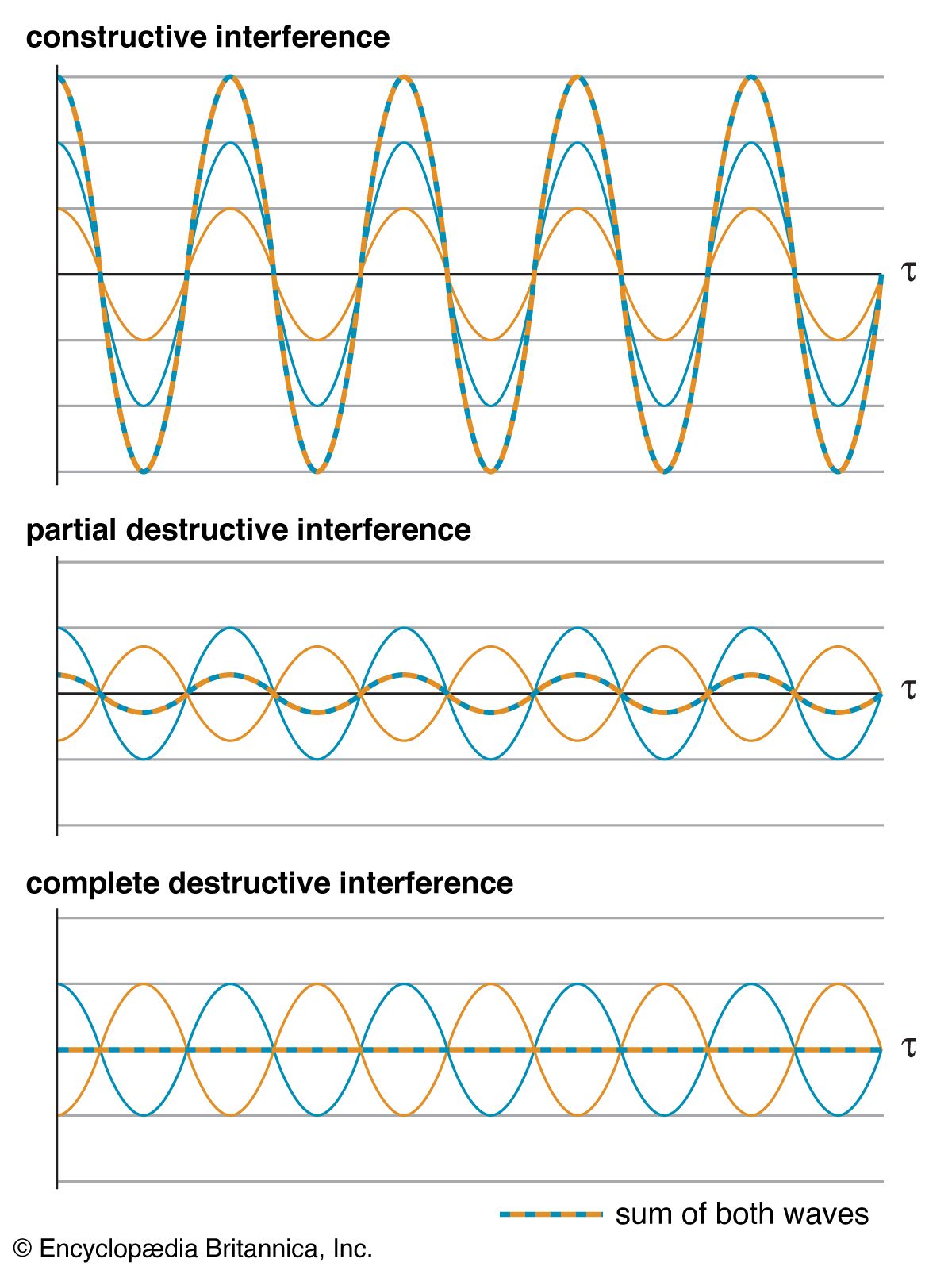
I always wondered if the principle of superposition is used by clusters of neurons. Thinking about brainwave patterns.
Clusters of neurons trying to overrule each other or enhance each other depending on the input information from senses and chemical messengers like for example neurotransmitters.
These clusters of neurons of course perform a particular function.
Something to think about.
NR1.jpg

NR2.jpg


Quantum Mechanics happening in real life on a bigger scale :


And the original double slit experiment with water with a young couple , showing how easy it is .


https://youtu.be/NW7VUFgwqg8

And the original double slit experiment with water.
https://www.youtube.com/watch?v=Iuv6hY6zsd0

A good video form the past :


Background information :
Brainwaves :

Superposition :
 
Last edited:
May 11, 2008
22,787
1,488
126
This is an interesting read about how photon entanglement might be the reason behind the swift synchronization between neurons.
Read the article on the website for more information and the full text :

Small excerpt form text :
"

Photon entanglement could explain the rapid brain signals behind consciousness​

Understanding the nature of consciousness is one of the hardest problems in science. Some scientists have suggested that quantum mechanics, and in particular quantum entanglement, is the key to unraveling the phenomenon.
Now, a research group in China has shown that many entangled photons can be generated inside the myelin sheath that covers nerve fibers. It could explain the rapid communication between neurons, which so far has been thought to be below the speed of sound, too slow to explain how the neural synchronization occurs.
The paper is published in the journal Physical Review E.
"
and
"
Comprised of up to hundreds of layers, myelin insulates the axons, as well as shaping them and delivering energy to the axons. (In actuality, a series of such sheaths stretches across the length of the axon. The myelin sheath is typically about 100 microns long, with 1 to 2 micron gaps between them.) Recent evidence suggests myelin also plays an important role in promoting synchronization between neurons.
"
and
"
A tricarboxylic acid cycle releases energy stored in nutrients, with a cascade of infrared photons released during the cycling process. These photons couple to vibrations from carbon-hydrogen (C-H) bonds in lipid molecules and excite them to a higher vibrational energy state. As the bond then transitions to a lower vibrational energy state, it releases a cascade of photons.
"
and
"
The conducting wall limits the electromagnetic wave modes that can exist inside the cylinder, making the cylinder an electromagnetic cavity that keeps most of its energy within it. These modes are different from the continuous electromagnetic waves ("light") that exist in free space.
It is these discrete modes that result in the frequent production of highly entangled photons within the myelin cavity, whose rate of production can be significantly enhanced compared to two untangled photons.
Entanglement means the two-photon state is not a classical combination of two photon states. Instead, measuring or interacting with one of the photons instantly affects the same property of the second photon, no matter how far away it is.
"
 
  • Wow
Reactions: igor_kavinski

Stiganator

Platinum Member
Oct 14, 2001
2,492
3
81
I'm not a proponent of moving to quantum explanations when there are plenty of classical solutions. The brain is wonderfully complex with many levels of hierarchy that overlap and interplay. Ions, Ion gradients, ion channels, neurotransmitters, axon structure, dendrite structure, cell soma structure, regional cell differentiation, etc all of these interplay with each other across excitatory and inhibitory feedback mechanisms, across time scales, and across spatial scales, and complexity scales (ions, channels, cells, circuits, networks, systems). Even the simplest computation representation of an action potential with fast/slow oscillator or the more physiological hodgekin-huxley model can produce a multitude of responses from 2-3 differential equations. So many emergent properties come into existence when you add something as simple as delay or structural complexity with recurrent connections. We are basically tip of the iceberg still on understanding how the brain works.
 
Jul 27, 2020
28,173
19,203
146
Few millionths of a volt!!!

Dang, our CPUs requiring more than a volt to function is just shameful!

Long way to go before we can compete with Mother Nature!
 
May 11, 2008
22,787
1,488
126
Few millionths of a volt!!!

Dang, our CPUs requiring more than a volt to function is just shameful!

Long way to go before we can compete with Mother Nature!
Well, the cell wall action potential of neurons are really not that far less than what the lowest voltage digital circuits can function on...
Perhaps even higher...
 

Stiganator

Platinum Member
Oct 14, 2001
2,492
3
81
"Brain wave" amplitude at 1 uV is somewhat misleading. The brain is made of billions of electric dipoles, most of which cancel out. Not really comparing apples to apples, a single cell resting potential is about -70mV. An action potential will peak at about +20 mV, but that is sort of immaterial. When you are comparing the operating voltage of a transistor to a neuron you are really comparing what it takes to to keep it operating, the consumption of ATP for the most part in a neuron. Fundamentally different transduction mechanisms. That being said a neuron is a bajillion times more complex than a transistor.
 
May 11, 2008
22,787
1,488
126
"Brain wave" amplitude at 1 uV is somewhat misleading. The brain is made of billions of electric dipoles, most of which cancel out. Not really comparing apples to apples, a single cell resting potential is about -70mV. An action potential will peak at about +20 mV, but that is sort of immaterial. When you are comparing the operating voltage of a transistor to a neuron you are really comparing what it takes to to keep it operating, the consumption of ATP for the most part in a neuron. Fundamentally different transduction mechanisms. That being said a neuron is a bajillion times more complex than a transistor.
I am doing this from vague memory, but the voltage swing was something like -70mV to (+30mV,+40mV max). Difference is like 100mV to 110mV. It is a short swing , a spike like signal.
I am not sure if it is our human neurons or some neurons from a snail.

EDIT:
corrected values.
 
Last edited:
May 11, 2008
22,787
1,488
126
Our brains are cool, but I don't think they're cool enough to maintain superposition and entanglement over things as big as a neuron.

Would have to be between some proteins folded in the right way i guess..
Proteins do weird stuff like modulate electron distribution.
I vaguely remember how superatoms function and have always wondered if proteins can do the same.
This because, some enzymes show the same reactivity as very reactive elements (and poisonous to us) but with basic elements like nitrogen, carbon, hydrogen and sometimes some trace element, like a single gold element or copper element, iron is very common.
 
May 11, 2008
22,787
1,488
126
I am doing this from vague memory, but the voltage swing was something like -70mV to (+30mV,+40mV max). Difference is like 100mV to 110mV. It is a short swing , a spike like signal.
I am not sure if it is our human neurons or some neurons from a snail.

EDIT:
corrected values.
I would expect a graph, sort of like a small capacitor discharging over a resistor.
There should be a natural log in that depolarization graph. But it seems it is not.
Seems a bit linear, so there must be some sort of current source behavior going on, AKA high output impedance with respect to the load.

For more information, this site might be a good source for the subject.

 
  • Like
Reactions: igor_kavinski
Jul 27, 2020
28,173
19,203
146
Our brains are cool, but I don't think they're cool enough to maintain superposition and entanglement over things as big as a neuron.
You could be onto something. Almost all of the world superpowers are in the Northern Hemisphere in colder regions.
 

Ken g6

Programming Moderator, Elite Member
Moderator
Dec 11, 1999
16,741
4,705
75
You could be onto something. Almost all of the world superpowers are in the Northern Hemisphere in colder regions.
By cool I meant liquid nitrogen or colder. I've heard the above is more related to malaria, and the relative lack of land in the southern hemisphere.
