- Mar 3, 2000
- 50,129
- 781
- 126
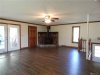
WTF is the purpose of this transition from the main room to the exit on the left? Why isn't that a smooth floor all the way across?
Am I retarded or am I missing something? I want smooth floors so I don't trip and end up like Boomer.
View attachment 43814
Long A dude. Bbhaag not bhagg and a couple of other things. That is not hardwood flooring. It's pretty clear that it's LVP you can tell by the pattern/seams and also it's pretty common to tile entryway doors. Not because the doors leak but because tile has better water resistance, wear resistance, and is easier to clean.dude ran speaker cables or something else stupid under that border...but basically what bhagg said: imperfect floor transition from retcon of older tile stepway at those French doors to the outside.
Mud space. In my old house I had mud room in both front and back door. There is a threshold to separate that space and inside.WTF is the purpose of this transition from the main room to the exit on the left? Why isn't that a smooth floor all the way across?
Am I retarded or am I missing something? I want smooth floors so I don't trip and end up like Boomer.
View attachment 43814
Long A dude. Bbhaag not bhagg and a couple of other things. That is not hardwood flooring. It's pretty clear that it's LVP you can tell by the pattern/seams and also it's pretty common to tile entryway doors. Not because the doors leak but because tile has better water resistance, wear resistance, and is easier to clean.
I'm I the only one shocked by olds saying please?![]()
Looks like an engineered product to me. The end joints roll slightly, you don't see that on LVP, I never have anyway.Long A dude. Bbhaag not bhagg and a couple of other things. That is not hardwood flooring. It's pretty clear that it's LVP you can tell by the pattern/seams and also it's pretty common to tile entryway doors. Not because the doors leak but because tile has better water resistance, wear resistance, and is easier to clean.
Probably because were the tile at the entry way meets the LVP flooring in the living place there is a difference in height or some other variance that required a transition strip. It appears to be a nice brass one though so that is a plus. Brass is really trending right now on Pinterest and HGTV so that's cool. I personally hate it and will never use it but that is just me. I'm a chrome guy myself or at the very least brushed nickel will work in a pinch if I have no other choice.
Anyway, I agree with you about transitions strips like that. I absolutely hate them and one of the reasons my wife and I bought our current home is because the original builder was handicap and went out of his way to make sure there were no transition strips like that in our house. It's awesome and one of the many things we love about our home.
Maybe the move East has mellowed him?I'm I the only one shocked by olds saying please?![]()
No transition strips like Olds posted above. We have several different types of flooring throughout the house(hardwood, carpet, tile, travertine, ect.)but they transition from one type of flooring to the next without the use of the above mentioned strips.How do you have a house without any transition unless it's the same material all throughout?

No transition strips like Olds posted above. We have several different types of flooring throughout the house(hardwood, carpet, tile, travertine, ect.)but they transition from one type of flooring to the next without the use of the above mentioned strips.
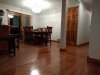
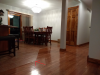
Like this pic for example. This is were our tiled kitchen meets the hardwood flooring in the hallway and living room. As you can see the two different types of flooring meet perfectly so no need for a strip. The entire home is like this.
View attachment 43848

Yes there is a slight difference in height between the tile and the hw flooring and honestly the kitchen is were it is most noticeable the rest of the house is very even. Before we moved in we did a pretty major remodel of that area so part of it is grout from when the floor was originally laid and part of it is something the contractor used to match the existing grout.Interesting - so is it the actual tile that ends - or is that basically the same grout that is inbetween all the tiles? Indeed it does look pretty slick and easy transition.
I just figure with...
1) Needing absolutely perfect cuts on EVERYTHING (both the wood + tile
2) Making sure everything is at appropriate angles, correct widths, etc...
3) PLUS - potential shifting of the home altogether over the years
That it would be near impossible to keep entirely even. And I'm not saying it looks bad, but it almost looks a bit different where I pointed here for an example of what I mean.
Vs. the T-Connector that allows you to not have to make perfect cuts, it accounts for shifting over the years etc.
I mostly say that as someone that did our own wood-floor conversion from carpet lol. There was zero chance that I would get all the cuts even.
View attachment 43849

Depends on the material used. Any sort of floating floor requires transition strips to allow for expansion. Fixed materials can get by without a transition strip as there is very little movement. Carpet you can roll the edge and staple it down.How do you have a house without any transition unless it's the same material all throughout?