• We’re currently investigating an issue related to the forum theme and styling that is impacting page layout and visual formatting. The problem has been identified, and we are actively working on a resolution. There is no impact to user data or functionality, this is strictly a front-end display issue. We’ll post an update once the fix has been deployed. Thanks for your patience while we get this sorted.

*less urgent* How to fix a leaky basement window

Sorry no picture atm

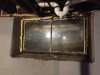
I have an old 1960 basement window that’s leaking a good amount. The window is the 1/4 sized maybe 12” high slant to open type window. All my basement windows are very rusted this one cannot open due to decay.
Any suggestions what can be applied to it for a temporary fix?
 
Last edited:
Slant to open? That could mean a lot of different things.

If you can determine where it's leaking, a tube of caulk might work as a temporary fix as long as you can redirect the water to allow it to cure. If it's direct rain falling on it, you may be better off getting some duct tape and plastic....or a small piece of trim and plastic to make a tent over the opening. That may be a better temporary fix until the weather dries up.

You can find cheap windows if you look around. Basement type windows can often be utility grade if the space isn't well insulated to start with. Just consider that when specifying what you're looking for and you may save a lot of money. Replacement windows can be ordered the exact size of the opening and you simply shim and caulk around them to create a seal.

Additionally, you can get rolls of window flashing that allow you to seal the outside of window to the side of the structure. It sticks on and uses a tar substance to form a seal with an outer foil membrane. A more permanent temporary fix, would be finding some aluminum flashing and possibly making a small awning over the window to direct water around the window opening. Without seeing pictures and knowing what kind of water you're dealing with, it's tough to say what's overkill and what's not. I'd definitely get a quote on some windows for the ones that need to be replaced or find someone that may be able to fix them. You may not need to replace them all and who knows if they can be salvaged. Sometimes, they can be reworked and resealed if the metal isn't too far gone.
 
Yes slant to open, I found some quick drying caulk and fortunately the rain had stopped when I got home. The window is a mess and I know it needs replacement, been putting it off because I feel basement windows are pretty expensive for what you get. I do not have a finished basement, the appearance is irrelevant.
However having a screened window I could open without fearing it breaking is a benefit.

I know that is a sloppy spray foam job. This was my first project as a homeowner 10 years ago. This window had a visible gap.
Above the window is my newly resurfaced deck. I wish I was smart enough to add a cover to the well.

6B74C446-FB27-49DB-8634-6A6D3E0C9843.jpeg

Hard to say how much water because the back wall was already slightly damp from the rain last week. Going to guess about a 5 gallon bucket worth on the floor. Water is spread over a large area.
 
Last edited:
Going to rain all week. The question is should I try to replace it this weekend with only YouTube knowledge of how to replace my fist window or ride it out?
 
From the outside, caulk the crap out of it, it probably won't look good but it should keep water out. Use 35 year rated caulk as it will do better with UV and weather.
 
Going to rain all week. The question is should I try to replace it this weekend with only YouTube knowledge of how to replace my fist window or ride it out?
I would be sure of at least 24 hours dry weather since the replacement should be set in mortar with a angled sill outside, or at least a plan to protect the work from washing out. Silicone caulk for the jambs and head will cure quicker in wet and humid conditions. You may want to point the jams and head with mortar, leaving enough room for backer rod and caulk on both sides. I used Grossmans outlet for our basement windows, which were the least expensive and decent (double pane), and offered sliders and pull out.
 
Last edited:
I would be sure of at least 24 hours dry weather since the replacement should be set in mortar with a angled sill outside, or at least a plan to protect the work from washing out. Silicone caulk for the jambs and head will cure quicker in wet and humid conditions. You may want to point the jams and head with mortar, leaving enough room for backer rod and caulk on both sides. I used Grossmans outlet for our basement windows, which were the least expensive and decent (double pane), and offered sliders and pull out.

Thanks, I need to mention the window is under my deck, I cannot access the outside of the window without removing my deck boards. Too tight to crawl under too.
I care less what the outside of this window looks like, I was thinking getting a sliding window in then caulking with the outdoor sticky window sealer type and just use a ton of it.
Another thought is this window has no purpose, maybe I should just brick it in. Only fear I have with closing the window is the usual unexpected problems that tend to come up with permanent changes like that.
 
Thanks, I need to mention the window is under my deck, I cannot access the outside of the window without removing my deck boards. Too tight to crawl under too.
I care less what the outside of this window looks like, I was thinking getting a sliding window in then caulking with the outdoor sticky window sealer type and just use a ton of it.
Another thought is this window has no purpose, maybe I should just brick it in. Only fear I have with closing the window is the usual unexpected problems that tend to come up with permanent changes like that.
I bricked in the window under our deck. I have masonry tools and grinder if you want to borrow and are close to the NY border on the Mass Pike.
 
I bricked in the window under our deck. I have masonry tools and grinder if you want to borrow and are close to the NY border on the Mass Pike.

Aw you are awesome. I am sure my brother in law has a grinder. I do appreciate that offer.
Should I be concerned about water and bricks?
Assuming I go the brick route I’ll do my best to cap the window well which could be difficult without outside access but even if it’s mostly water tight that should be good enough.
I am wondering is moisture from the well would wick thru the brick & mortar.
 
Aw you are awesome. I am sure my brother in law has a grinder. I do appreciate that offer.
Should I be concerned about water and bricks?
Assuming I go the brick route I’ll do my best to cap the window well which could be difficult without outside access but even if it’s mostly water tight that should be good enough.
I am wondering is moisture from the well would wick thru the brick & mortar.
I'm not completely sure of the implications of filling in the window well, but I did with no problems. I filled it with crushed shale and compacted it. I also filled the block with mortar and used a solid brick on top. Complete foundations are built with block so as long as you use standard heavyweight block and reach around to be sure the joints are full, you shouldn't have a wicking problem as long as you have positive runoff away from the foundation under the deck.
 
Thanks, I need to mention the window is under my deck, I cannot access the outside of the window without removing my deck boards. Too tight to crawl under too.
I care less what the outside of this window looks like, I was thinking getting a sliding window in then caulking with the outdoor sticky window sealer type and just use a ton of it.
Another thought is this window has no purpose, maybe I should just brick it in. Only fear I have with closing the window is the usual unexpected problems that tend to come up with permanent changes like that.
I suppose you could also install a window from the inside set in mud, and pointed in as I mentioned, then after its somewhat set but still pliable, remove the window from the frame, and reach through the frame to finish pointing and caulking.
 
I suppose you could also install a window from the inside set in mud, and pointed in as I mentioned, then after its somewhat set but still pliable, remove the window from the frame, and reach through the frame to finish pointing and caulking.

Yeah I’m starting to think I should remove the top deck boards to get access to the well and I should use this time to clean up the large rocks and pre meat construction debris under it. Also check/fix the grade.
Seems like water always finds a way in if it pools and I am not sure what has changed under there but something changed.
After doing grading work I can brick or window or whatever because at least I’ll have *some* access to the window.
Big pain in the ass work ahead.
 
So a second window started to leak. We had pretty intense rain today and last night.
Looking into replacing them.
Seems that replacement basement windows want a PT wood frame around them. That sounds weird to me, wouldn’t even PT wood rot after a decade or since basement windows tend to have water splashed on when it rains or snows.
I have zero experience with this so any advice is approciated.
@shortylickens you are right.
 
For whatever reason I cannot edit above.
I think I see why replacements involve wood, I have concrete all around the window. Picture is from the top of the newly noticed leak. That is concrete.
Good news is it can’t possibly be supporting anything.

7D52ACCE-8249-451E-9D8B-6864911A82B5.jpeg

A8302B4A-68BE-47A8-947F-309CCA8B0097.jpeg
 
The sill plate on top should be the only wood involved, and that should be covered on outside with the exterior siding, or flashed under the deck.
 
Last edited:
The sill plate on top should be the only wood involved, and that should be covered on outside with the exterior siding, or flashed under the deck.

Thanks, these windows are well in the concrete probably 2” to the inside or outside. Plainly in my foundation. No siding would be near it are you saying put something over the wood to limit exposure?
 
The siding covers the sill plate on the outside, and allows the water to drip straight down, as opposed to surface tension carrying the water under and down the window.
 
It's possible, if there are windows above the basement windows, that water may be entering the sills on the above windows and running down inside the wall.
 
Back
Top