I remember when I owned one of the older AGP cards (9600se), it was almost 6 inches long. Then I owned a 9600gt and a 4870 which were around the same length (almost 8 inches?). And then I owned a massive 6950 which was like 13 inches i believe? I'm not sure, but each generation of graphics cards i've owned have gotten progressively bigger. Is there a reason for this when the gpu dies are shrinking and producing less heat, using less power, etc?

-
We’re currently investigating an issue related to the forum theme and styling that is impacting page layout and visual formatting. The problem has been identified, and we are actively working on a resolution. There is no impact to user data or functionality, this is strictly a front-end display issue. We’ll post an update once the fix has been deployed. Thanks for your patience while we get this sorted.
You are using an out of date browser. It may not display this or other websites correctly.
You should upgrade or use an alternative browser.
You should upgrade or use an alternative browser.
If GPU dies are getting smaller, why are graphics cards getting bigger?
- Thread starter dpk33
- Start date
96Firebird
Diamond Member
...the gpu dies are shrinking and producing less heat, using less power, etc?
Says who?

toyota
Lifer
well if they shrink the process itself 30% but still end up adding 50-60% or more stuff to the chip it actually gets bigger an more power hungry.Really? I always related die shrinks to less heat and power consumptions? Or is that just for CPUs? Or am I completely mistaken?
I'm not going to lock this thread for being the "repost" that it is, but I will leave a link to the last time we had this discussion in VC&G for the benefit of the author of this thread.
Video cards do get smaller, and do use less power, but the flagship halo-tier type products are not.
They are becoming larger and more power-hungry as the technology for dealing with the heat and the power-supply are improved in parallel.
But one need look no further than the discreet mobile chips that see where performance has markedly improved over the years on a TDP-normalized basis.
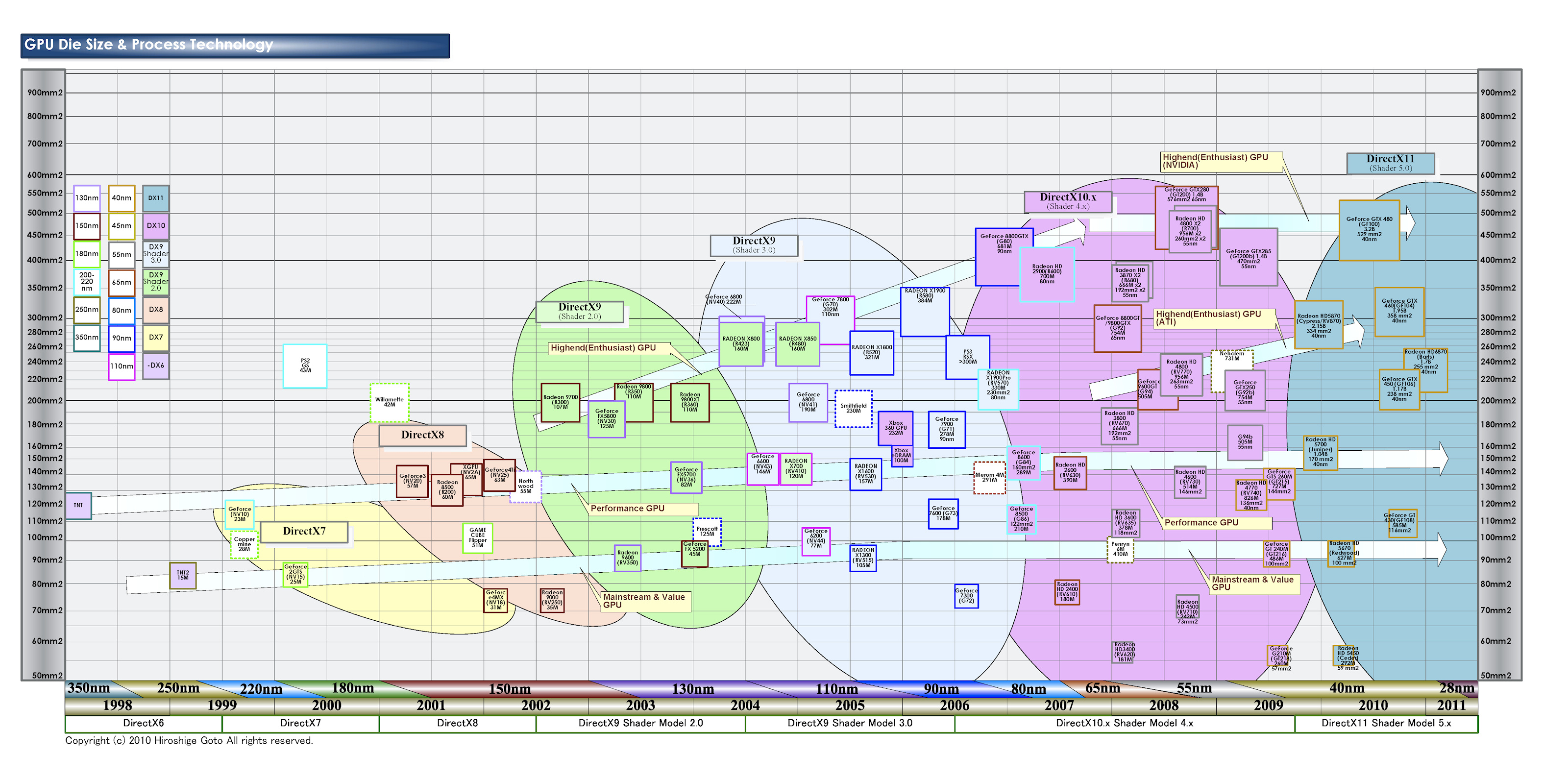
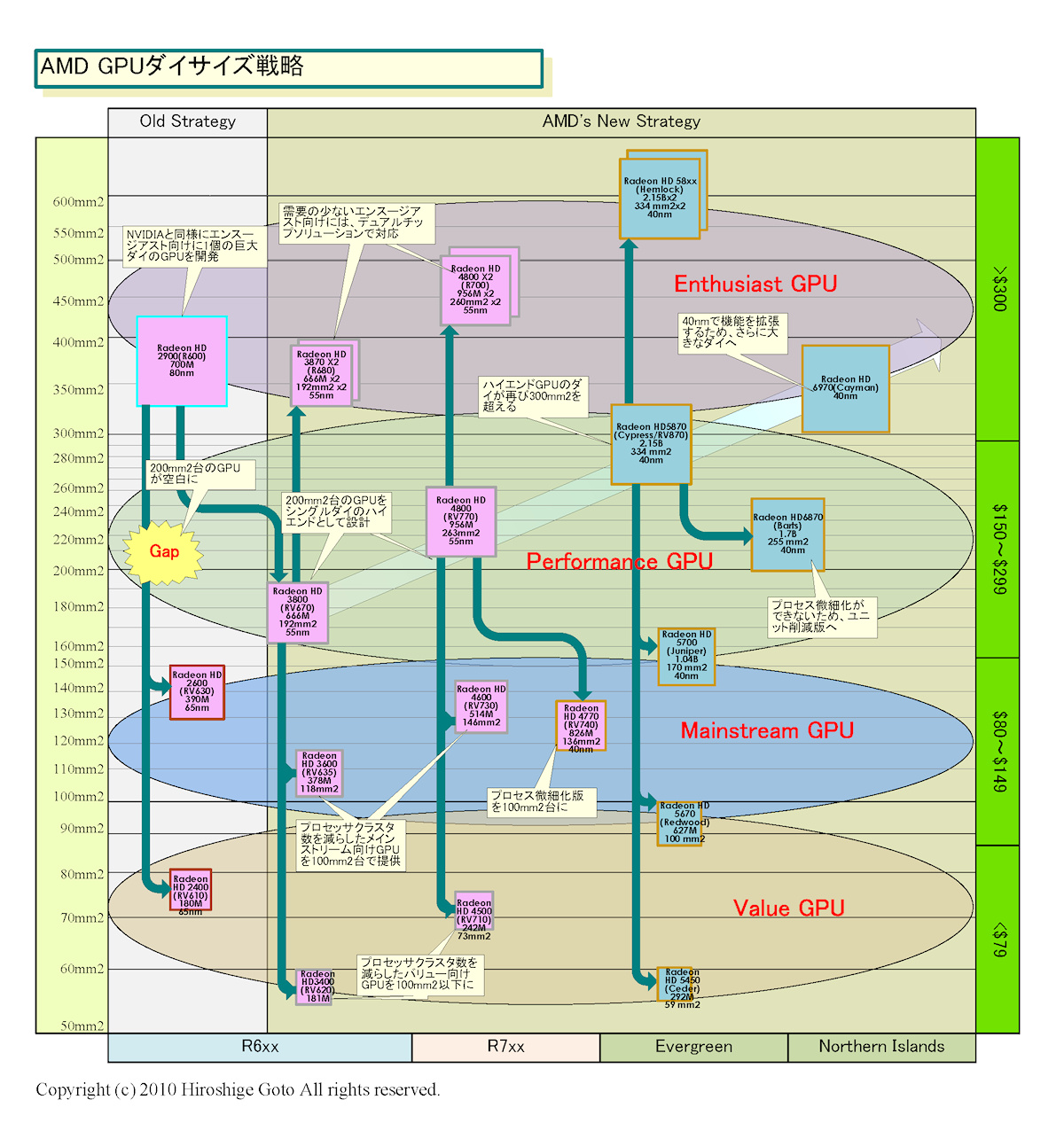
Video cards do get smaller, and do use less power, but the flagship halo-tier type products are not.
They are becoming larger and more power-hungry as the technology for dealing with the heat and the power-supply are improved in parallel.
But one need look no further than the discreet mobile chips that see where performance has markedly improved over the years on a TDP-normalized basis.
When you're able to pack more architecture into the same size area, of course the power consumption and heat will increase. The areas where they claim to use less power and heat are the budget and mainstream solutions that do not require massive improvements in performance to satisfy the end user, and therefore use less heat
ransomlist
Member
Because of the need for beefier cooling and power req's that need more space used for that side of things; as someone above has mentioned, GPU's for gaming arent representative of the normal use which these days would be mobile.
If you want lower profile, go for full cover WC blocks.
If you want lower profile, go for full cover WC blocks.

T_Yamamoto
Lifer
lol:thumbsup:lol, I need eyefinity to see that first graph.
jiffylube1024
Diamond Member
I remember when I owned one of the older AGP cards (9600se), it was almost 6 inches long. Then I owned a 9600gt and a 4870 which were around the same length (almost 8 inches?). And then I owned a massive 6950 which was like 13 inches i believe? I'm not sure, but each generation of graphics cards i've owned have gotten progressively bigger. Is there a reason for this when the gpu dies are shrinking and producing less heat, using less power, etc?
Per transistor, every die shrink makes GPU's cooler and produce less heat. However, overall GPU dies are getting bigger - ATI and AMD are taking advantage of the smaller transistors and packing more and more of them into their GPUs. The cards are getting longer and more complex because they consume more power now than ever before.
blackened23
Diamond Member
dpk33, you might actually want to read some reviews. cards are more power hungry than ever. mid range cards consume as much as very end high cards did a few years ago. some current high end cards even have to use safety features to prevent full usage during Furmark.
Pretty much this. Die size has gone down by power consumption/heat output has gone up a lot.

Blitzvogel
Platinum Member
Those charts are great. The power consumption issue I think is most attributed to the increase in clock speeds. The performance per die area has increased immensely of course, but the willingness to push the clocks has too in the performance brackets of graphics processors, especially with Nvidia when they introduced independent shader domain clocks beginning with the 8000 series. One also has to remember the need for more transistors as unified architecture came about and GPGPU features for use beyond graphics have been piled on.
toyota
Lifer
clocks have hardly moved for Nvidia. in fact their shader processor speeds are actually slower now than some of the 65nm and 55nm g92 cards. so really clock speeds to die shrink ratio are getting slower not faster in many cases.Those charts are great. The power consumption issue I think is most attributed to the increase in clock speeds. The performance per die area has increased immensely of course, but the willingness to push the clocks has too in the performance brackets of graphics processors, especially with Nvidia when they introduced independent shader domain clocks beginning with the 8000 series. One also has to remember the need for more transistors as unified architecture came about and GPGPU features for use beyond graphics have been piled on.
Last edited:
BladeVenom
Lifer
Nice chart. Looks like Nvidia has already stopped increasing die sizes even at the high end, So I imagine AMD will also stop increasing in size for their high end cards in the not too distant future.
3DVagabond
Lifer
Nice chart. Looks like Nvidia has already stopped increasing die sizes even at the high end, So I imagine AMD will also stop increasing in size for their high end cards in the not too distant future.
I'm sure they'd like to reduce their size and except for possibly the top chip (Tahiti?) they likely will.
Then I owned a 9600gt and a 4870 which were around the same length (almost 8 inches?). And then I owned a massive 6950 which was like 13 inches i believe?
just a little item to add.
The 9600GT was a mid ranged card, so mid ranged size needed (ie: lower end cards can get away with being "half height" if need be, but I diegress).
The 6950 IIRC is a CrossFire on a single card, so two GPUs on one board. It is a bit of a exception when looking at the change in card sizes over the years.
As to how large they can go, the spec for add on cards I think is rather well set from many years ago. Going full length/dual slot is happening, but you run into issues, physically, in mounting that card into a average case.

tigersty1e
Golden Member
Is there a reason for this when the gpu dies are shrinking and producing less heat, using less power, etc?
gpu dies are producing more heat and using more power.
they are only getting more efficient per watt.

TRENDING THREADS
-
 Discussion Zen 5 Speculation (EPYC Turin and Strix Point/Granite Ridge - Ryzen 9000)
- Started by DisEnchantment
- Replies: 25K
-
Discussion Intel Meteor, Arrow, Lunar & Panther Lakes + WCL Discussion Threads
- Started by Tigerick
- Replies: 25K
-

-

-
