
• We’re currently investigating an issue related to the forum theme and styling that is impacting page layout and visual formatting. The problem has been identified, and we are actively working on a resolution. There is no impact to user data or functionality, this is strictly a front-end display issue. We’ll post an update once the fix has been deployed. Thanks for your patience while we get this sorted.

Question How many of these power connections are needed for a regular single CPU, single GPU rig?

yacoub

Golden Member
I know the big 24-pin molex and usually one 8-pin CPU connector are required.

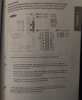
This board (z690 Hero) also has a second 8-pin CPU connector (ATX_12V_2) and an 6-pin "extra PCI-E x16" power connector (PD_12V_PWR), which is says helps PCI-E go from 27w to 60w. I have never heard of this before or had a board that offered either of these additional connections before. Do I need to connect them?

Build is an i7-12700K and a single 3070Ti.

TIA
Power Question.jpg
 
Last edited:
When you ask whether you need to connect the second connector, the implication seems to be that you have the choice. But most PSUs don't offer this choice. The ones that do are generally made for 2P (dual CPU) systems. If I had a PSU that did not allow for this connection, I would test the setup with only the one 8-pin connection and see what happens.
 
According to the manual diagram shown, I see 2 8pin CPU connectors, the normal 24pin ATX connector, and what looks like a regular 6pin PCIe connector that you would find on some video cards. Depending on what PSU you have, if you have 2 8pin CPU connectors, I would recommend connecting both. The 24pin is obviously required.

As for the 6pin connector, I don't think this would be necessary for a single video card, especially since your 3070Ti will be fed by its own power connectors in addition to the PCIe bus. Of course, if you have an extra 6pin or 6+2pin available on your PSU, then you might as well connect it, especially if you run into any performance or stability issues later, this might help.
 
When you ask whether you need to connect the second connector, the implication seems to be that you have the choice. But most PSUs don't offer this choice. The ones that do are generally made for 2P (dual CPU) systems. If I had a PSU that did not allow for this connection, I would test the setup with only the one 8-pin connection and see what happens.
According to the manual diagram shown, I see 2 8pin CPU connectors, the normal 24pin ATX connector, and what looks like a regular 6pin PCIe connector that you would find on some video cards. Depending on what PSU you have, if you have 2 8pin CPU connectors, I would recommend connecting both. The 24pin is obviously required.

As for the 6pin connector, I don't think this would be necessary for a single video card, especially since your 3070Ti will be fed by its own power connectors in addition to the PCIe bus. Of course, if you have an extra 6pin or 6+2pin available on your PSU, then you might as well connect it, especially if you run into any performance or stability issues later, this might help.
Thank you both. The PSU is a Seasonic Focus PX-750, fully modular. It offers a second PSU to CPU 8-pin cable so I could conceivably connect both 8-pin CPU connectors (trying to physically get both connected will be... interesting, to say the least due to tight working spaces near the top of the board, and may not be possible). It also does have a second PSU to PCI-E 6+2 pin connector if needed.

@crashtech - As far as having the choice, I've never had a single-socket board that required two 8-pin CPU connectors, so regardless of whether a PSU came with two of the cables (which is typically for boards with two CPU sockets), I've never needed two before.

I'm still not sure I should go through the difficulty of attempting to connect the second CPU cable or adding the extra(?) PCI-E. :\
 
I might add that extensions are available for any cables that don't reach. I think I have one for the 24-pin ATX connector around here somewhere for a former build I did in a surprisingly large case.
 
Linus got power draw up past 400W+ on his 12900K doing sub-ambient cooling overclocking.

I would connect both, if you intend to overclock at all, just to be on the safe side.
 
Back
Top